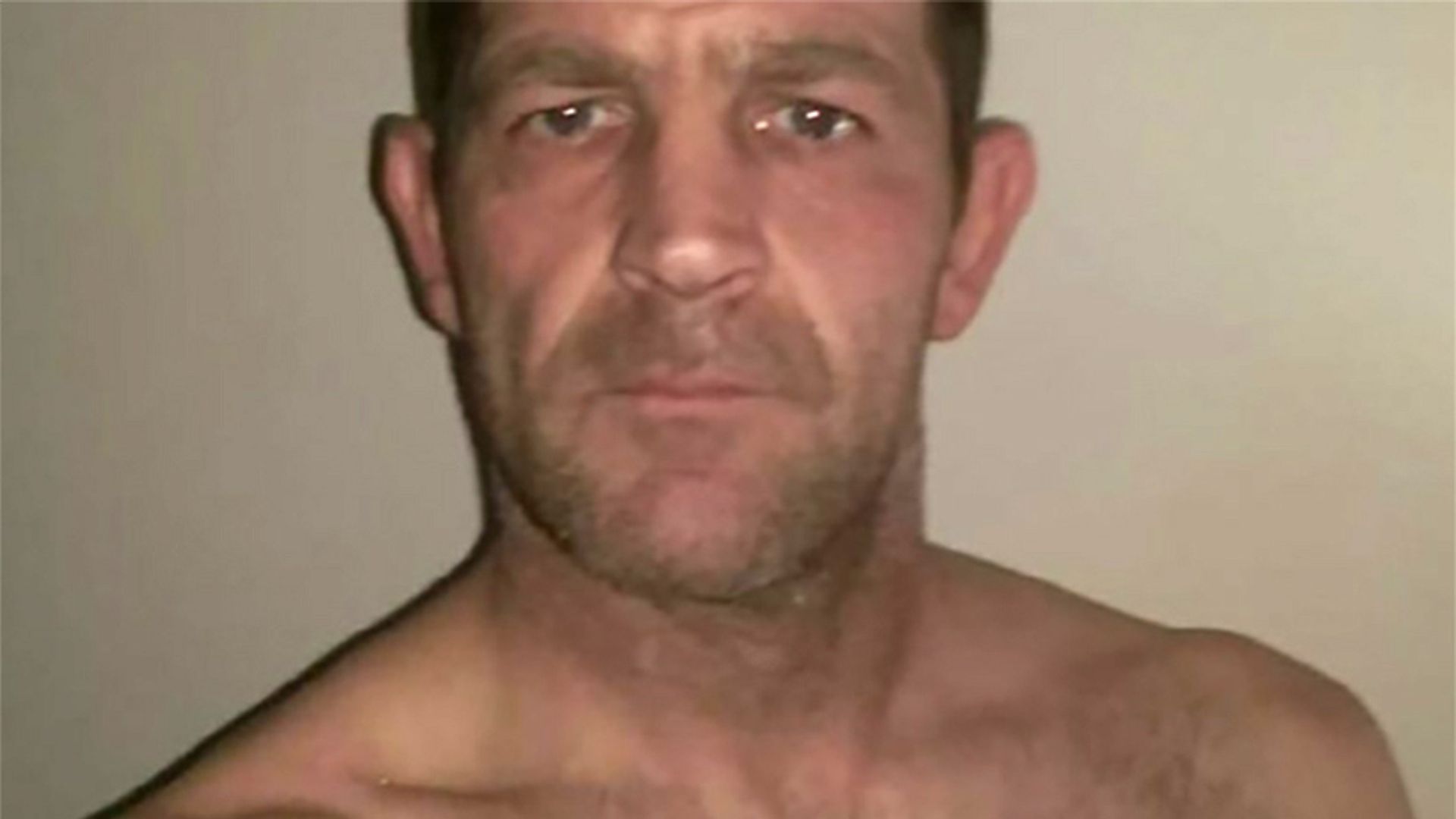
The exoneration of an innocent man after nearly two decades behind bars is often framed as a triumph of the legal system. It is not. When a person spends seventeen years in a concrete box for a crime they did not commit, the eventual discovery of the truth is a diagnostic report on a terminal illness within the judiciary. In cases like this, the victim of a wrongful conviction often describes themselves as a "patsy," a convenient placeholder used by investigators to close a file rather than find a criminal. The reality is that these failures are rarely the result of a single rogue actor, but rather a cascading series of procedural shortcuts and cognitive biases that value a conviction over the truth.
Justice is supposed to be a search for facts. In practice, it frequently becomes a search for a narrative that fits a pre-existing suspicion. When the real perpetrator is finally identified through DNA or a confession years later, the focus usually lands on the individual tragedy. We look at the grey hair, the lost years, and the broken families. But to understand why this happens, we have to look at the machinery of the state that allowed a "patsy" to be manufactured in the first place.
The Architecture of a Wrongful Conviction
Wrongful convictions do not happen in a vacuum. They are built on a foundation of shaky evidence that is treated as gospel by a prosecution eager for a win. Usually, the collapse of a case starts with the most unreliable form of evidence available to a jury: eyewitness identification.
Memory is not a video recording. It is a reconstructive process, easily influenced by the way a detective asks a question or the way a lineup is presented. Research has consistently shown that when an eyewitness is shown a group of people, they tend to pick the person who looks most like the perpetrator relative to the others, rather than making an absolute match. If the actual criminal isn't in the lineup, the witness picks the closest approximation. Once that choice is made, the witness’s confidence often spikes, regardless of its accuracy.
By the time the case reaches a courtroom, that shaky identification has been polished into "certainty." The jury sees a victim pointing a finger at a defendant, and they find it impossible to look away. They aren't told about the three hours of suggestive questioning that preceded that moment. They aren't told about the other photos the witness failed to identify. They see a finished product, not the messy, biased process used to create it.
The High Cost of the Win At All Costs Mentality
The incentive structure for prosecutors and police departments is heavily skewed toward closing cases. Success is measured in conviction rates. High-profile crimes, particularly those involving sexual assault or violence, create immense public pressure. When the pressure mounts, the "tunnel vision" effect takes over.
Investigators lock onto a lead—perhaps a man who was in the wrong place at the wrong time or someone with a minor prior record—and they begin to filter out any evidence that doesn't support his guilt. This isn't always malicious. It is a psychological trap. If a piece of evidence contradicts the theory, it is dismissed as an outlier or the work of a "clever" criminal trying to hide their tracks.
In the case of the man who spent seventeen years in prison, the eventual discovery of the real rapist usually reveals that the correct suspect was right under the nose of the authorities the entire time. Often, the real perpetrator was already in the system, or their name had surfaced in the initial investigation but was ignored because the "patsy" had already been selected. This is the ultimate irony of the "tough on crime" stance; by convicting the wrong person, the state ensures that a violent offender remains free to strike again.
The DNA Revolution and Its Limitations
We are often told that DNA evidence has solved the problem of wrongful convictions. It has certainly helped, acting as a late-stage safety net for those lucky enough to have biological evidence preserved from their trials. But DNA is not a magic wand.
Most crimes do not leave behind usable genetic material. For every person exonerated by a laboratory test, there are dozens more whose claims of innocence cannot be proven because the evidence was lost, destroyed, or never existed. Furthermore, even when DNA evidence points to innocence, some prosecutors fight the results for years. They argue that the DNA "could have been left by someone else at a different time" or that the defendant must have had an accomplice who left the biological trace.
The institutional resistance to admitting a mistake is profound. Admitting a mistake means acknowledging that the state committed a grave injustice. It means opening the door to massive civil lawsuits. More importantly, it requires the people involved—the detectives, the lawyers, the judges—to look in the mirror and realize they participated in the kidnapping of an innocent human being under the color of law.
The Myth of the Fair Trial
The American legal system is predicated on the idea of an adversarial balance. A prosecutor and a defense attorney fight it out, and the truth emerges. This is a fantasy in many jurisdictions.
Public defenders are frequently buried under caseloads that make it impossible to conduct a thorough independent investigation. They might have hours to prepare for a case that the state has spent months building. When a defendant is poor, their "day in court" is often a brief formality on the way to a mandatory minimum sentence.
If the defense cannot afford expert witnesses to challenge the state’s forensic "experts," the jury hears a one-sided story. For decades, "junk science" like bite-mark analysis, hair microscopy, and even certain types of arson investigation were treated as infallible. We now know these methods were often little more than guesswork dressed up in a lab coat. Yet, these techniques were used to steal decades from people who had no way to fight back.
Life After the Exoneration
When the prison gates finally open, the nightmare doesn't end. A man who enters prison in his twenties and leaves in his forties has missed the formative years of his adult life. He has no career history, no credit score, and often, no family left to return to.
Ironically, in many states, it is easier for a paroled criminal to get transition services than it is for an exoneree. Because the exoneree was never "guilty," they don't fall under the purview of parole offices that provide job placement or housing assistance. They are simply dropped at a bus station with a check for a few hundred dollars and an apology that feels like an insult.
The psychological toll is even heavier. The "patsy" has spent years in an environment where survival depends on hyper-vigilance and a lack of trust. Reintegrating into a world that has moved on without them—where technology and social norms have shifted entirely—is a monumental task. They are free, but they are often ghosts in their own lives.
Dismantling the Factory of Error
Preventing these tragedies requires more than just better technology; it requires a fundamental shift in how we handle the accused. We need "blind" photo lineups, where the officer administering the test doesn't know who the suspect is, preventing any subtle cues from being passed to the witness. We need mandatory recording of all interrogations to prevent the manufacturing of "false confessions," a phenomenon where innocent people are broken down until they agree to a narrative just to make the pressure stop.
Crucially, there must be accountability for "Brady violations"—the illegal withholding of evidence that could favor the defense. Currently, prosecutors enjoy near-total immunity for their actions in the courtroom. If there are no consequences for burying evidence that could prove a man’s innocence, some will continue to do it in the pursuit of a conviction.
The story of a man being "lucky" enough to be proven innocent after seventeen years is a lie. There is nothing lucky about it. It is a record of a systemic crime. Every day that an innocent person sits in a cell, the legal system is committing a fresh kidnapping. If we want to stop creating "patsies," we have to stop treating the courtroom like a stadium where the only thing that matters is the final score.
True reform starts with the uncomfortable admission that the system is not broken; it is working exactly as it was designed—to prioritize finality and efficiency over the grueling, expensive, and often politically inconvenient pursuit of actual justice. Until the cost of a wrongful conviction becomes higher than the cost of a failed prosecution, the machinery will keep grinding lives into dust.