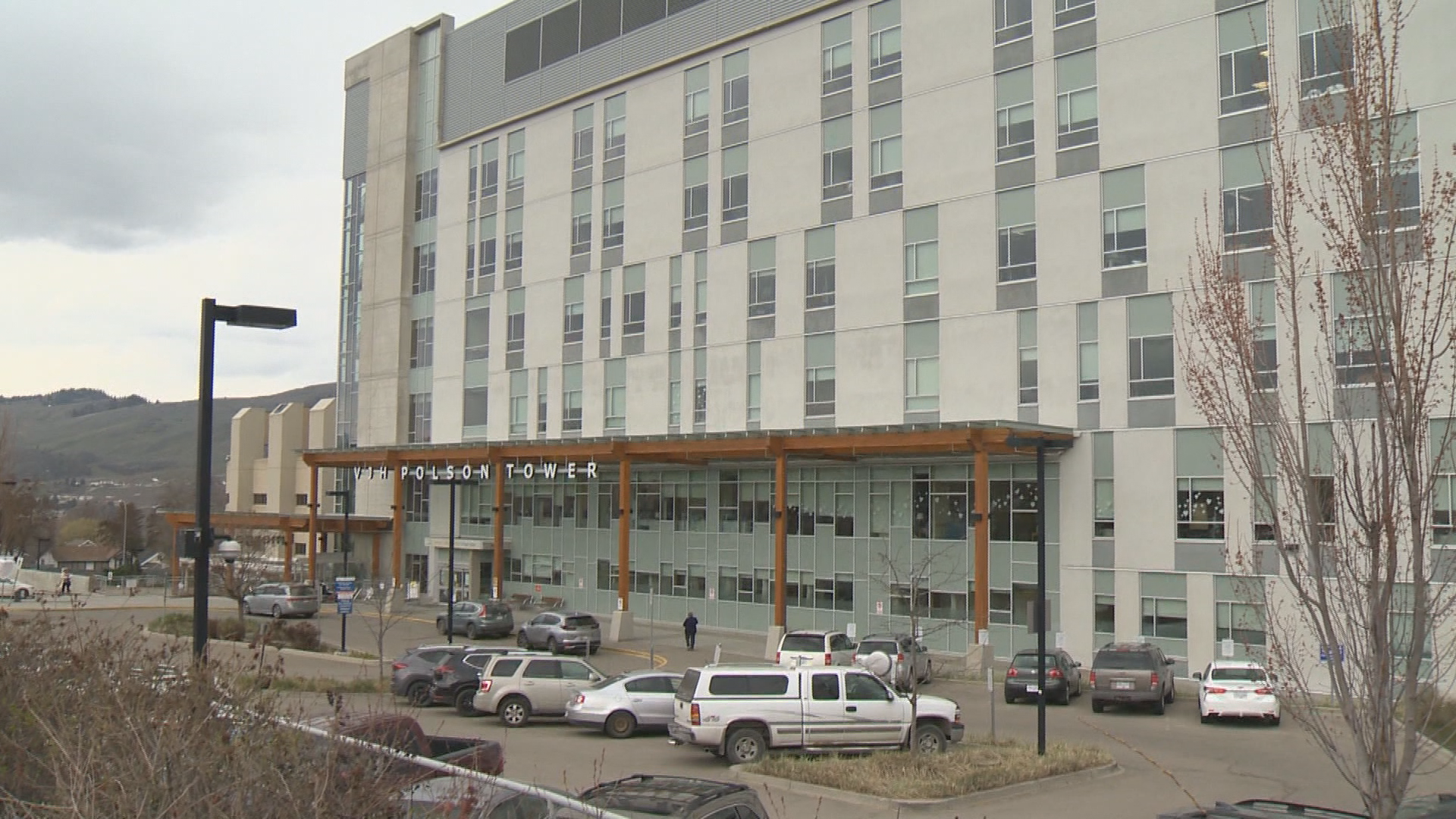
The tragic death of a young patient at Vernon Jubilee Hospital (VJH) serves as a terminal indicator of a system operating beyond its structural capacity. While public discourse often focuses on the emotional weight of individual loss, a clinical and operational audit reveals a more clinical reality: the intersection of fixed bed counts, surging acute acuity, and failed discharge pathways has created a lethal bottleneck. To understand why a psychiatric ward fails, one must look past the headlines and analyze the three specific failure points in the patient lifecycle: intake saturation, internal triage degradation, and the secondary care deficit.
The Tri-Point Failure Framework
The efficacy of an acute psychiatric unit is measured by its ability to stabilize patients in crisis and transition them to lower-intensity care. When the inflow of high-acuity patients exceeds the outflow of stabilized individuals, the unit enters a state of Active Saturation. At VJH, this saturation is not a temporary spike but a permanent operational feature.
1. Intake Saturation and ER Boarding
The emergency room serves as the primary valve for psychiatric admissions. When the specialized psychiatric unit is at 100% capacity, patients are "boarded" in the ER—an environment characterized by high sensory input, lack of specialized monitoring, and minimal therapeutic intervention.
- Environmental Destabilization: For a patient experiencing psychosis or severe suicidality, the chaotic nature of an ER acts as a stress-multiplier.
- The Observation Gap: ER nursing staff, while highly skilled in trauma and medicine, often lack the specific behavioral health training required for 1:1 psychiatric observation, leading to delayed recognition of escalating self-harm risks.
2. Internal Triage Degradation
Inside a saturated ward, the "Quiet Room" or high-observation beds become the most valuable real estate. When these are full, clinicians are forced into a "shuffle" where the least-at-risk patient is moved to a lower-observation area to make room for a new, higher-risk arrival.
This creates a Risk Migration effect. By constantly shifting patients to accommodate the newest crisis, the baseline level of safety for the entire population drops. Staff attention is fragmented, and the "milieu"—the therapeutic environment of the ward—becomes volatile.
3. The Secondary Care Deficit (The Outflow Block)
A psychiatric bed is only "filled" because there is nowhere for the occupant to go. The lack of supported housing, intensive outpatient programs, and assertive community treatment (ACT) teams in the Okanagan region means that patients who are medically ready for discharge remain in acute care beds. This is known as Alternative Level of Care (ALC) occupancy. Every day an ALC patient stays in a psych bed is a day a person in active crisis remains in an ER hallway or, worse, is turned away entirely.
Quantifying Capacity Beyond Bed Counts
Capacity is a multidimensional metric. Simply counting the number of beds at Vernon Jubilee is a reductive approach that ignores the Patient-to-Acuity Ratio. A ward with 20 beds and 20 low-risk patients is functional; a ward with 20 beds and 5 high-violence or high-suicidality patients is effectively over-capacity due to the staffing requirements for 1:1 monitoring.
The Staffing-to-Risk Correlation
In psychiatric care, safety is a function of observation. If a patient is determined to be at "high risk of imminent self-harm," they require constant visual contact.
- Staffing Elasticity: Most hospital budgets are fixed. They do not allow for the rapid scaling of specialized psychiatric nurses when five "1:1" patients arrive simultaneously.
- Cognitive Load: When nurses are stretched thin, the subtle behavioral cues—the "preattentive" signals of a worsening mental state—are missed. Data suggests that adverse events in psychiatric settings correlate directly with shifts where the patient-to-staff ratio exceeds established safety benchmarks.
Structural Design Flaws
The physical architecture of older units like those found in regional hospitals often contains "blind spots" and ligature points that modern psychiatric design has moved away from. In a saturated environment, patients are more likely to be placed in rooms that were not originally designed for high-acuity observation, significantly increasing the mechanical risk of a successful suicide attempt.
The Economic and Moral Cost of Reactive Triage
The current strategy at Vernon Jubilee—and by extension, much of the Interior Health authority—is Reactive Triage. This is the practice of only treating the "loudest" crisis.
This model is economically inefficient for two reasons:
- The Revolving Door Cost: Patients discharged prematurely to free up space almost inevitably relapse, returning to the ER within 30 days. This "re-admission penalty" costs the system significantly more than an extended, stable initial stay would have.
- Litigation and Reform Overhead: Each high-profile death triggers a coroner’s inquest and potential civil litigation. The cost of these legal processes often exceeds the capital investment required to add the necessary beds or hire the required staff.
The Hierarchy of Psychiatric Need
To prevent further fatalities, the facility must move toward a Stratified Care Model. This requires a clear distinction between three types of psychiatric intervention:
| Tier | Patient Type | Requirement | Current VJH Status |
|---|---|---|---|
| Tier 1: Intensive | Active Suicidality/Psychosis | 1:1 Observation, Locked Unit | Severely Overburdened |
| Tier 2: Transitional | Stabilizing, Non-Acute | Group Therapy, Med Management | Non-Existent/Minimal |
| Tier 3: Community | High-Functioning, Chronic | ACT Teams, Outpatient Support | Underfunded |
The current crisis at VJH is caused by Tier 1 trying to perform the functions of Tiers 2 and 3. Because there is no Tier 2 transitional space, stable patients stay in Tier 1 beds. Because there is no Tier 3 community support, Tier 3 patients decompensate and flood Tier 1.
Strategic Reconfiguration of the VJH Psychiatric Ecosystem
Solving the capacity crisis at Vernon Jubilee does not require a "holistic" rethink; it requires targeted structural adjustments to the flow of human capital and physical space.
Immediate Expansion of Rapid Response Teams
Interior Health must decouple psychiatric assessment from the ER. By implementing mobile psychiatric response units that can assess and stabilize patients in the community or in specialized "sobering and assessment" centers, the pressure on the VJH emergency department—and the subsequent demand for ward beds—can be reduced by an estimated 20-30%.
Mandatory Ratio Caps for High-Acuity Patients
The facility must adopt a hard cap on the number of high-acuity patients accepted relative to the number of specialized psychiatric nurses on shift. If a unit is at its safety limit, the "overflow" must be diverted to other regional hubs (e.g., Kelowna or Kamloops) via a centralized bed registry. Treating a patient in a different city is a logistical burden; treating them in an unsafe, over-capacity ward is a clinical failure.
Conversion of ALC Space to Transitional Care
VJH should identify underutilized wings or nearby administrative spaces for conversion into "Low-Observation Transitional Beds." By moving stable, "wait-listed" patients out of the acute ward and into these lower-intensity environments, the high-security beds are freed for those in active, life-threatening crises.
The death of a patient in a psychiatric ward is rarely the result of a single staff member's error. It is the predictable outcome of a system where the "Safety Buffer"—the gap between maximum capacity and average demand—has been squeezed to zero. Until the structural inflow and outflow issues are addressed, the ward will remain a high-risk environment, regardless of the dedication of its clinicians.
The only logical move for Interior Health is a capital injection specifically for Step-Down Housing in Vernon. Without a release valve for the psychiatric ward, the pressure inside will continue to result in catastrophic system failures. Move the stabilized patients out to make room for those who cannot wait another hour.