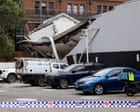
A sudden roar ripped through an inner-city Sydney suburb just before eleven in the morning. Bricks spilled onto a busy street. A roof caved in.
Two men are now fighting serious injuries after a structure on Wattle Street in Ultimo collapsed without warning. The incident sent massive piles of rubble crashing directly onto parked vehicles and a neighbouring Shell petrol station. Ambulances rushed to the scene. Emergency services treated seven people in total, rushing two patients—aged in their 30s and 60s—to hospital in critical conditions.
It’s messy. It’s terrifying. And honestly, it raises hard questions about construction safety across urban Australia.
What Actually Happened on Wattle Street
The site wasn't just any random property. It was an active construction zone, previously functioning as a warehouse and rehearsal studio approved for demolition to clear the path for a multi-storey mixed-use development.
Around 11 am on Monday, structural integrity failed catastrophically. A major wall and roof section gave way. Heavy bricks cascaded down, crushing cars stationed at the adjacent service station.
According to Fire and Rescue NSW Acting Superintendent Peter Murray, one of the injured men was getting back into his vehicle at the service station when the disaster struck, while the other was sitting inside his car.
Chaos followed immediately. Up to 35 people were forced to evacuate the immediate vicinity, while roughly 100 more people had to clear out from a nearby red-brick building behind the site. Urban search and rescue teams, alongside specialized drones, swarmed the block to scan for trapped individuals. Fortunately, no one else is currently listed as missing.
The Bigger Picture of Urban Redevelopment Risks
We see this pattern too often. Inner-city suburbs like Ultimo are undergoing rapid transformation. Old industrial buildings, warehouses, and commercial spaces are constantly being ripped down to make room for shiny new apartments and commercial hubs.
When you mix heavy demolition work right next to public thoroughfares and active petrol stations, the margin for error shrinks to zero.
Why do structures fail mid-project? Usually, it boils down to the chaotic transition phase between old and new engineering. Demolition requires immense precision. Taking down load-bearing walls or stripping roofs before proper temporary shoring is secured creates ticking time bombs.
What Authorities Are Doing Now
Police and workplace safety regulators have officially launched investigations. They're picking through the rubble on Wattle Street to determine whether safety protocols were properly enforced, or if corners were cut to speed up demolition timelines.
Surrounding roads remain locked down. Commuters and pedestrians have been urged to avoid the area completely while structural engineers evaluate neighboring properties for latent damage.
If you live or work near active construction zones in Sydney, don't assume safety is guaranteed just because a permit was approved. Pay attention to perimeter warnings, report strange shifting noises or structural cracks immediately, and give heavy machinery the wide berth it demands.