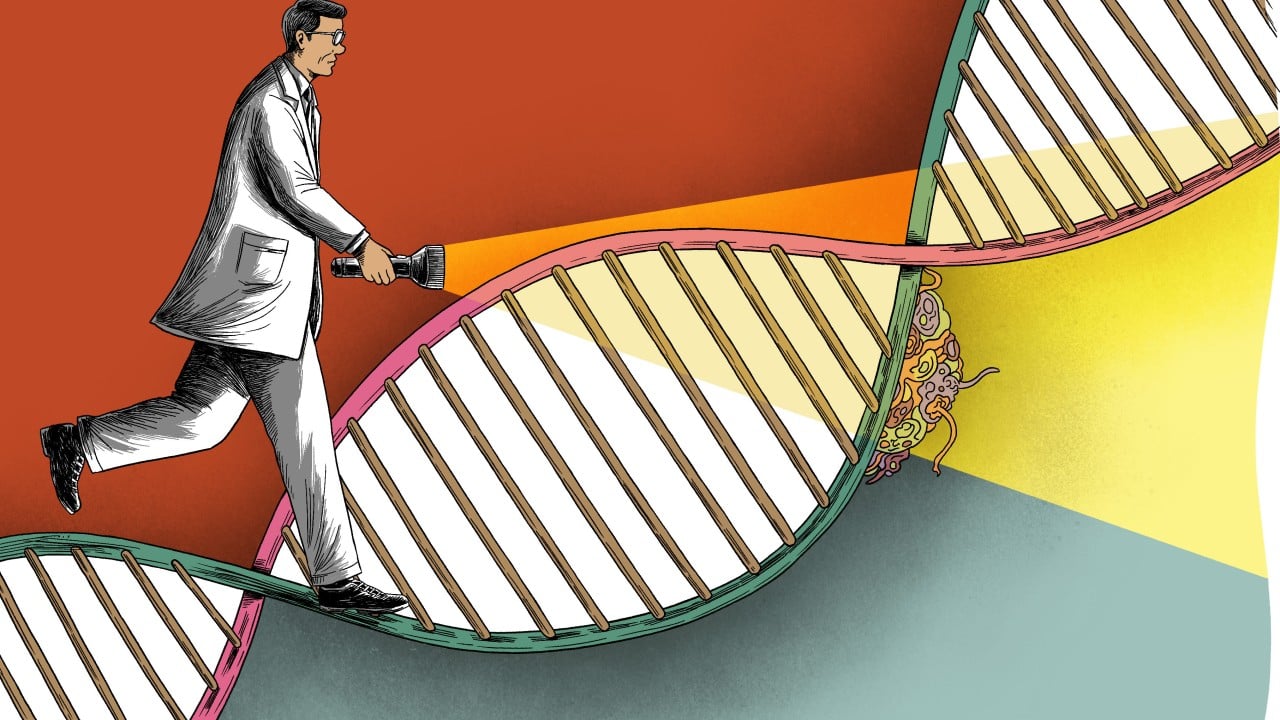
The American public has been conditioned to view the Surgeon General as a kind of national family doctor—a gentle, white-coated figure who offers platitudes about sunscreen and the dangers of vaping. Most media outlets covering Donald Trump’s nomination of Dr. Nicole Saphier are stuck in this rut. They are busy debating her Fox News appearances or her past tweets, completely missing the structural earthquake her appointment represents.
They think the role is about "public health consensus." They are wrong. If you enjoyed this piece, you might want to look at: this related article.
The Surgeon General has no legislative power. They have no budget to pass laws. The office is a bully pulpit. For decades, that pulpit has been occupied by bureaucrats who prioritize institutional preservation over individual agency. By nominating Saphier, the administration isn't just picking a physician; it is weaponizing the office to dismantle the very "consensus" that failed the country during the last decade.
The Public Health Industrial Complex is Rotting
Most legacy media coverage frames the Surgeon General’s job as "unifying the nation." This is a fundamental misunderstanding of the current state of American health. You cannot unify a nation around a public health apparatus that has lost its internal compass. For another angle on this development, see the recent coverage from Psychology Today.
I have spent years watching health policy wonks trade favors in D.C. hallways. The "consensus" they talk about is usually just a shield against accountability. When the CDC or the FDA gets something wrong—whether it's the food pyramid that fueled an obesity epidemic or the shifting goalposts of the 2020s—the Surgeon General is usually expected to go on television and polish the brass on the sinking ship.
Saphier’s nomination is a middle finger to that expectation. She represents a shift from Institutional Health to Individual Literacy.
The "lazy consensus" argues that the government must protect people from themselves. The contrarian reality? The government’s attempt to "protect" the public often involves suppressing data that doesn't fit the desired narrative. Saphier has built a career on questioning the centralized narrative, specifically regarding how we handle risk assessment. In a world where "The Science" became a rigid dogma, we need someone who understands that science is a process of constant, aggressive correction.
The Body Mass Index of Politics
Critics claim Saphier is "too political." This is a laughably naive take. Every Surgeon General is a political appointment. Vivek Murthy was political. Jerome Adams was political. C. Everett Koop was intensely political.
The difference is that Saphier’s politics lean toward personal responsibility and transparency rather than paternalistic mandates. The establishment hates this because if the public stops looking to the federal government for every "how to live" instruction, the establishment loses its relevance.
Let’s look at the data the legacy press ignores. The U.S. spends more on healthcare per capita than any other developed nation, yet our outcomes in chronic disease—diabetes, hypertension, heart disease—are abysmal. The "experts" have been in charge of the Surgeon General's office for a century. If their methods worked, we wouldn't be the sickest wealthy nation on earth.
The standard approach is to "foster" (a banned word for a reason) "awareness." We don't need awareness. Everyone knows sugar is bad. Everyone knows exercise is good. What we have is a breakdown in the trust required to communicate these truths. When a federal official tells you to do something today, half the country reflexively does the opposite because the messenger is seen as a tool of the state, not a practitioner of medicine.
The Radiologist's Lens: Seeing Through the Noise
Saphier is a board-certified radiologist. In medical circles, radiologists are often called the "doctor's doctor." They don't deal in vibes; they deal in objective imaging. They find the tumor the primary care physician missed. They see the structural fracture that others try to treat with a bandage.
This background is crucial. The Surgeon General’s office needs a diagnostician, not a cheerleader. We are currently facing a "metabolic winter" in America. Over 40% of US adults are obese. Instead of addressing the root causes—subsidized seed oils, high-fructose corn syrup, and a sedentary culture—the public health establishment has spent the last few years debating "body positivity" and "health at every size."
Saphier has been vocal about the clinical reality of obesity. It is a killer. It is a comorbid engine for almost every major cause of death. By nominating someone who refuses to sugarcoat (pun intended) the obesity crisis, the administration is signaling an end to the era of "polite" public health.
The Risk Assessment Revolution
The biggest failure of the public health elite over the last five years was the total abandonment of Risk Stratification.
They treated a 5-year-old and an 85-year-old as if they faced the identical biological threats. This wasn't just bad science; it was an ethical disaster. It eroded the credibility of the office. Saphier’s primary value proposition is her insistence on nuanced risk assessment.
Imagine a scenario where a local health department closes a park to "save lives" from a respiratory virus, while simultaneously ignoring the long-term cardiac and mental health impacts of keeping people indoors. A "consensus" Surgeon General stays silent to keep their job. A "disruptor" Surgeon General points out that the cure is more toxic than the disease.
This approach will be called "dangerous" by those who benefit from a fearful, compliant population. In reality, the most dangerous thing you can do is lie to the public about the complexity of health risks. Once you lose that trust, you can't buy it back with a fancy PR campaign or a celebrity-laden PSA.
Dismantling the "Expert" Shield
We are told to "Trust the Experts." But which ones? The ones who said masks didn't work, then said they were mandatory, then admitted they were mostly "theater" in certain settings?
The "expert" class has used the Surgeon General’s office as a shield to deflect criticism. If you disagreed with the office, you weren't just wrong; you were "anti-science." Saphier’s presence in this role effectively shatters that shield. She is an expert who disagrees with the experts. That creates a competitive marketplace of ideas—something public health has lacked for decades.
Why the "Medical Misinformation" Argument is a Trap
You will hear a lot of noise about how Saphier might spread "misinformation." Define misinformation. In 2020, suggesting a virus might have come from a lab was "misinformation." Today, it is a lead hypothesis for multiple federal agencies.
The label of "misinformation" is almost always used by the people in power to silence those who are right too early. Saphier’s willingness to operate outside the approved script isn't a bug; it's the main feature.
The role of the Surgeon General should be to provide the best available data and allow citizens—and their local doctors—to make informed decisions. It should not be the "Chief Instruction Officer" for the United States.
The Cost of the Status Quo
People will argue that her appointment is a "threat to public health." Let’s look at the status quo she’s "threatening":
- Life expectancy in the U.S. has been stagnating or falling.
- Drug overdose deaths are at record highs.
- Mental health crises among adolescents are skyrocketing.
- Chronic disease is bankrupting the Medicare system.
If this is the "safe" version of public health, we should be begging for someone "dangerous."
The establishment is terrified of Saphier because she doesn't owe them anything. She didn't rise through the ranks of the NIH or the WHO. She rose through the private sector and the media, speaking directly to the people. She understands that in 2026, the gatekeepers have no gates left to keep.
The Actionable Pivot
If Saphier takes the office, the "advice" coming from Washington will change. It will move away from "The government will provide a solution" toward "You are the primary stakeholder in your own biology."
This is a terrifying prospect for many. It’s much easier to wait for a government mandate than to take a hard look at your own lifestyle, your own metabolic health, and your own environment. But the former has failed. The latter is the only path forward.
The critics will focus on her personality. Smart people will focus on her philosophy. We are moving from an era of Compulsory Health to an era of Competitive Health.
Expect the Surgeon General's warnings to shift. Don't be surprised when the warnings start targeting the food industry, the pharmaceutical lobbyists, and the very agencies the Surgeon General is supposed to "represent."
The era of the polite, consensus-driven Surgeon General is dead. Good riddance.
Stop asking if she will follow the "rules" of public health. The rules are what got us into this mess. The only question that matters is whether she can effectively burn the old playbook fast enough to build something that actually focuses on the patient instead of the bureaucracy.
The medical establishment isn't worried that Nicole Saphier will be wrong. They are terrified that she will be right, and in doing so, prove how unnecessary their "consensus" has been all along.