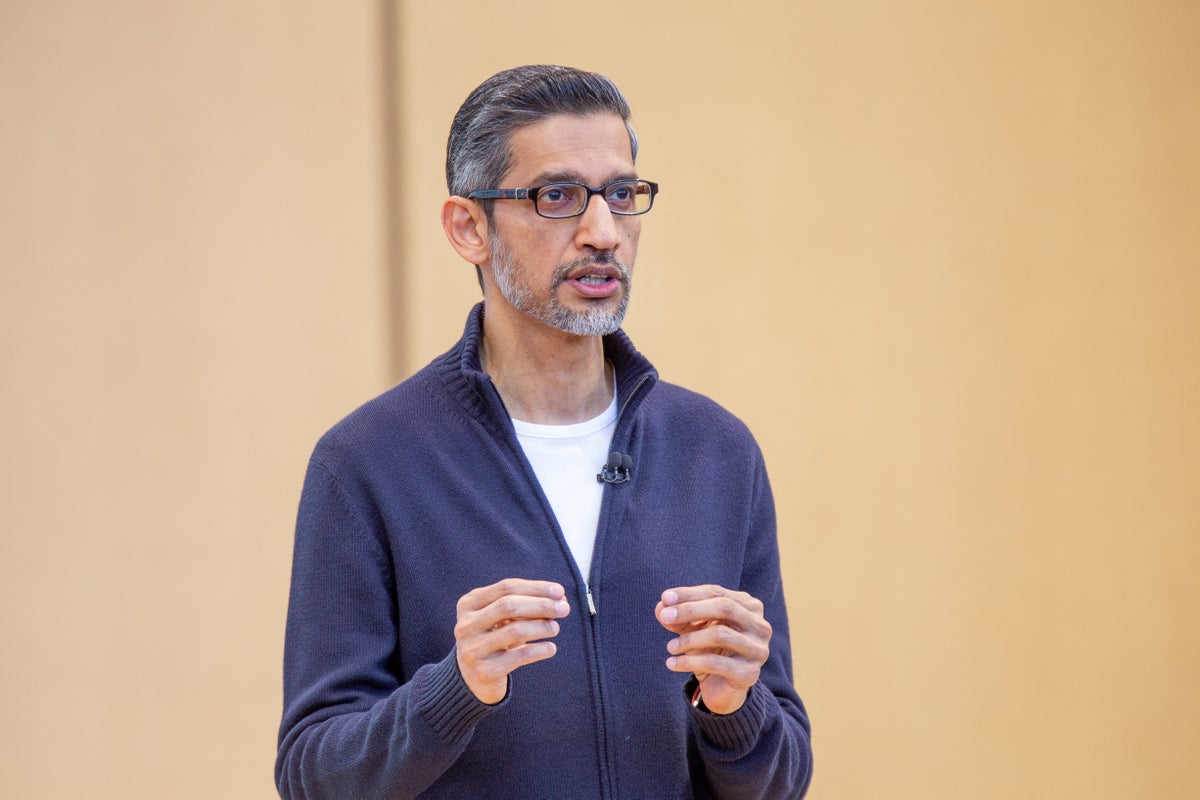
You can't script the contrast that went down at Stanford Stadium. One minute, graduates are parading around in inflatable horses and cardboard mock-ups of Caltrain trains for the university's traditional "Wacky Walk." The next, the mood turns icy cold as Google and Alphabet CEO Sundar Pichai steps up to the podium.
Instead of a polite round of applause from the next generation of Silicon Valley elites, Pichai was greeted by a wall of boos, whistling, and a coordinated mass exodus.
Around 200 graduating seniors stood up, turned their backs, and marched right out of their own graduation ceremony. They waved Palestinian flags, donned keffiyehs over their black gowns, and chanted "Free, free Palestine" as they exited into the California sun.
This wasn't a random glitch in the graduation matrix. It was a highly organized, deliberate ambush of one of tech’s most powerful figures at his own alma mater. And if you think this is just another standard campus protest, you’re missing the bigger story.
The Real Target is a Cloud Contract Named Project Nimbus
The students didn't walk out because they were bored by corporate platitudes. They walked out because of Project Nimbus.
If you aren't familiar with the name, you should be. Project Nimbus is a $1.2 billion cloud-computing and artificial intelligence contract signed in 2021. It isn't just a Google thing; Amazon is locked into the deal too. The customer? The Israeli government and its military infrastructure.
Organized by groups like Stanford Students for Justice in Palestine and the No Tech for Apartheid campaign, the walkout directly targeted Google's corporate choices. Activists argue that the cloud infrastructure supplied by Google provides powerful surveillance and data processing capabilities used by the Israeli Defense Ministry during the ongoing war in Gaza.
"We don't need another tech billionaire to tell us how to get rich off of the killing and surveillance of Palestinians," Stanford’s SJP chapter stated bluntly.
This highlights a massive friction point inside tech culture right now. For decades, tech companies pitched themselves as idealistic engines of human progress. Now, the people graduating into the workforce view them as defense contractors.
Skipping the AI Playbook to Save Face
What makes Pichai’s speech fascinating isn't just what he said, but what he went out of his way to avoid.
This graduation season, tech executives have been getting eaten alive on stage. Talking to debt-ridden graduates about how generative AI is going to rewrite the job market has proven to be a fast track to getting booed off the stage. Pichai clearly got the memo.
He actually joked about the pressure to dodge the topic, hinting that the elephant in the room sat in the last two letters of his last name. He told the crowd that the best advice he received was to keep things "technology agnostic."
So, he pivoted. He stuck to a totally safe, hyper-sanitized script focusing on his personal journey since earning his Stanford master's degree back in 1995. He left out the tech talk entirely and offered three basic filters for life:
- Choosing optimism
- Saying yes to hard things
- Doing what excites you when all else is equal
It was the ultimate corporate defensive maneuver. Pichai looked straight past the marching students, trying to project total calm. "What I see in front of me is how graduation should be," he said right at the start, attempting to drown out the chants with a wholesome nod to families in the bleachers.
But you can’t look tech-agnostic when your company’s logos are tied to global geopolitical flashpoints.
The Tech Elite Splinter Over Campus Activism
The reaction to the walkout shows a massive generational and cultural divide. While the departing students set up a counter-event called the "People's Commencement" under nearby oak trees, tech insiders quickly lost their minds online.
Venture capitalist Vinod Khosla didn't hold back on X, calling the protesting Stanford students "idiotic," "short-sighted," and "very selfish." His argument? The students were so wrapped up in their own political stances that they ignored how Google's technological advancements could benefit the poorest billions of people on earth.
That’s the classic Silicon Valley worldview: tech fixes everything, so don't get in the way of the machine.
But today's top-tier engineering and computer science students aren't buying the old "Don't Be Evil" marketing copy anymore. They understand that code isn't neutral. The infrastructure built by modern tech companies dictates how wars are fought, how citizens are tracked, and who holds power.
What Happens When the Talent Pools Dry Up
If you run a tech team or track industry trends, this walkout matters because it signals a breaking point in tech recruitment. Companies like Google depend entirely on a steady pipeline of genius-level minds from schools like Stanford, MIT, and UC Berkeley.
When a visible chunk of that tier actively despises your corporate contracts, you have a long-term talent problem.
We're already seeing the fallout. Internal leaks, employee sit-ins, and high-profile firings over Project Nimbus have shaken Google's internal culture over the past few years. When the protest moves from the office cubicle straight to the commencement stage, it means the next generation of workers is entering the industry with their guards up.
Pichai might have walked away from the stadium without answering questions from reporters, but the issue isn't going anywhere. Tech leaders can't hide behind standard corporate optimism anymore. If you're going to bid on massive government defense contracts, you have to expect that the very engineers you need to build your tech might just turn around and walk away.