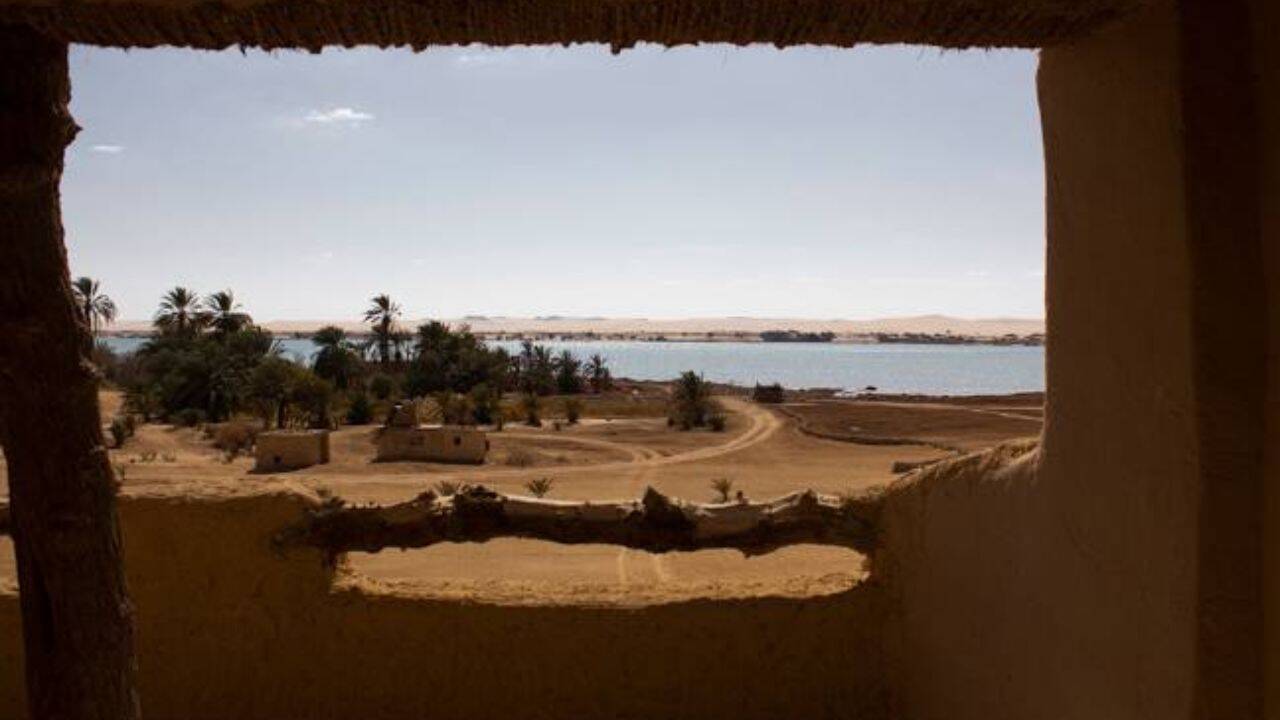
Frank Shuman stood in the blistering sands of Maadi, just south of Cairo, wiping sweat from his forehead while staring at a row of massive silver troughs. The year was 1913. While Europe scrambled to secure oil fields and extract coal from dark, subterranean tunnels, the American engineer was looking up at the brutal, unyielding Egyptian sun. He did not see a desert to be feared. He saw power.
Shuman had spent years perfecting a radical idea: using curved mirrors to concentrate heat onto glass tubes filled with water, boiling it into steam to drive a low-pressure engine. His installation in Maadi was the world’s first solar thermal power plant. It pumped over 6,000 gallons of Nile water per minute directly into surrounding cotton fields, proving that the sun alone could turn barren dirt into life. Building on this topic, you can find more in: Why dismantling the UK science department slows down everything that matters.
Shuman was convinced he had unlocked humanity's endless engine. He calculated that covering just 20,700 square miles of the Sahara could power the entire globe forever.
Then came the summer of 1914. Analysts at The Next Web have shared their thoughts on this situation.
Archduke Franz Ferdinand was assassinated in Sarajevo. World War I erupted across Europe. Shuman’s dream collapsed almost overnight. Coal was cheap, portable, and easily weaponized for steamships and military engines. The Maadi plant was abandoned, left to rust into dust beneath the desert winds, while its creator died in Philadelphia before the war even ended.
For more than a century, Shuman's grand plan lay buried under the sand.
The Mirage of the North African Battery
Fast forward past a hundred years of oil booms, carbon crises, and shifting geopolitics. In the early 2000s, European planners and green tech visionaries stumbled back onto Shuman’s math. The logic seemed absurdly simple: the North African desert receives more clean energy in a few hours than humanity consumes in an entire year.
Out of this realization came Desertec, a multi-billion-dollar vision to cover massive stretches of the Sahara with high-tech solar collectors and wind turbines. The goal was breathtaking in scale. High-voltage direct current cables would run underneath the Mediterranean Sea, carrying clean electricity straight into the grid of mainland Europe. It was supposed to solve Europe’s impending energy needs while delivering economic growth to North Africa.
It sounded brilliant on paper. It looked unstoppable in slide decks.
Yet, once again, the grand plan sputtered and dissolved into the desert heat.
Why did a concept that makes total scientific sense keep falling apart? Because energy projects are never just about physics. They are about people, power, and political realities.
When Equations Meet Reality
Consider what happens when a massive global consortium attempts to build a giant power grid in someone else's backyard.
To the engineers in Europe, the Sahara looked like empty space waiting to be used. But no desert is truly empty. The land belongs to nations with complex histories, fragile ecosystems, and local populations who need power just as desperately as anyone in Berlin or Paris.
The early blueprints focused heavily on export. North Africa would host the sprawling infrastructure, handle the maintenance, and endure the land use, while the electricity flowed north. Local communities quickly began asking hard questions. Why should African land be cleared to keep streetlights glowing across Europe when millions living nearby still faced blackouts?
The financial mechanics were equally treacherous. Building thousands of miles of transmission cables across international borders requires absolute political stability. When regional conflicts flared and diplomatic tensions shifted, investors pulled back. The enormous upfront costs became impossible to justify. The math made sense in a vacuum, but the real world is never a vacuum.
The Quiet Pivot
The idea of a single, monolithic solar giant supplying an entire continent is dead. But the underlying truth Frank Shuman discovered in 1913 hasn't changed. The sun is still burning down on the desert every single day.
Instead of grand cross-continental schemes, a quieter revolution is happening on the ground. North African nations are building renewable infrastructure for themselves first. Massive installations like Morocco's Noor Ouarzazate Solar Complex show what happens when solar power is built to serve local grids, power local industries, and create regional security.
Shuman’s century-old dream was not wrong; it was simply ahead of its time and misplaced in its execution. True power does not come from imposing a giant grid on a map. It comes from building self-reliance, piece by piece, right where the sun hits the sand.
As dusk falls over the ruins of Maadi, the metal frame of Shuman’s original engine is long gone, swallowed by time. But the desert heat remains, waiting quietly for a world finally ready to use it properly.