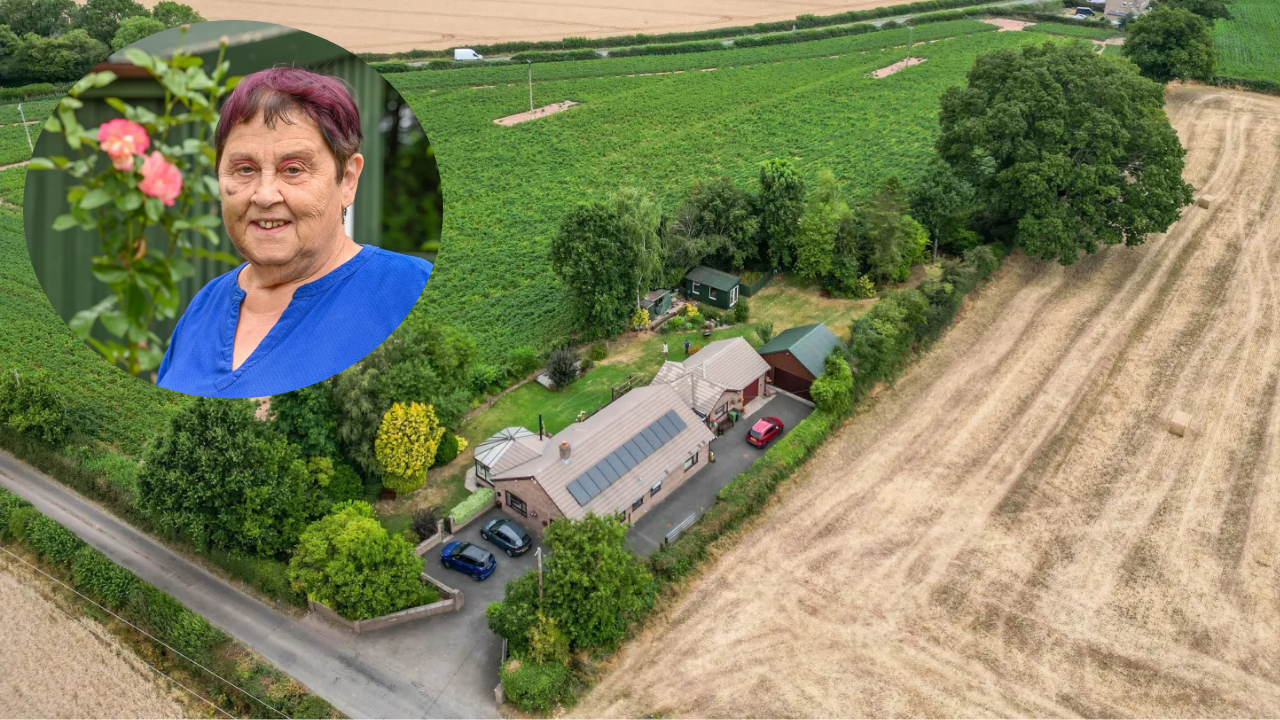
Every viral headline loves a folk hero. The internet wept tears of joy over the seventy-nine-year-old British grandmother who stared down developers and refused to cash out a sixty-million-dollar payout for her plot of land, blocking a crucial infrastructure expansion. The narrative writes itself. David versus Goliath. Community spirit triumphing over cold, heartless corporate greed. The plucky pensioner sitting amidst her petunias while bulldozers idle in defeat.
It makes for a fantastic fairy tale. It is also an economic disaster.
I have spent two decades sitting across the table from municipal planners, civil engineers, and infrastructure financiers. I have watched cities choke on their own congestion because a single property owner decided their nostalgia mattered more than the logistical efficiency of four million commuters. We romanticize stubbornness when it costs us nothing, but we pay for it every single day in wasted hours, inflated supply chain costs, and infrastructural decay.
Let us strip away the sentimentality and look at what actually happened on that patch of dirt.
The Fallacy of Intrinsic Property Value
The lazy consensus in every mainstream report is that property rights are absolute and moral, while development is transactional and predatory. This is a profound misunderstanding of how urban economics works. Land is not just a sentimental keepsake; it is a finite utility node within a larger network.
When a sixty-million-dollar highway or transit corridor bypasses a bottleneck, the economic velocity generated by that project benefits an entire region. Hundreds of thousands of people save time. Commerce flows faster. Productivity rises. Property values across entire adjacent zip codes adjust to reflect better connectivity.
When one person holds out, the alignment breaks. The project must either curve awkwardly around the obstacle—creating an unsafe design that increases accident rates and slows traffic forever—or it stalls indefinitely while legal fees mount.
We treat the holdout as a defender of culture. Economically, they are a toll collector extracting private rent from public progress.
"Property rights exist to encourage productive use, not to grant citizens absolute veto power over collective prosperity."
If you buy a house in the direct path of a designated arterial expansion—often known for decades prior through zoning maps—you are not a victim of circumstance. You are an opportunistic roadblock.
The Hidden Tax on Every Commuter
Let us talk about the math that the feel-good journalists conveniently leave out.
Every month a major transit or road project is delayed by litigation or stubborn resistance, the carrying costs explode. Inflation hits materials. Contractors demand hazard pay for idle equipment. Municipal bonds accrue interest. That sixty-million-dollar valuation for a single plot of land? That money does not materialize out of thin air. It comes from public coffers, taxes, or toll revenues paid by ordinary workers who have zero say in the standoff.
Imagine a scenario where a highway project is delayed by two years because of one holdout. During those twenty-four months, fifty thousand vehicles idle in gridlock twice a day at that specific bottleneck. Calculate the wasted fuel. Calculate the man-hours lost. Calculate the elevated carbon emissions from stop-and-go traffic that could have been cruising at sixty miles per hour.
The environmental cost of preserving one backyard garden through legal paralysis often outweighs the carbon footprint of the actual construction twenty times over. Yet the green movement celebrates the standstill because it looks organic. It is not organic; it is an administrative malignancy.
Eminent Domain and the Social Contract
People recoil at the mention of eminent domain. The phrase evokes tyrannical governments seizing humble homes for corporate parking lots. That abuse has certainly happened, and the history of mid-century urban renewal is littered with racial and economic displacement that left deep scars.
However, we have overcorrected. We have swung the pendulum so far toward individual veto power that a functioning state can barely build a sidewalk without inviting a multi-year lawsuit.
Eminent domain is the price we pay for living in a high-density, interconnected civilization. If you want the benefits of clean water piped to your tap, electricity grids that span continents, emergency services that reach your door in minutes, and high-speed transit that links you to global markets, you must accept that individual land use is subordinate to collective necessity.
The social contract relies on a basic trade-off. The government protects your property from casual theft, but in exchange, you agree not to hold the entire community hostage when public utility demands expansion.
When we let seventy-nine-year-old pensioners weaponize sentimentality to block vital infrastructure, we are signaling that the whims of an individual outweigh the survival of a metropolis.
Why Urban Planners Keep Losing Their Nerve
The real failure here does not lie with the homeowner. She is acting entirely rationally in her own self-interest, trying to maximize leverage or protect her daily routine. The failure lies with the leadership class.
Modern politicians and planners are terrified of bad press. They look at social media outrage cycles and crumble. They would rather let a regional transit network fail than endure two weeks of hostile headlines featuring a weeping grandmother clutching a watering can.
This cowardice has a price tag. Look at the state of infrastructure across the Western world. Bridges crumbling, rail lines fifty years out of date, airports bottlenecked, and transit expansions bogged down in endless environmental reviews and land disputes. We cannot build anything anymore. We cannot build because we have prioritized the emotional comfort of the few over the functional survival of the many.
If a project is essential, it must be executed with dispatch. Fair compensation must be paid—generously, even—to ensure the displaced party is made whole. But once that compensation is placed on the table, the veto must expire.
The Uncomfortable Truth About Progress
Progress is disruptive. It is noisy, it changes neighborhoods, and it requires sacrifice. You cannot have a modern economy built on high-density efficiency if every individual plot of land functions as an inviolable fiefdom.
We need to stop praising obstructionism just because the obstructionist is elderly and photogenic. That garden was not a sanctuary of biodiversity; it was a speed bump on the road to modern civilization.
Next time you sit in standstill traffic watching your fuel gauge drop, remember the viral headline you liked on your phone last week. That grandmother's petunias are costing you an hour of your life every single day.