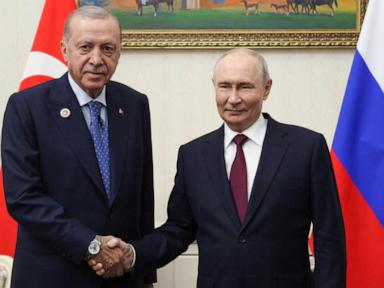
Foreign policy assertions made by heads of state are frequently interpreted through binary lenses: alignment or defection, integration or isolation. When Ankara articulates a multi-vector diplomatic strategy—simultaneously maintaining North Atlantic Treaty Organization commitments while engaging deeply with BRICS economic frameworks and Eurasian security architectures—observers typically default to narrative analysis rather than structural assessment. This friction points to a fundamental misreading of modern geopolitical positioning. Turkey is not executing a erratic pivot away from Western institutions; it is operating within a calculated transactional matrix designed to maximize state autonomy under conditions of structural constraint.
To evaluate this orientation without resorting to diplomatic rhetoric, we must examine the mechanics of multi-aligned foreign policy through three distinct operational vectors: security interdependence, economic exposure, and regional proxy management. Each vector imposes severe structural limits on any attempt at a clean geopolitical break, while simultaneously creating incentives for tactical diversification. Also making waves recently: Stop Hoarding Trump Dollar Coins Your Pocket Change is Not an Investment.
The Security Architecture and Institutional Lock-In
The primary structural anchor binding Ankara to Western security frameworks is not political affection or shared values, but the sunk costs and operational dependencies of the North Atlantic Treaty Organization. Turkish military logistics, early warning radar systems, intelligence-sharing protocols, and defense procurement pipelines have been tightly integrated with Western systems for over seventy years.
Attempting a systemic decoupling from this apparatus would incur catastrophic transaction costs. The Turkish Air Force relies heavily on maintenance chains, training regimens, and interoperability standards tethered to Western defense contractors. Even during periods of acute diplomatic strain—such as the acquisition of Russian S-400 surface-to-air missile batteries, which triggered the country's removal from the F-35 joint strike fighter program—Ankara did not exit the alliance. Instead, it absorbed the penalty while seeking alternative domestic defense development pathways and secondary procurement options. Further insights regarding the matter are detailed by NPR.
This dynamic illustrates a core principle of institutional lock-in: membership in a dominant security architecture provides a floor for state survival that alternative partnerships cannot replicate. Moscow and Beijing can offer capital, energy supplies, and diplomatic cover at the United Nations, but they cannot substitute for the collective defense guarantee of Article 5 or the intelligence infrastructure of the North Atlantic alliance.
Simultaneously, participation in Western security structures does not preclude transactional cooperation with systemic rivals. Ankara leverages its geographic position at the intersection of the Black Sea, the Caucasus, and the Middle East to extract tactical concessions from both sides. The Montreux Convention Regarding the Regime of the Straits grants Turkey absolute legal control over naval traffic between the Mediterranean and the Black Sea. By strictly enforcing this treaty during the Russo-Ukrainian conflict, Ankara fulfills its obligations as a littoral state while demonstrating indispensable utility to its Western allies, even as it maintains robust trade volumes with Moscow.
Economic Exposure and the Energy Transit Imperative
Foreign policy rhetoric is ultimately constrained by macroeconomic reality. Turkey runs a chronic current account deficit and relies heavily on external financing to maintain currency stability and domestic growth. This economic vulnerability dictates a pragmatic commercial policy that completely decouples trade relationships from ideological alignment.
Energy dependencies create immediate operational imperatives. Turkey imports the vast majority of its natural gas and oil consumption, with Russia remaining a primary supplier alongside Azerbaijan and Iran. Projects like the TurkStream pipeline anchor Ankara into a bilateral energy relationship with Moscow that cannot be easily unwound without inducing severe domestic supply shocks and industrial contraction.
Conversely, Western markets remain the primary destination for Turkish manufacturing exports, particularly in automotive components, textiles, and consumer goods. The European Union is by far Turkey’s largest trading partner and source of foreign direct investment. A structural pivot toward Eurasian integration models like the Shanghai Cooperation Organisation or BRICS would offer negligible offsets for the loss of preferential market access provided by the EU-Turkey Customs Union.
This creates a structural tension between political posturing and economic gravity. When leadership figures emphasize alternative geopolitical horizons, they are often signaling dissatisfaction with Western economic leverage or attempting to extract diplomatic concessions during debt refinancing cycles. The underlying balance sheet, however, reveals an unavoidable reliance on Western capital markets and consumer bases.
The Regional Proxy Matrix and Transactional Bargaining
Without a secure anchor in either bloc, middle powers like Turkey operate within a transactional matrix where alliances are fluid, tactical, and issue-specific. Ankara manages its security environment through direct military interventions, drone warfare deployment, and proxy management across Syria, Libya, Iraq, and the South Caucasus.
In these theaters, Turkish policy frequently collides directly with Russian and Iranian interests, while simultaneously generating friction with Western capitals. In Syria, Ankara coordinates with Moscow through the Astana format to manage border security and refugee flows, while simultaneously supporting opposition forces that oppose the Russian-backed regime in Damascus. In the South Caucasus, Turkish military backing for Azerbaijan decisively altered the regional balance of power against Armenian forces, challenging traditional Russian hegemony in its near abroad.
These interventions are executed precisely because the international system has transitioned from a unipolar hegemony to a fragmented multipolar order. In a unipolar environment, middle powers are disciplined by a single dominant enforcer. In a multipolar fragmentation, the cost of unilateral action decreases because targeted states can play competing major powers against one another.
When Washington criticizes Turkish actions in northern Syria or regards its diplomatic overtures toward Beijing with suspicion, Ankara counters by highlighting its utility as a containment wall for migration toward Europe and an indispensable maritime choke point. This diplomacy is transactional by design. It treats bilateral relationships not as permanent moral commitments, but as variable inputs in a continuous optimization problem focused on regime preservation and regional influence.
The Limits of Strategic Hedging
Hedging strategies carry an inherent risk of overextension. By attempting to extract concessions from multiple competing power centers, a state risks alienating all of them simultaneously, reducing its long-term strategic flexibility.
Western capitals view Ankara's acquisition of non-interoperable military hardware, its maintenance of open banking channels for sanctioned Russian capital, and its diplomatic hedging as evidence of unreliability. Meanwhile, Moscow and Beijing view Turkey through the lens of calculated opportunism, understanding that Ankara remains structurally bound to the Western security and financial grid.
This leaves Turkish foreign policy caught within a narrow corridor of maneuver. The strategy succeeds only as long as systemic competition between the United States, China, and Russia remains constrained beneath the threshold of direct global conflict. Should geopolitical fault lines harden into absolute blocs—reminiscent of Cold War bipolarity—the cost of economic and security non-alignment will rise exponentially. Under such conditions, a middle power cannot indefinitely ride multiple currents without crashing into the banks.
To sustain this diplomatic posture, future policy adjustments must prioritize the modernization of domestic industrial capacity to reduce reliance on external defense supply chains, while simultaneously ring-fencing the central banking infrastructure from secondary sanctions risks. The continuation of multi-vector maneuvering depends entirely on maintaining enough economic sovereignty at home to absorb the friction generated abroad.