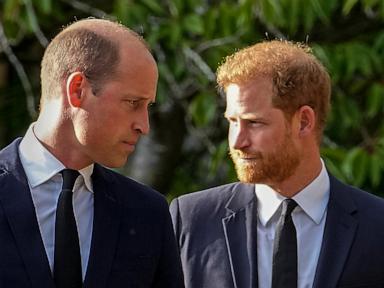
Public interest in the interpersonal mechanics between Prince Harry and Prince William often defaults to tabloid sentimentality, reducing structural institutional friction to a personal dispute. To understand the viability of any future reconciliation, one must shift from psychological speculation to an institutional and game-theoretic framework. The relationship between the two brothers is governed not merely by familial sentiment, but by asymmetric incentives, role-based constraints, and institutional risk management within the House of Windsor.
When analyzing high-visibility public figures embedded in state apparatuses, personal grievances cannot be separated from brand protection, constitutional optics, and operational security. This analysis models the variables dictating whether a structural realignment is mathematically or operationally possible between the Duke of Sussex and the Prince of Wales. For another perspective, read: this related article.
The Asymmetric Incentive Matrix
The divergence between Prince Harry and Prince William is rooted in an asymmetrical incentive structure. In institutional economics, agents within a hierarchical system act according to the constraints and rewards dictated by their positioning relative to the core asset. For the Prince of Wales, the core asset is the continuity and stability of the monarchy as a constitutional entity. Every public action, private communication, and association must be filtered through risk mitigation protocols designed to protect the institution's license to operate.
Prince Harry operates outside this institutional boundary. By transitioning to an independent commercial and philanthropic model, his incentives shifted toward personal autonomy, media monetization, and global brand building. These two paradigms are fundamentally incompatible under current operating conditions. Similar analysis on this trend has been provided by Wall Street Journal.
- Institutional Preservation: William's utility function maximizes risk reduction and long-term institutional survival.
- Commercial Autonomy: Harry's utility function maximizes narrative control, commercial independence, and public validation.
- Information Asymmetry: Trust requires predictable information flows. When private communications are converted into public commodities via memoirs or interviews, the feedback loop collapses.
The divergence is not merely ideological; it is operational. An individual operating within a state-adjacent institution cannot maintain high-trust dialogue with an individual whose commercial viability relies, in part, on public disclosures regarding that very institution. Until these incentive structures align or stabilize, any rapprochement remains high-risk and low-yield for the institution.
The Cost Function of Public Dispute
Every public disclosure carries a quantifiable cost to brand equity. In public relations and strategic communications, friction between key principals creates market uncertainty. For the British monarchy, market uncertainty translates to a decline in public approval ratings among key demographic cohorts, particularly younger populations whose support is vital for long-term institutional survival.
The cost function can be broken down into three distinct variables:
- Reputational Volatility: Uncontrolled narratives force reactive communications from institutional handlers, draining operational bandwidth.
- Constitutional Distraction: Media focus on interpersonal conflict eclipses legislative or charitable outputs, reducing the perceived utility of the monarchy to the tax-paying public.
- Access Depreciation: The total withdrawal of trust eliminates the possibility of informal mediation, forcing all communication through legal or formal channels.
When the cost of conflict exceeds the cost of engagement, rational actors typically seek a negotiated settlement. However, when the principals occupy different jurisdictions and answer to entirely different stakeholder groups—taxpayers and constitutional subjects versus global media consumers and commercial partners—the threshold for reconciliation shifts upward. The friction is sustained because the short-term incentives to maintain distance outweigh the long-term benefits of structural repair.
Trust Reconstruction and the Information Security Protocol
In high-stakes dispute resolution, trust is treated as a depreciating asset that must be actively recapitalized through verifiable actions. In the context of royal reconciliation, the primary barrier is not emotional fatigue, but information security.
Modern institutions rely on strict compartmentalization. Within the core of the royal household, discretion is enforced through cultural norms, professional proximity, and legal frameworks. The entry of commercial media ventures into the private lives of family members introduced a structural vulnerability. For Prince William to engage in substantive dialogue, he would require absolute assurance regarding privacy boundaries—a guarantee that is difficult to structure when media output forms a core component of the opposing party's professional ecosystem.
True reconciliation requires a multi-stage protocol:
- Operational Moratorium: A complete cessation of public commentary, media serialization, and indirect signaling regarding historical grievances.
- Third-Party Mediation: Engaging neutral, non-partisan arbiters capable of establishing enforceable communication ground rules.
- Incremental Engagement: Moving from low-stakes, highly structured public appearances to private, unrecorded dialogues only after baseline trust metrics are met.
Without a verifiable commitment to an information security protocol, any attempt at personal reconnection risks immediate public exposure, resetting the trust deficit to zero.
The Constitutional Variable
Beyond personal dynamics lies the constitutional reality of the succession. Prince William is the direct heir to the throne, tasked with steering an ancient institution through an era of declining deference and shifting societal values. Prince Harry occupies a peripheral position in the line of succession, further distanced by the births of William's children.
This structural reality dictates that the institution's resources, protection mechanisms, and public positioning will invariably prioritize the direct line of succession. Any expectation of operational parity or shared institutional footprint is mathematically unfeasible. The monarchy is not structured to accommodate dual power centers or competing narratives at its apex.
Consequently, any future relationship between the brothers must exist outside the formal machinery of the state. It cannot be mediated by royal households, nor can it rely on shared patronages or joint official duties. It must be strictly private, bounded by the realistic acceptance of their divergent life paths and constitutional obligations.
Strategic Outlook
The trajectory of the relationship between Prince Harry and Prince William depends entirely on a mutual acknowledgment of structural limits rather than an emotional desire for return to baseline. If both parties accept that their institutional roles are permanently severed, the pressure for forced reconciliation dissolves. Realignment, if it occurs at all, will manifest not as a public reconciliation or a return to shared royal duties, but as a quiet, low-friction modus vivendi characterized by minimal public exposure and strict adherence to professional boundaries. The variable determining success is the abandonment of unrealistic public expectations in favor of private, functional containment.

.webp)