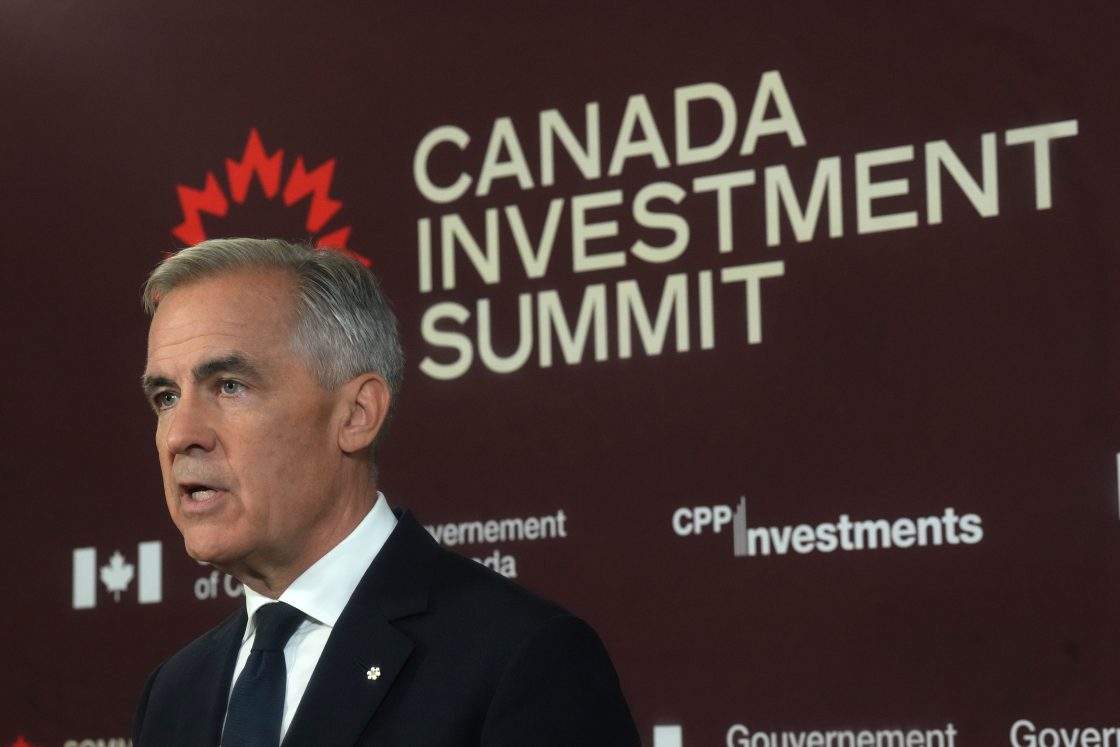
Large-scale infrastructure financing requires institutional capital pools capable of absorbing multi-billion-dollar allocations without breaking internal risk parameters. The launch of the fifty billion dollar Maple Fund, structured jointly by Canada Pension Plan Investment Board and Brookfield Asset Management, addresses an acute structural friction within domestic capital markets: the chronic shortage of institutional vehicles sized to handle mega-scale assets within the country. By committing equal tranches of up to twenty-five billion dollars in equity each, both institutions are establishing a permanent capitalization framework designed to bypass traditional syndication bottlenecks.
Understanding the economic rationale of this vehicle requires dissecting the capital constraints facing modern pensions and alternative asset managers. Mega-pension funds operate under high asset accumulation rates. As asset bases scale past eight hundred billion dollars, the deployment velocity required to maintain target equity and infrastructure weightings demands ticket sizes that ordinary project finance markets cannot absorb. Writing checks of one billion dollars or more into single-asset deals creates severe concentration risk unless pooled within joint-venture platforms equipped with operational oversight.
The Dual-Driver Mandate
The investment thesis rests on two operational pillars: scale matching and asset-class convergence. Traditional infrastructure funds rely on sequential fundraising rounds, forcing general partners to cycle through five-to-seven-year deployment windows. This cadence creates a structural mismatch when managing assets with multi-decade operational horizons, such as power grids, transmission corridors, and next-generation digital infrastructure.
The Maple Fund eliminates fundraising friction by pre-funding a massive pool of capital on a fifty-fifty co-investment basis. This structure alters the bargaining power of the partnership during asset sourcing. When capital is committed and readily accessible at scale, the vehicle can engage in proprietary bilateral negotiations rather than competing in highly compressed public auctions.
[Institutional Capital Base]
       │
       ├─► CPP Investments (C$25B Equity Capacity) ──┐
       │                                             ├──► [The Maple Fund (C$50B Total)] ──► [Mega-Scale Canadian Infrastructure & Assets]
       └─► Brookfield Asset Management (C$25B) ──────┘
Risk Mitigation via Operational Integration
Deploying fifty billion dollars requires more than financial engineering; it necessitates direct operational control to protect downside risk. Financial investors often suffer from margin erosion during economic downturns because they outsource asset management to third-party operators. The Brookfield-CPP alliance bypasses this agency problem by combining balance-sheet scale with vertically integrated asset management.
Operating essential services requires managing three distinct cost drivers:
- Input Volatility: Securing long-term supply chains for raw materials and technological components.
- Regulatory Exposure: Navigating multi-jurisdictional compliance frameworks across provincial and federal lines.
- Capital Expenditure Overruns: Managing massive construction phases for complex projects like data center clusters and energy grids without triggering liquidity squeezes.
By utilizing Brookfield's historical operating framework alongside CPP Investments' total portfolio approach, the fund aligns long-horizon liability matching with active operational value creation. Debt financing within such large vehicles is typically structured with staggered maturities and predominantly fixed-rate obligations to insulate cash flows from interest rate volatility.
Capital Deployment Priorities
The velocity at which capital is absorbed depends on targeting sectors characterized by high barriers to entry and secular demand growth. Standard commercial real estate and mature toll roads no longer offer the risk-adjusted yield required to move the needle for funds of this magnitude. Instead, the deployment focus concentrates on core-plus and value-add assets undergoing structural transformation.
Digital infrastructure represents an immediate absorption channel. The rapid expansion of artificial intelligence compute requirements, massive data center campuses, and high-voltage electrical grid interconnects demand capital expenditures that dwarf historical baselines. Traditional regional utilities lack the balance-sheet capacity to fund these grid modernizations independently, creating an opening for private-public institutional partnerships.
Another primary vector involves industrial consolidation and supply chain re-shoring. As global trade routes experience structural realignment, domestic manufacturing, logistics networks, and bulk transport nodes require massive capital injections to modernize throughput efficiency.
Strategic Execution Framework
The success of the vehicle will not be measured by the speed of initial deployment, but by the long-term cash flow resilience of the underlying portfolio. To maintain discipline across economic cycles, the partnership must enforce strict hurdle rates that account for macroeconomic shifts in inflation and cost-of-capital baselines.
Future capital allocations should prioritize brownfield expansions of existing critical networks over unproven greenfield developments to minimize execution risk. Institutional partners must continuously evaluate currency exposure, regulatory headwinds, and public-private interface friction to ensure that multi-decade cash flows remain insulated from political and macroeconomic volatility.