Low-cost carrier business models rely on high-frequency asset utilization, low unit operating costs, and aggressive capacity expansion. When exogenous macroeconomic pressures—such as sudden jet fuel volatility and adverse foreign exchange movements—intersect with legacy liabilities, the operational margin for error shrinks rapidly. Recent public friction involving AirAsia, regulatory contingency planning, and executive rebuttals highlights a fundamental tension in aviation economics: the friction between long-term structural restructuring and immediate liquidity assessment. Evaluating this situation requires stripping away executive rhetoric to examine the actual balance sheet mechanics, capital expenditure commitments, and cash-flow vulnerabilities that dictate carrier solvency.
The Liability Structure: Immediate Obligations Versus Long-Term Commitments
A primary point of confusion in evaluating airline distress lies in the distinction between current liabilities and long-term lease obligations. Balance sheet analysis of major low-cost carriers frequently reveals massive liability figures—often running into tens of billions of local currency units—that combine short-term trade payables, short-term debt, and multi-year aircraft lease commitments.
Understanding the risk profile requires decomposing these totals:
- Current liabilities represent obligations due within twelve months, including vendor payments, short-term borrowings, and operational outlays. When these short-term liabilities significantly outstrip cash and cash equivalents, the organization faces a working capital deficit.
- Capital lease commitments and operating lease liabilities represent multi-year contractual agreements, often spanning twelve to eighteen years, payable in monthly increments. While legally binding, these do not represent immediate liquidity drains unless lessors demand repossession or Letter of Credit (LC) calls due to breached financial covenants.
The systemic danger emerges not from the total absolute volume of long-term leases, but from the ratio of operating cash flow to short-term debt service requirements. If cash generation falters due to yield compression or demand shocks, even well-structured long-term commitments become immediate default catalysts.
The Cost Function of Fuel Volatility and Currency Mismatch
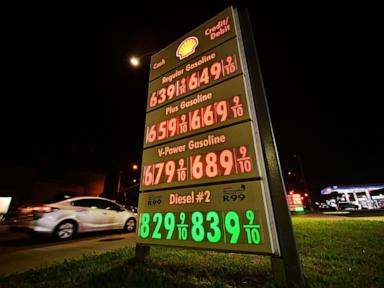
Airline profitability is notoriously sensitive to two unhedged variables: aviation turbine fuel prices and foreign exchange fluctuations. Fuel typically constitutes between thirty and forty percent of an airline's total operating expenses. When jet fuel spikes over short intervals—compounded by a weakening domestic currency against the US Dollar, in which aircraft financing, maintenance reserves, and fuel are globally denominated—the standard unit cost metric (Cost per Available Seat Kilometer, or CASK) destabilizes.
Low-cost carriers combat this by attempting to pass cost increases directly to the consumer via dynamic pricing and fare adjustments. However, demand elasticity places a ceiling on how much of a fuel shock can be transferred without triggering volume declines. If ticket prices rise to preserve operating margins, load factors frequently drop, destroying the volume-dependent economics of the low-cost model. Consequently, carriers absorb the margin compression, forcing reliance on cash reserves or external credit facilities to fund daily operations.
Refinancing Mechanics as a Capital Optimization Strategy
When legacy debt instruments carry high interest rates—such as emergency borrowings secured during pandemic-era downturns with double-digit coupons—management teams typically pursue debt restructuring and refinancing. Refinancing is fundamentally an exercise in reducing annual debt-service cash outflows rather than injecting fresh operational capital.
Executing a multi-million or billion-dollar refinancing package involves distinct operational hurdles:
- Replacing expensive debt with lower-cost financing requires securing binding term sheets from institutional lenders, private equity, or international banking syndicates.
- The timeline from initial term sheet execution to final drawdown involves rigorous due diligence, asset valuation, and covenant negotiation, creating a window of vulnerability where market sentiment can shift.
- Rating agencies and creditors evaluate these transactions based on whether the restructuring genuinely lowers leverage or merely defers insolvency at a higher overall cost of capital.
If the market perceives refinancing as a forced liquidity rescue rather than a proactive liability management strategy, counterparty risk spreads. Lessors may tighten payment terms, demand larger security deposits, or require cash-in-advance arrangements for maintenance reserves, compounding the liquidity drain.
Fleet Modernization and Capital Expenditure Contradictions
A recurring strategic paradox in airline turnaround management is the pursuit of fleet renewal during periods of financial stress. Committing to large-scale aircraft orders—such as shifting from widebody aircraft like the A330 to more fuel-efficient narrowbody alternatives like the A321LR, A321XLR, or regional variants—represents a long-term unit cost optimization strategy. Newer aircraft reduce fuel burn per seat-kilometer significantly and lower maintenance overhead.
However, the capital expenditure and pre-delivery payment (PDP) schedule required for massive fleet updates create a near-term cash flow burden. Financing new deliveries requires either sale-and-leaseback transactions, manufacturer support, or debt issuance. If balance sheet leverage is already elevated, securing favorable financing terms for new aircraft becomes increasingly difficult. The strategic imperative to lower future operating costs directly conflicts with the immediate necessity to conserve cash.
Systemic Market Interdependence and Regulatory Contingency Planning
Governments and aviation authorities maintain a vested interest in the operational continuity of dominant domestic carriers because national economic output, tourism revenue, and labor stability depend on route density and network connectivity. When a major low-cost operator encounters financial strain, aviation regulators must engage in contingency planning.
This planning typically maps out scenarios for market redistribution:
- Assessing whether full-service flag carriers or competing hybrid airlines possess the fleet capacity, slot allocations, and operational infrastructure to absorb sudden route abandonments.
- Calculating the economic fallout of reduced regional connectivity on secondary airports, hospitality sectors, and workforce employment.
- Determining the threshold where market-driven private restructuring gives way to systemic risk interventions, keeping strictly within statutory frameworks that avoid direct public equity bailouts.
The presence of these contingency plans is an administrative necessity for regulatory bodies, regardless of management's assertions regarding operational sustainability.
Strategic Execution Playbook
Management teams operating under high-leverage constraints must prioritize liquidity preservation over capacity expansion until credit markets stabilize. The required operational sequence involves three distinct structural actions:
- Immediate Capacity Rationalization: Audit all route profitability on a marginal contribution basis. Terminate or down-gauge underperforming frequencies immediately to eliminate cash-burning routes, shifting capacity exclusively to high-yield trunk corridors.
- Working Capital Hardening: Freeze non-essential capital expenditures, renegotiate vendor payment terms, and lock in fuel hedging structures to establish a predictable cost baseline against further commodity volatility.
- Finalizing Debt Refinancing Execution: Conclude pending term sheets for high-interest debt replacement without attaching onerous equity dilution terms, ensuring that cash generation directly covers reduced interest obligations ahead of the next fiscal reporting cycle.