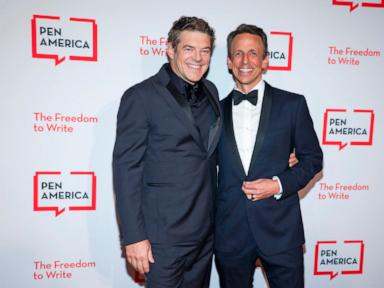
The $2 million capital injection at the 2024 PEN America Literary Gala represents more than a philanthropic milestone; it marks a strategic pivot in the defense of intellectual property and freedom of expression. As book bans in the United States reached record levels—surpassing 4,000 instances in the 2023-2024 academic year—the literary advocacy sector is transitioning from passive observation to a mobilized, resource-heavy defense. This escalation is driven by three distinct structural pressures: institutional censorship, the legal cost of access, and the ideological fragmentation of public education.
The Economic Impact of Censorship on the Literary Supply Chain
Censorship is frequently discussed as a social phenomenon, but its primary function is an economic disruption of the literary supply chain. When a book is removed from a school district or a state-wide library system, the impact cascades through the industry via three primary vectors.
- Revenue Loss for Mid-List Authors: While marquee names can absorb the loss of a regional market, mid-list authors rely on the steady, predictable acquisition cycles of public libraries and schools. A localized ban effectively terminates a revenue stream that supports the creation of future intellectual property.
- Increased Unit Costs for Publishers: Publishers operate on thin margins. When a title is flagged for "review," the administrative cost of legal defense and compliance checking is often higher than the projected profit of that specific unit. This creates a soft-censorship effect where publishers may preemptively decline manuscripts that trigger high-risk legal flags.
- Inventory Devaluation: Wholesale distributors and retailers face a sudden loss in the liquidity of their inventory. A book that was a "safe" educational staple can become an unsellable liability overnight, forcing write-downs that strain the balance sheets of independent booksellers.
The Patchett Doctrine: Slow Consumption as a Counter-Strategy
Ann Patchett’s advocacy for "breathing" with a book—treating reading as a deliberate, slow-process activity—functions as a counter-strategy to the rapid-fire, algorithmic outrage that drives modern book bans. The "breath" is not merely a poetic suggestion; it is a cognitive defense mechanism against the reactive politics of the current era.
The mechanics of this approach rely on increasing the "dwell time" of a reader with a text. High-velocity media (social platforms) relies on context collapse—taking a single sentence out of a 400-page narrative to incite a regulatory response. By advocating for deep reading, Patchett is essentially calling for the restoration of context. From a strategic standpoint, if the public can be incentivized to engage with the whole of a work rather than its extracted fragments, the logical basis for many ban attempts evaporates.
Analyzing the $2 Million Capital Allocation
The $2 million raised during the gala serves as a war chest for a multi-front defense. To understand the utility of these funds, one must look at the operational costs of literary advocacy.
- Legal Defense Funds: A significant portion of this capital must be earmarked for litigation. Organizations like PEN America and the Penguin Random House coalition are increasingly filing lawsuits against school districts on First Amendment grounds. These cases are expensive, requiring expert witnesses, constitutional scholars, and years of sustained funding.
- Rapid Response Infrastructure: As bans shift from organized state-level efforts to grassroots, school-board-level actions, the cost of monitoring and responding increases exponentially. Monitoring thousands of local districts requires sophisticated data-tracking software and a network of boots-on-the-ground advocates.
- Direct Access Programs: Capital is used to bypass bans by providing digital access or physical copies to students in restricted districts. This is a supply-side solution to a demand-side restriction.
The Mechanism of School Board Pressure Groups
Modern book bans are rarely organic. They are the result of highly organized pressure groups utilizing a "template-based" attack strategy. These groups provide parents with pre-written scripts and lists of "objectionable" pages, allowing them to flood board meetings with high-volume, low-effort complaints.
This creates a systemic bottleneck. School boards, often composed of volunteers, lack the bandwidth to conduct comprehensive reviews of every challenged book. The path of least resistance is often a temporary or permanent removal. To counter this, advocacy groups must provide "counter-templates"—pre-vetted educational justifications and legal precedents that school boards can use to defend their collections without incurring massive administrative overhead.
Quantitative Rise of Censorship Tiers
The surge in bans is not uniform. Data suggests a tiered escalation that signals a broadening of the censorship scope.
- Tier 1: Identity-Based Targets. The initial wave focused on LGBTQ+ themes and racial identity.
- Tier 2: Historical Revisionism. The second wave expanded to historical texts that challenge traditional narratives of American history.
- Tier 3: Literary Merit Challenges. The current wave is beginning to target classic literature and contemporary award winners under the guise of "age appropriateness."
This progression indicates that the goal is not the removal of specific "harmful" content, but the establishment of a centralized vetting authority over all public-facing information.
The Strategic Role of Celebrity in High-Stakes Advocacy
The presence of figures like Patchett, Whoopi Goldberg, and others at the PEN gala is often dismissed as performative. However, in a media-saturated environment, celebrity serves as a "force multiplier" for complex issues.
Celebrity involvement converts a niche legal and educational debate into a mass-market narrative. This visibility is essential for fundraising, but it also provides a shield for local librarians and teachers. When a national figure highlights a specific ban, it raises the political cost for the local officials implementing that ban. The local board member is no longer just "protecting children" in a vacuum; they are now an actor in a national controversy, which often leads to more cautious, legally sound decision-making.
Information Asymmetry and the Parent-Professional Gap
A core driver of the current crisis is the growing information asymmetry between professional educators (librarians) and non-professional oversight (parent groups). Librarians use a rigorous selection criteria based on peer review, literary merit, and developmental psychology. Parent groups often use "keyword searches" to identify content.
Bridging this gap requires a structural shift in how library collections are communicated to the public. Transparency is often cited as the solution, but transparency without context often leads to further misunderstanding. A strategic recommendation for libraries is the implementation of "Curated Logic Summaries" for every title in a collection—short documents that explain why a book was purchased, which professional reviews supported its inclusion, and what educational standards it meets. This preemptively addresses the "why is this here?" question before it becomes a grievance.
The Risk of Institutional Overreach
While the $2 million raise is a victory for advocacy, it carries the risk of institutionalizing the conflict. As advocacy groups grow larger and more well-funded, they risk becoming detached from the very communities they represent. There is a danger that the fight becomes a high-level battle between national NGOs and state legislatures, leaving local librarians and students as collateral damage.
Furthermore, the reliance on high-profile galas and wealthy donors can create a "filter bubble" where the advocacy reflects the values of the donor class rather than the diverse needs of the readers. Maintaining a decentralized, grassroots-focused distribution of resources is the only way to ensure the $2 million has a lasting impact on the ground.
Intellectual Property as a National Security Interest
In a broader geopolitical context, the ability of a nation to produce and consume diverse viewpoints is a metric of its cognitive resilience. Societies that restrict information flow eventually suffer from "intellectual stagnation," where the lack of competing ideas leads to a decline in innovation and problem-solving capacity.
From this perspective, defending books is not just a cultural preference; it is the maintenance of a vital national infrastructure. The current surge in bans represents a degradation of this infrastructure. The response from PEN America and its allies must be viewed as a maintenance project intended to prevent the "siliconization" of thought—where the only acceptable ideas are those that have been sanitized for the lowest common denominator.
Tactical Roadmap for Literary Defense
To move beyond the gala and into effective long-term defense, the literary community must execute on three tactical imperatives:
- Litigation Scalability: Develop a "standardized lawsuit" template that can be deployed rapidly by local pro-bono attorneys when a clear First Amendment violation occurs. This reduces the cost of entry for legal defense.
- Data Portability for Librarians: Create a centralized, secure database of professional reviews and "defense dossiers" for frequently challenged books. If a librarian in Florida is challenged on a title, they should be able to instantly download the successful defense strategies used by a librarian in Michigan.
- Economic Disincentivization: Work with publishers to include "anti-censorship clauses" in distribution contracts. If a district bans a book without following a strictly defined, transparent review process, they may face surcharges or loss of bulk-discount privileges from major publishers. This moves the cost of censorship from the publisher to the censor.
The goal is to move from a defensive posture to one of "active deterrence." By raising the legal, economic, and political costs of banning books, the literary community can create a stable environment where the "breath" Patchett describes is not a luxury, but a fundamental right.
The final strategic move for PEN America is the diversification of its funding model. Relying on annual galas creates a boom-bust cycle for advocacy. Establishing a permanent endowment dedicated specifically to the legal defense of school librarians would provide the long-term stability required to outlast what is currently a highly volatile political cycle. This endowment should function as an insurance policy for the First Amendment, ensuring that no school board can bankrupt a local library through endless litigation.