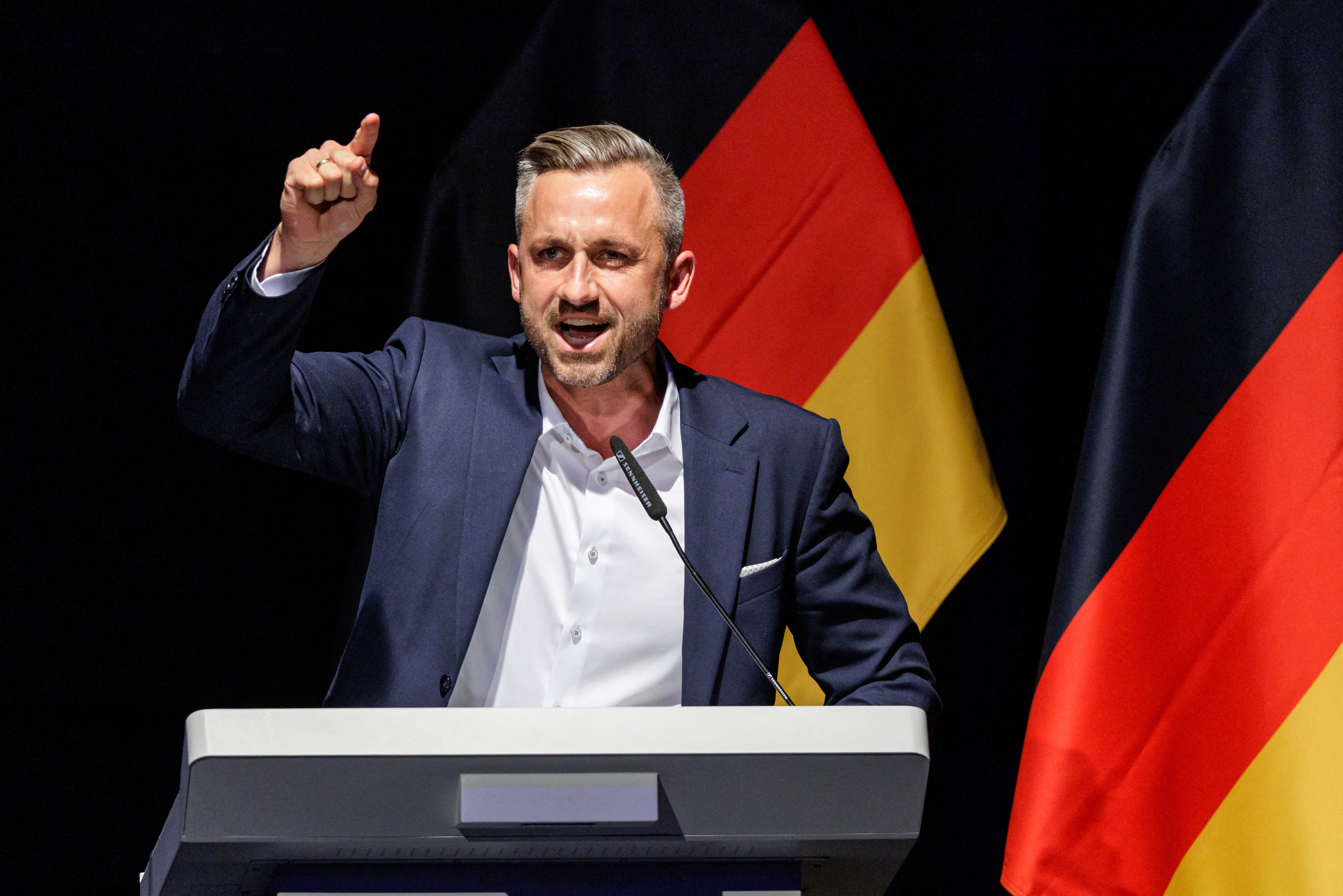
Political risk modeling in consolidated Western democracies relies on tracking institutional friction rather than volatile shifts in public mood. When an insurgent political movement moves from disruptive opposition to a viable governing threshold within a regional legislature, the shift exposes structural vulnerabilities in traditional coalition mechanics. The structural ascent of the Alternative for Germany party inside eastern federal state jurisdictions illustrates a permanent fracture in post-war consensus governance. Observers frequently misdiagnose this phenomenon as a temporary populist protest cycle. A rigorous systems-level analysis reveals a fundamental incompatibility between legacy centrist party platforms and the economic grievances concentrated in post-industrial regional economies.
The Economic Vector of Realignment
The primary driver of electoral realignment is not cultural anxiety in isolation, but the compounding effects of asymmetric economic transition. Eastern federal states inherited a compressed modernization trajectory following reunification, bypassing organic capital accumulation phases.
- Deindustrialization Legacy: The swift privatization and liquidation of state-owned industrial combines in the 1990s destroyed generational equity accumulation channels.
- Wage Convergence Stagnation: Nominal wage growth has consistently lagged western equivalents by fifteen to twenty percent, while cost-of-living metrics for energy and housing have converged nationally.
- Demographic Drain: Out-migration of working-age cohorts over three decades created acute labor dependencies and hollowed out municipal tax bases.
These material conditions generate a distinct utility function for voters. Traditional catch-all parties structured their value propositions around continuous growth and European integration dividends. When those dividends fail to materialize in peripheral municipal districts, the rational voter shifts from optimizing gains to penalizing incumbents. The insurgent party capitalizes on this by offering a zero-sum protectionist framework that directly challenges federal economic orthodoxy.
Institutional Mechanics of the Partisan Firewall
The operational containment of far-right entities in Germany depends on the structural convention known as the firewall. Mainstream center-right and center-left organizations commit to refusing legislative cooperation, supply agreements, or coalition formations with the insurgent party. This creates a severe legislative bottleneck.
When a challenger party captures a blocking minority or a relative plurality of legislative seats, the mathematics of coalition building transform.
The Three Coalition Failure Modes
- Mathematical Exhaustion: If the insurgent party commands thirty-five percent of the legislature, legacy parties must form heterogeneous multi-party alliances—often bridging diametrically opposed economic philosophies—merely to achieve a functional majority.
- Policy Paralysis: Grand coalitions or tripartite alliances spend their legislative capital on internal friction management rather than structural reform, accelerating constituent alienation.
- Legitimacy Erosion: Excluding a large plurality of voters from executive power strains democratic norms, feeding the insurgent narrative of an entrenched political cartelist class.
The firewall functions effectively as a short-term containment strategy, but it increases long-term systemic risk. Every electoral cycle that requires unnatural centrist-left coalitions to block a single victor degrades the perceived efficacy of parliamentary democracy itself.
Voter Behavioral Models
Analyzing voter migration patterns requires discarding the assumption of permanent political identity. The electorate in eastern jurisdictions exhibits high volatility, characterized by fluid movement between non-voters, protest parties, and the nationalist right.
The institutional response from established parties typically involves defensive co-optation. Centrist candidates adopt harsher rhetoric on border security and national identity in an attempt to recapture alienated segments. This maneuver systematically fails to achieve its objective. It validates the insurgent party's framing of the political debate while failing to offer a credible policy alternative, driving voters toward the original, uncompromised source of that narrative.
Concurrently, civil society organizations and economic chambers deploy capital into anti-extremism campaigns and democratic education initiatives. While valuable for civic hygiene, these interventions address symptoms rather than causes. They operate on the premise that informational deficits explain voting behavior, ignoring the rational calculation of citizens reacting to deteriorating public infrastructure, declining rural healthcare access, and perceived cultural displacement.
Forward Operating Dynamics for State Governance
Managing a regional state legislature under conditions of deep polarization forces an evolution in administrative strategy. When legislative majorities become mathematically impossible without either breaking the firewall or including fringe actors, governance shifts from legislative reform to bureaucratic endurance.
State ministries pivot toward defensive execution. Civil service departments insulate long-term infrastructure projects, regional funding allocations, and administrative frameworks from legislative turbulence. This creates a dual-track state where political rhetoric at the parliamentary podium diverges sharply from the technocratic reality of ministerial execution.
The strategic trajectory points toward protracted political fragmentation. As traditional voter loyalty continues to decay, regional state elections will increasingly resemble high-stakes referendums on federal economic management. Insurgent movements will consolidate their gains not by moderating their platform, but by weaponizing the inevitable policy gridlock produced by the very firewall designed to exclude them. The structural crisis of regional governance is thus self-reinforcing, locking the political system into a permanent state of high-friction equilibrium.

.png?width=1200&auto=webp&trim=0%2C0%2C0%2C0)