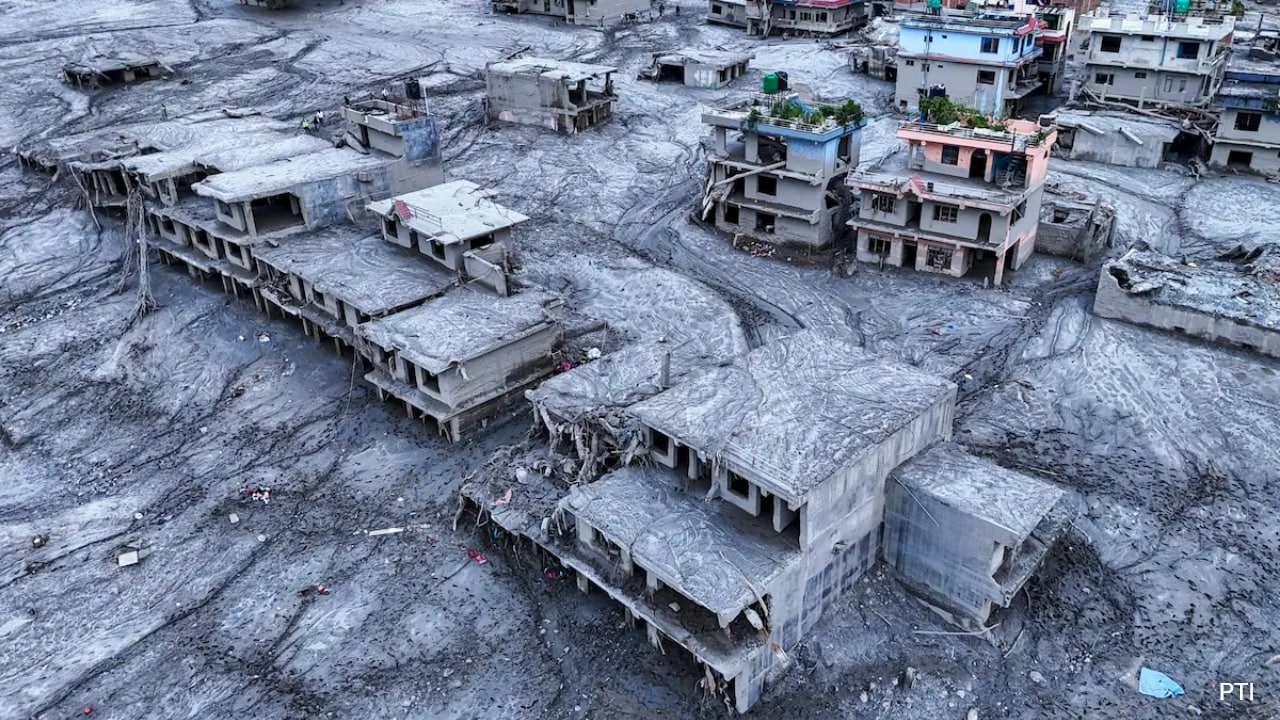
A single glacial collapse and subsequent flash flood in the Hindu Kush Himalaya has generated a five billion dollar reconstruction requirement for Nepal, equal to roughly ten percent of the nation's total economic output. This localized catastrophe exposes a structural failure within the international climate finance architecture: the mechanisms designed to absorb sovereign shock operate on fractional reserves compared to the physical realities of modern environmental degradation. When the Ministry of Finance in Kathmandu petitioned the United Nations Fund for Responding to Loss and Damage, the limitations of global burden-sharing mechanisms shifted from theoretical policy debates to an acute balance-of-payments emergency.
The Macroeconomic Transmission Mechanism of Climate Shocks
Developing economies relying on natural capital assets face a distinct transmission channel during catastrophic events. Physical destruction does not merely translate to immediate emergency response costs; it alters the foundational productive capacity of the state. In Nepal, the disaster severely damaged roughly ten percent of installed electricity-generating capacity, primarily high-head hydropower installations situated along narrow river corridors. In other updates, read about: Why South Korea Is Cornered Over the Strait of Hormuz Deployment.
The economic fallout operates through three compounding vectors:
- Capital Stock Destruction: Immediate physical write-offs of bridges, roads, transmission lines, and municipal infrastructure that require hard currency imports to replace.
- Revenue Stream Impairment: Loss of domestic energy generation forces substitution toward imported fossil fuels, degrading the current account balance while simultaneously choking domestic industrial output.
- Fiscal Space Compression: Prior to the disaster, the World Bank projected tepid economic growth for the fiscal year. Absorbing a multi-billion dollar liability forces a reallocation away from long-term capital investments toward immediate, non-productive humanitarian and asset-replacement expenditures.
This creates a self-reinforcing debt trap. Sovereign debt sustainability models assume steady asset depreciation and predictable revenue generation. When a physical climate shock wipes out ten percent of a nation's GDP equivalent overnight, traditional debt-to-GDP ratios deteriorate instantly, restricting access to international capital markets just as liquidity needs peak. Al Jazeera has provided coverage on this critical topic in great detail.
The Asymmetry of the Global Loss and Damage Architecture
The structural mismatch between sovereign recovery requirements and international funding availability is stark. The Fund for Responding to Loss and Damage—conceived after decades of diplomatic friction to address unavoidable climate impacts—accumulated less than one billion dollars in total pledges during its initial capitalization phase. Meanwhile, aggregate requests from over one hundred vulnerable nations surpassed billions of dollars for a minor fraction of available capital.
Individual grants under the fund's current pilot framework are administratively capped between five and twenty million dollars per project. For Nepal, receiving the maximum allowable allocation represents less than half a percent of the total reconstruction liability. This structural discrepancy proves that the mechanism was designed as a symbolic accounting ledger rather than a macroeconomic backstop.
Geopolitical realignments compound this inadequacy. The withdrawal and recalibration of contributions from major historical emitters like the United States leave the fund undercapitalized. Without mandatory replenishment formulas or insurance-linked risk transfer instruments, multilateral climate funds function as underfunded grant committees rather than resilient financial insulators.
Evaluating Alternative Capital Mobilization Vectors
Given that global loss and damage facilities cannot cover sovereign liabilities of this scale, economic planners must evaluate alternative, highly constrained funding pathways.
- Multilateral Development Bank Concessional Lending: Institutions such as the World Bank and the Asian Development Bank remain the primary sources of liquidity. However, expanding sovereign debt to finance non-productive asset replacement accelerates debt distress. Loans must be serviced, converting a physical climate shock into a permanent structural tax on future generations.
- Domestic Fiscal Retrenchment: Reallocating internal budgets away from health, education, and foundational development projects to fund emergency civil works. This approach preserves sovereign credit ratings at the expense of human capital development and long-term poverty reduction.
- Bilateral Sovereign Rescheduling: Seeking debt moratoria or debt-for-climate swaps from bilateral creditors. While effective for short-term liquidity relief, these interventions require complex diplomatic coordination and rarely yield net-new capital injections for physical rebuilding.
Strategic Capital Allocation and Risk Mitigation
To prevent recurrent fiscal collapse, vulnerable nations must transition from ex-post disaster financing to ex-ante economic hardening. Relying on international benevolence is a failing operational strategy.
The immediate imperative requires restructuring national infrastructure investment models. Hydropower expansion strategies must incorporate dynamic risk-zoning that accounts for glacial lake outburst flood potentials, moving away from concentrated valley-bottom generation assets toward distributed, redundant micro-grids. Furthermore, sovereign balance sheets must integrate parametric insurance products and catastrophe bonds that trigger automatic liquidity payouts based on physical event parameters rather than protracted post-disaster damage assessments.
The five billion dollar deficit facing Nepal is a leading indicator for developing economies situated in fragile ecological zones. Until the international financial architecture links capital mobilization directly to historical emissions liabilities through automatic, scaled capitalization mechanisms, sovereign resilience will remain subordinate to geopolitical volatility.