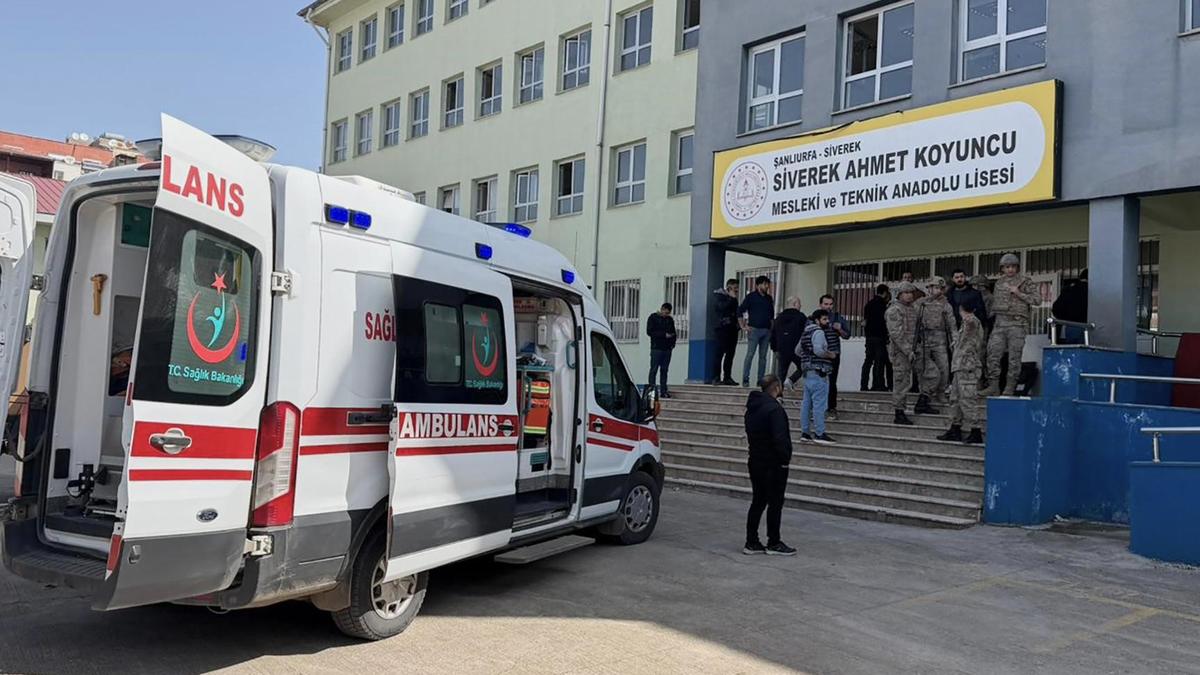
The recent incident in Turkiye, resulting in 16 casualties, functions as a terminal stress test for existing campus security protocols. Beyond the immediate tragedy, the event reveals a systemic collapse in three distinct operational layers: perimeter integrity, early-warning detection, and rapid-response synchronization. Traditional security narratives focus on the perpetrator’s psyche; a rigorous strategy analysis instead focuses on the failure of the environment to mitigate a known risk profile. The occurrence of a mass-casualty event in a regulated educational space suggests that the current defensive posture is reactive rather than preventative, operating on a high-latency feedback loop that ensures casualties before intervention occurs.
The Architecture of Perimeter Failure
The integrity of an educational facility relies on a "Hard Shell, Soft Core" security model. When 16 individuals are wounded, it indicates a total breach of the external shell. Security architecture in these environments often suffers from a trade-off between accessibility and fortification. In the Turkish context, the transition from open-access campuses to controlled-entry environments has been inconsistent.
The breach mechanism likely followed one of three failure paths:
- Credential Bypassing: The exploitation of social engineering or visual mimicry to pass through checkpoints.
- Physical Permeability: The presence of "dead zones" in CCTV coverage or unmonitored secondary egress points that allow for undetected entry.
- Threshold Saturation: High-volume entry periods (start of school day) where the throughput of students exceeds the scanning capacity of security personnel, leading to a degradation of vetting standards.
If a perpetrator carries a weapon into a high-density zone, the "Cost of Entry" was set too low. A robust system requires a tiered friction model where the energy required to transit from a public space to a student-dense area increases exponentially.
Quantifying Response Latency and the Casualty Curve
The number of wounded—16—is a direct function of the "Active Threat Duration." In ballistics and tactical analysis, the casualty curve is almost always logarithmic. The highest rate of injury occurs in the first 120 seconds of an engagement.
$$C = r \times t$$
Where $C$ represents total casualties, $r$ is the rate of fire/engagement, and $t$ is the time before neutralization. To reduce $C$, the only variable within the school’s control is $t$. The Turkish incident suggests a high $t$ value, implying a lag in the "Detect-Verify-Notify" chain.
The bottleneck in these scenarios is rarely the physical speed of first responders, but rather the internal verification lag. School staff often experience "Normalcy Bias," where the sound of gunfire or a struggle is initially interpreted as a non-threatening event (e.g., construction noise, furniture moving). This cognitive delay adds critical seconds to the $t$ variable. A digitized, sensor-based detection system—such as acoustic gunshot sensors or AI-integrated visual recognition—removes the human verification bottleneck and initiates the notification phase instantly.
The Triad of Institutional Vulnerability
To understand why this specific incident achieved such scale, we must categorize the institutional vulnerabilities into a logical framework.
1. Resource Asymmetry
The attacker chooses the time, location, and method (Aggressor Advantage). The institution must defend all points at all times. In many Turkish regional districts, security funding is allocated toward static personnel rather than dynamic technology. Static guards are susceptible to fatigue and pattern recognition by an observer, whereas automated systems maintain a constant vigilance baseline.
2. Information Siloing
The 16 wounded individuals represent a failure of the internal communication network. In a high-functioning security environment, a breach at Point A triggers an immediate lockdown at Points B through Z. If the attacker was able to move through multiple areas or sustain an attack long enough to wound double-digit victims, the "Internal Notification System" was either non-existent or failed to reach the intended recipients in time.
3. Psychological Infrastructure Deficit
Drills often focus on the physical act of hiding (the "Lockdown" protocol) but fail to account for the "Chaos Factor." When an actual event occurs, the lack of "Tactical Literacy" among staff leads to a breakdown in the chain of command. The result is a disorganized evacuation that often moves victims toward the threat rather than away from it.
The Mechanics of Public Space Violence in Turkiye
Turkiye’s unique socio-political geography creates a specific risk profile for educational institutions. The convergence of high youth population density and varying degrees of regional stability means schools are high-value targets for both personalized grievances and broader ideological statements.
The "Copycat Effect" or "Contagion Heuristic" is a significant risk factor here. When an event is reported with high emotionality and low analytical rigor—as seen in standard media outlets—it provides a blueprint for future aggressors. The 16 wounded in this incident become a "score" to be surpassed by the next individual seeking infamy. Shifting the narrative from the perpetrator to the systemic failure of the school's defense reduces the "glory" associated with the breach.
Optimizing the Defense Function
To prevent a recurrence of the Turkish incident, the strategy must shift from "Response-Based" to "Interruption-Based." This requires a re-engineering of the school's operational flow.
- Vulnerability Mapping: Every school must undergo a red-team assessment where potential ingress points are identified through the lens of an aggressor. This identifies "Pathways of Least Resistance."
- Decentralized Alerting: Move away from a centralized "Front Office" alarm. Implement wearable panic buttons for staff that trigger an immediate, localized lockdown signal. This reduces the notification lag from minutes to milliseconds.
- Ballistic Hardening of High-Density Zones: Areas like cafeterias and large lecture halls must have integrated ballistic shielding or rapid-deploy barriers.
The current reliance on manual gate checks and roving guards is an analog solution to a digital-speed threat. The 16 wounded in Turkiye are a data point indicating that the current "Human-Centric" security model has reached its limit. Without a transition to an "Integrated Systems" approach—where hardware, software, and human intelligence are synchronized—the casualty count in future incidents will remain a variable of the attacker's skill rather than the school's defense.
The immediate requirement for Turkish educational authorities is a mandatory audit of "Active Threat Latency" across all campuses. Institutions failing to demonstrate a sub-60-second notification and lockdown capability must be classified as high-risk zones, necessitating immediate physical infrastructure upgrades. The priority is not more guards, but more efficient detection and more rigid physical barriers that force an attacker into a "Chokepoint" where their mobility—and thus their ability to inflict mass casualties—is neutralized.