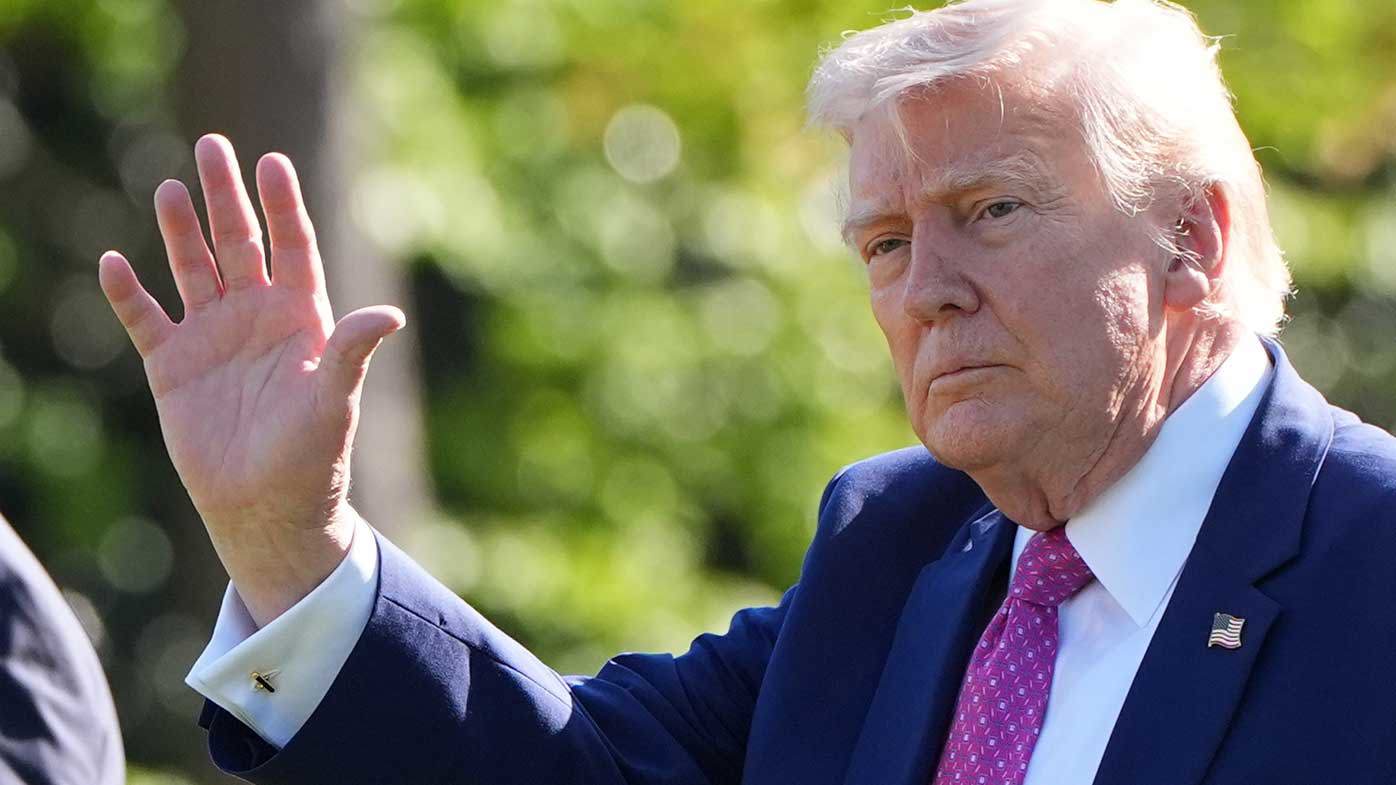
The exclusion of a former executive or high-profile political figure from active peace negotiations is rarely a matter of personal friction; it is a function of institutional risk mitigation and diplomatic path dependency. When peace talks proceed without the direct involvement of Donald Trump, the mechanism at play is the preservation of the "negotiation floor"—the minimum viable consensus required to keep belligerents at the table. To understand why certain diplomatic tracks intentionally bypass specific power brokers, one must analyze the tension between disruptive leverage and procedural stability.
The Architecture of Diplomatic Isolation
Diplomatic negotiations operate on a timeline that often exceeds the lifespan of a single political administration. This creates a structural conflict when a figure who prioritizes transactional, short-term victories attempts to enter a long-game process. Current mediators utilize three primary filters to determine who sits at the table:
- Sovereign Continuity: State actors prioritize interlocutors who represent the enduring interests of a nation-state rather than a volatile personal brand.
- Multilateral Synchronization: Modern conflicts—whether in Eastern Europe or the Middle East—involve a web of stakeholders including the EU, NATO, and regional blocs. A "lone wolf" negotiator introduces variables that these institutions cannot model or predict.
- The Information Asymmetry Gap: Active negotiations rely on classified intelligence sharing. Private citizens, regardless of their former status, lack the legal clearance to access the real-time data feeds required to make informed concessions.
The exclusion of Donald Trump from current high-stakes dialogues is a strategic choice to reduce noise-to-signal ratios. In a complex conflict, every statement made by a high-profile figure carries the weight of a potential policy shift. If that figure is not bound by the constraints of current office, their rhetoric creates "phantom expectations" that can derail weeks of quiet, subsurface progress.
The Cost Function of Unpredictability
In game theory, predictability is a currency. When two warring parties engage in a ceasefire discussion, they are calculating the Expected Value (EV) of peace against the Risk of Betrayal.
Traditional diplomacy lowers the risk of betrayal through formal treaties and institutional backing. Donald Trump’s methodology centers on "strategic ambiguity." While this serves as a potent tool in bilateral trade disputes, it acts as a toxin in peace negotiations. The presence of an unpredictable variable increases the risk premium for both sides. If Party A believes that a future administration might unilaterally tear up a deal brokered by the current one, Party A has zero incentive to make painful concessions today.
By conducting talks without Trump, mediators are effectively attempting to "lock in" the current geopolitical price. They are creating a closed system where the variables are known and the consequences of breaking the agreement are clearly defined by the current international order.
Operational Bottlenecks and the Shadow Track
There is a distinction between formal diplomacy and Track II diplomacy. Trump often operates in a "Track 1.5" space—not quite an official representative, but far more influential than a private citizen. This creates an operational bottleneck.
When a former president engages in parallel talks, it fragments the messaging of the state. This fragmentation leads to:
- Hostile Opportunism: Belligerents will "forum shop," looking for the negotiator who offers the most lenient terms, thereby stalling the official process.
- Trust Erosion: Allies begin to question the reliability of the official envoy if a high-profile alternative is whispering a different set of priorities in the background.
- Legal Liability: In the United States, the Logan Act—though rarely prosecuted—creates a legal friction point for private citizens attempting to conduct foreign policy. This risk alone is enough to make professional diplomats keep a calculated distance.
The current peace initiatives are structured to prioritize institutional permanence. The logic is simple: a deal that survives a change in leadership is worth more than a deal that depends on a single personality. By excluding the "Trump Factor," negotiators are betting on a framework that can be codified into law and international code, rather than one that lives or dies on a handshake.
Strategic Realignment of Global Power Blocs
The shift away from individual-centric diplomacy marks a return to Realpolitik 2.0. European and Asian powers are no longer waiting for a green light from a singular American figurehead. They are developing "Trump-proof" diplomatic corridors.
This realignment is driven by a realization that the American political system is currently in a state of high-frequency oscillation. To maintain stability, global actors are building redundancy into their peace processes. They are engaging with the Department of State, the Department of Defense, and Congressional committees rather than pinning their hopes on the executive branch alone.
This creates a scenario where the "Live" talks mentioned in current headlines are actually the final stage of a much deeper, more boring, and highly resilient process. The absence of the former president is not a snub; it is a design feature of a system trying to protect itself from the volatility of the four-year election cycle.
The Pivot to Technical Diplomacy
As the complexity of modern warfare increases—incorporating cyber warfare, satellite dominance, and economic sanctions—the role of the "Great Man" negotiator diminishes. Peace is no longer just about drawing lines on a map; it is about:
- SWIFT System Integration: Re-engaging or de-linking a nation from the global financial grid.
- Technological Compliance: Managing the flow of dual-use semiconductors.
- Energy Arbitrage: Establishing long-term LNG or oil delivery contracts to ensure mutual economic dependence.
These are technical, granular problems that require teams of career bureaucrats and industry experts. The "Art of the Deal" style of negotiation, characterized by high-level rhetoric and personal chemistry, lacks the resolution required to solve these multi-dimensional crises. The current negotiation teams are staffed by specialists who prioritize the functional stability of systems over the optics of a signing ceremony.
Forecasting the Institutional Barrier
The barrier to entry for Donald Trump—or any similar disruptive figure—into the current peace process is not political; it is structural. The international community has moved toward a model of Distributed Diplomacy. In this model, power is diffused through a network of international organizations and regional alliances.
For a negotiator to be effective in this environment, they must be willing to operate within the constraints of the network. A figure who seeks to dominate the network or operate outside of it becomes a "malicious node." The system naturally routes around such nodes to maintain the integrity of the data (the negotiation).
The strategic play for any entity observing these talks is to ignore the "celebrity" of the missing participants and focus on the underlying mechanics of the consensus. The talks are proceeding without Trump because the cost of including him—measured in terms of diplomatic friction, ally distrust, and procedural delay—currently outweighs any potential leverage he brings to the table.
Future stability will be dictated by the ability of these institutions to finalize agreements that are structurally sound enough to withstand a return to a more populist or isolationist American executive. The success of these talks will be measured not by who was in the room, but by the depth of the legal and economic triggers embedded in the final text.
Investors and strategists should look for the ratification of technical annexes rather than the high-profile photo ops. The real work of peace is happening in the footnotes of the agreements, far from the reach of those who rely on the power of personality to force an outcome.



