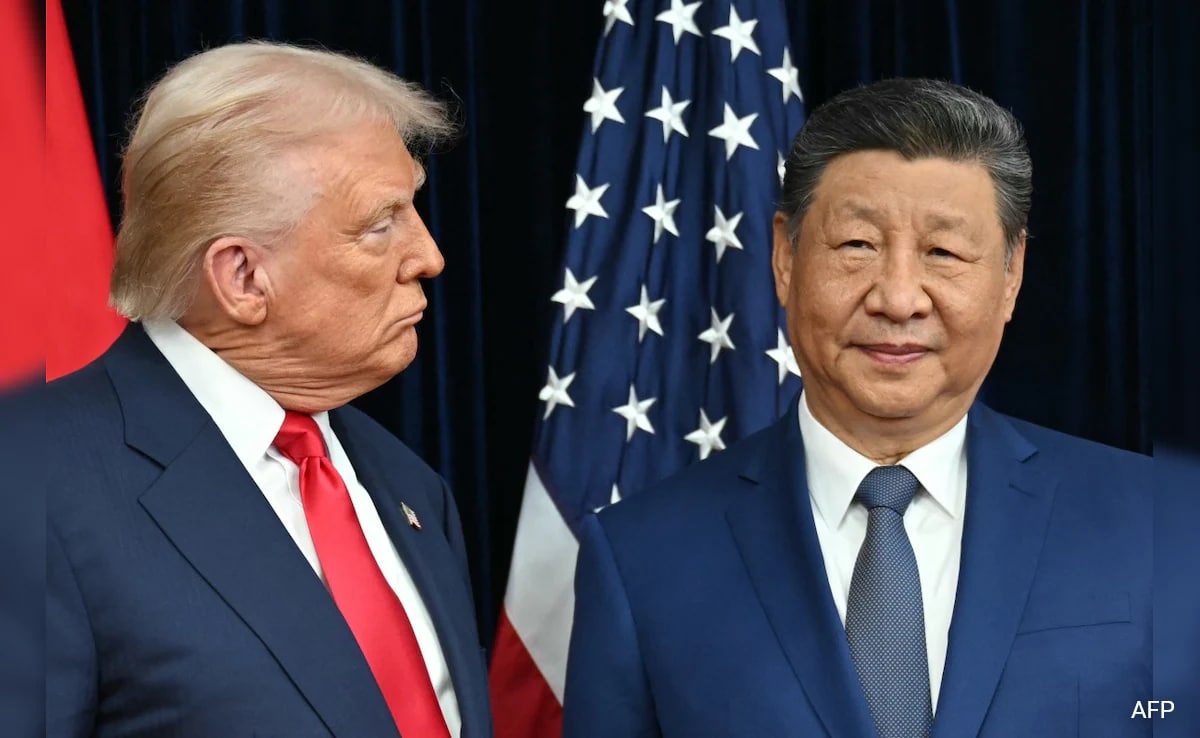
The perceived drift in American trade policy toward China is not a failure of intent but a collision between static protectionist tools and a dynamic, multi-channel economic offensive. When tariffs—the primary blunt-force instrument of the previous decade—reach a point of diminishing marginal utility, the resulting policy vacuum is often mistaken for a lack of direction. In reality, the strategic architecture is shifting from broad-spectrum taxation of goods to a surgical, high-stakes restriction of capital and foundational technologies. Understanding this transition requires moving beyond the binary of "tariffs vs. no tariffs" and analyzing the specific mechanics of the current geopolitical stalemate.
The Diminishing Returns of Tariff-Centric Strategy
Tariffs function as a tax on the domestic importer, intended to create a price floor that makes domestic or third-party alternatives more attractive. However, the efficacy of this mechanism is governed by the price elasticity of the goods in question. The current policy stasis stems from three structural bottlenecks that have neutralized the impact of traditional trade barriers.
1. Transshipment and Value-Chain Obfuscation
The "China + 1" strategy adopted by many multinationals has not necessarily resulted in a reduction of Chinese dependency, but rather a geographic re-routing. Components manufactured in the Pearl River Delta are shipped to Vietnam, Mexico, or Malaysia for "substantial transformation"—often minimal assembly—to secure a new country-of-origin certificate. This creates a data lag where US trade deficits with Southeast Asia balloon, while the underlying value-added remains tethered to Chinese upstream suppliers. The policy "drifts" because the target has moved behind a curtain of intermediary jurisdictions.
2. The Inelasticity of Critical Dependencies
For sectors such as rare earth processing, lithium-ion battery precursors, and specific legacy semiconductors (28nm and above), the US lacks the immediate industrial capacity to respond to price signals. When a tariff is applied to a good with zero domestic substitutes, it ceases to be a protective measure and becomes a pure inflationary weight. Policy makers currently face a "dead zone" where increasing tariffs further would damage the US manufacturing base more than the Chinese exporter, leading to the current tactical pause.
3. Currency Devaluation as a Hedge
The People’s Bank of China maintains a managed float of the Yuan. Historically, periods of intense US tariff pressure have coincided with a depreciation of the Yuan against the Dollar. This currency movement acts as a natural shock absorber, effectively subsidizing the cost of Chinese exports and neutralizing the intended price hike of the tariff. For a trade policy to regain momentum, it must account for this monetary offset, a variable currently outside the remit of the United States Trade Representative (USTR).
The Pivot to Capital and Kinetic Technology Controls
As the utility of the Section 301 tariffs plateaus, the real theater of operations has shifted to the "Small Yard, High Fence" framework. This represents a fundamental change in the cost function of geopolitical competition. While tariffs target the flow of existing goods, these new measures target the stock of future capabilities.
The Asymmetry of Export Controls
The Bureau of Industry and Security (BIS) has replaced the USTR as the primary architect of China policy. The logic here is centered on "choke point" technologies—specifically extreme ultraviolet (EUV) lithography and high-end AI accelerators. Unlike tariffs, which are broad and porous, export controls are designed to be absolute. The goal is not to rebalance trade but to induce a multi-generational lag in Chinese computational sovereignty.
This creates a paradox: the more successful the US is at restricting high-end tech, the more China is incentivized to dominate the "legacy" market. We see a surge in Chinese investment in 28nm-65nm chip production, which powers everything from automobiles to medical devices. The US policy appears to be drifting because it has not yet reconciled the victory in high-end AI with the growing vulnerability in everyday industrial components.
Inbound and Outbound Investment Screening
The introduction of executive orders targeting outbound investment into Chinese tech sectors (quantum computing, AI, semiconductors) marks the end of the era of blind capital integration. The analytical framework here is "Capital as a Force Multiplier." By restricting US venture capital and private equity from fueling Chinese domestic champions, the US is attempting to break the feedback loop between Western financial markets and Chinese military-civil fusion.
The Institutional Bottleneck of Enforcement
A policy is only as robust as its enforcement mechanism. The current "drift" is exacerbated by the fragmentation of oversight across the Department of Commerce, the Treasury, and the Department of State. Each entity operates with a different primary objective:
- The Treasury prioritizes financial stability and the continued attractiveness of US Treasuries.
- The Commerce Department seeks to protect US industrial secrets while maintaining market access for US firms.
- The State Department manages the diplomatic fallout and alliance-building necessary to make any blockade effective.
The friction between these objectives creates a "policy drag." For instance, when the Commerce Department tightens restrictions on a Chinese entity, the Treasury must weigh the risk of retaliatory measures against US financial institutions. This internal negotiation results in a series of exemptions and grace periods that dilute the perceived strength of the original policy.
The "Green Transition" Contradiction
The most significant logical flaw in current US trade strategy is the tension between climate goals and industrial decoupling. The US energy transition is currently predicated on the availability of low-cost solar panels, EVs, and stationary storage—categories where China holds a 60% to 90% market share of the global supply chain.
Applying aggressive tariffs to Chinese green tech accelerates the "Buy American" mandate but decelerates the "Decarbonize" mandate by increasing the cost of the transition by an estimated 20% to 40%. The administration is currently caught in a "Trifecta of Constraints":
- Price: Keeping green energy affordable for the American consumer.
- Speed: Meeting aggressive emissions reduction targets by 2030.
- Security: Removing Chinese components from the national grid.
You can optimize for any two of these variables, but never all three simultaneously. The current "drift" is the physical manifestation of the government attempting to find a middle ground that does not exist.
Quantitative Indicators of Policy Failure or Success
To move beyond the qualitative "drift" narrative, we must look at the specific metrics that define the success of a decoupling strategy. The standard trade deficit is a lagging and often misleading indicator. A more precise dashboard includes:
- The Tech Gap Index: The delta in compute power available to US vs. Chinese Tier-1 data centers.
- Dependency Ratios: The percentage of "Single-Source" critical minerals where the source is a Foreign Entity of Concern (FEOC).
- Capital Flow Divergence: The year-over-year change in Western FDI into Chinese strategic sectors compared to "Friend-shoring" destinations.
Currently, the Tech Gap Index is widening in favor of the US, suggesting that the "High Fence" strategy is working. However, the Dependency Ratios for mid-stream processing (anode/cathode production) remain static or are worsening. This suggests that while the US is winning the battle for the "brain" of the future economy, it is losing the battle for its "nervous system."
Strategic Recommendation: From Reactive to Structural Offense
The US cannot rely on the momentum of 2018-era tariff tranches to navigate the complexities of 2026. To resolve the current policy drift, the strategy must evolve from a defensive posture (blocking imports) to a structural offensive (building alternative ecosystems).
The primary focus must be the Reshoring of Process Knowledge, not just assembly. Incentivizing a factory to move to Ohio is useless if the underlying chemical processing patents and specialized labor remain in Sichuan. This requires a "Lateral Integration" strategy:
- Harmonized Subsidy Regimes: Aligning the CHIPS Act and the Inflation Reduction Act (IRA) with the industrial policies of the EU, Japan, and South Korea to prevent a "race to the bottom" on subsidies.
- The Intellectual Property Blockade: Moving beyond entity lists to a broader "technology-class" restriction that prevents the licensing of foundational US IP to any entity that services the Chinese defense industrial base.
- The Strategic Mineral Cartel: Establishing a "Buyers' Club" among G7 nations to guarantee off-take agreements for non-Chinese mineral processors, thereby de-risking the massive capital expenditure required to compete with subsidized Chinese incumbents.
The path forward is not found in the escalation of taxes on consumer goods. It is found in the relentless, systemic isolation of Chinese industrial capacity from the high-value inputs—both financial and intellectual—that it requires to move up the value chain. The drift ends when the US stops trying to tax the old world and starts aggressively financing the new one.