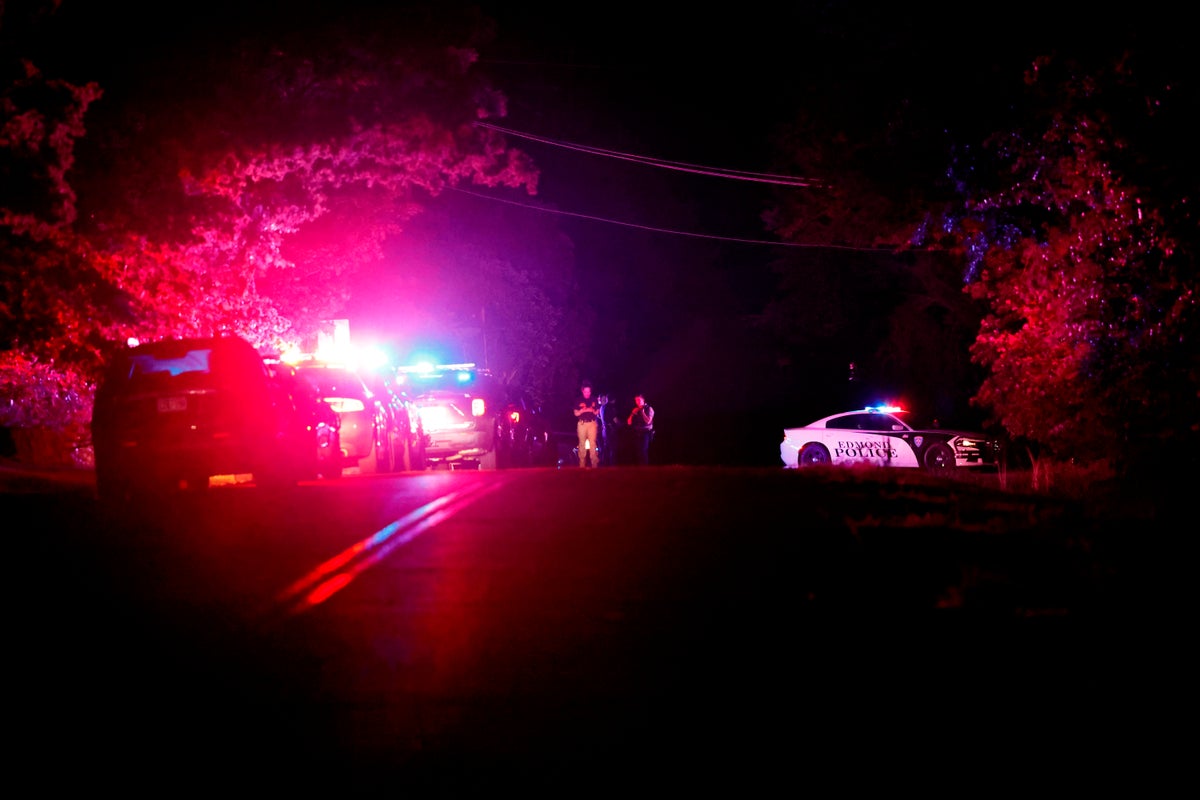
The proliferation of mass casualty events at unmanaged public gatherings suggests a failure in traditional perimeter security models and a fundamental misunderstanding of the "flash-point" dynamics inherent in large-scale social clusters. The incident at an Oklahoma lake party, which resulted in twelve injuries following a coordinated assault by masked individuals, serves as a primary case study for analyzing the intersection of crowd density, environmental vulnerability, and the tactical advantages of mobile, anonymous aggressors. Effective intervention requires moving beyond descriptive reporting to a quantitative understanding of how these events materialize and why current law enforcement response frameworks often arrive at a tactical deficit.
The Triad of Event Vulnerability
Every public gathering operates within a risk matrix defined by three specific variables: Accessibility, Visibility, and Dissipation Rate. When these three factors align in a specific configuration, the environment transitions from a social space to a high-probability target zone. You might also find this related coverage interesting: The West Bengal Myth and Why Modi Winning is Actually a Warning Sign.
- Porosity of the Perimeter: Unlike a stadium or a private venue, the lake party environment lacks a defined entry or exit point. This creates an open-system architecture where "bad actors" can integrate into the crowd without passing through a single friction point (metal detectors, ID checks, or visual screening).
- Information Asymmetry: The use of ski masks by the perpetrators introduces an immediate psychological and tactical advantage. In a high-density environment, the delay between the visual identification of an anomaly (masked individuals) and the recognition of a threat (discharging firearms) provides the aggressors with a critical window of uninhibited movement.
- Low Dissipation Capacity: Waterfront environments often feature natural geographic barriers—water on one side, dense brush or steep terrain on others. This creates a "funnel effect" during a panic event, where the rate of people attempting to flee exceeds the physical capacity of the available exit paths.
Mechanics of the Coordinated Assault
The Oklahoma shooting was not a spontaneous escalation of a verbal dispute but a coordinated tactical deployment. The presence of multiple shooters in masks points to a pre-planned objective, categorized here as a "Surgical Disruption." In this model, the goal is not necessarily high lethality—though that is often a byproduct—but the maximization of chaos and the successful extraction of the perpetrators.
The shooters leveraged Signal-to-Noise Disparity. At a large party, the baseline noise level (music, shouting, combustion engines) is high. The initial shots are frequently mistaken for fireworks or mechanical failures. This acoustic masking allows the shooters to discharge multiple rounds before the crowd enters a state of collective flight. By the time law enforcement or security personnel can orient themselves to the source of the sound, the shooters have utilized the pre-planned exit routes afforded by the porous perimeter. As discussed in recent articles by Associated Press, the implications are worth noting.
The Failure of "Reactionary" Policing
The primary bottleneck in managing these incidents is the reliance on a reactionary model. Local law enforcement typically operates on a "Report-Verify-Deploy" sequence. In the context of a lake party with thousands of attendees, this sequence is too slow.
- Communication Lag: Initial 911 calls from high-stress environments are notoriously unreliable. Callers provide conflicting locations, descriptions, and casualty counts.
- Access Throttling: The same lack of infrastructure that makes the site attractive for a party prevents rapid emergency ingress. Responding units are often blocked by the mass of fleeing vehicles and pedestrians, creating a "gridlock trap" that prevents medical personnel from reaching the "Golden Hour" victims—those whose survival depends on intervention within the first sixty minutes.
- The Identification Vacuum: Once the shooting stops, the "masked" element becomes the ultimate shield. In a crowd of hundreds or thousands, the physical act of discarding a mask and a weapon allows a perpetrator to instantly transition from an aggressor to a "victim" or a fleeing bystander, rendering immediate apprehension nearly impossible without high-resolution, overhead thermal or digital surveillance.
Categorizing the Twelve Injuries: A Resource Strain Analysis
The number of victims—twelve—is significant because it crosses the threshold of a "Level 1 Mass Casualty Incident" for most rural or suburban medical systems. This creates a cascading failure in local infrastructure.
- Triage Bottleneck: When twelve gunshot victims appear simultaneously, the nearest trauma center must implement immediate rationing of surgical suites and blood supplies.
- Secondary Trauma: In a chaotic lakefront environment, a significant portion of injuries often stems from the "Trample Effect" rather than direct ballistics. Fractures, lacerations from broken glass, and blunt force trauma from falls contribute to the total casualty count, complicating the medical response and the subsequent criminal investigation.
The Oklahoma incident highlights the "Crowd-as-a-Shield" doctrine used by modern non-state actors. The shooters did not need sophisticated weaponry; they used the environment's inherent lack of structure as their primary tactical tool.
Quantifying the Strategic Deficit in Event Management
To prevent the recurrence of such incidents, the organizers of large-scale gatherings—and the municipalities that permit them—must adopt a Risk-Informed Operational Framework. This requires moving away from "presence-based security" toward "intelligence-led mitigation."
The first limitation is the lack of real-time crowd analytics. Without a way to monitor the density and movement patterns of a crowd from an elevated vantage point, security forces are effectively blind until a crisis occurs. A secondary limitation is the absence of "Hardened Egress Points." In any unmanaged gathering, the most dangerous area is the exit. If the exit is not staged and lit, it becomes a secondary kill zone or a site for crush injuries.
The final strategic move for local authorities is the implementation of Remote Perimeter Interdiction. Rather than trying to police the center of the crowd, the objective must be to control the fringes. This involves:
- Mandatory Lighting Zones: Eradicating dark pockets where masked individuals can organize or stash equipment.
- Acoustic Detection Arrays: Utilizing technology that can triangulate the exact location of a gunshot within seconds, bypassing the delay of human reporting.
- Digital Geo-Fencing: Working with cellular providers to identify "anomalous device behavior" in the area, which can provide leads even after physical evidence has been cleared.
The Oklahoma lake party shooting is a symptom of a larger shift in public safety dynamics. As social gatherings grow in scale and move to unmanaged spaces, the cost of "open access" increases. The only viable path forward is a shift from reactive patrolling to a systems-engineering approach to public space security, where the environment itself is designed to fail-safe, rather than fail-deadly.