Geopolitical conflict in the southern Arabian Peninsula functions as a complex system of asymmetric friction, economic disruption, and state-proxy alignment. Standard media reporting routinely reduces the ongoing crisis involving the Houthi movement in Yemen, regional Yemeni military factions, and international maritime choke points to episodic summaries of missile intercepts and retaliatory airstrikes. This descriptive approach obscures the underlying operational mechanics. Comprehending the trajectory of Middle Eastern security requires shifting away from chronological recaps and toward a structural analysis of logistics, economic leverage, and strategic incentives.
The operational capability of the Houthi movement relies on three distinct pillars: decentralized asymmetric military architecture, localized supply chain insulation, and ideological cohesion maintained through administrative control of population centers. Traditional military doctrine evaluates conflicts through the lens of concentrated force projection, industrial capacity, and supply lines vulnerable to conventional interdiction. The Houthi model inverts this paradigm. By dispersing missile assembly, mobile launcher platforms, and drone manufacturing across rugged terrain and subterranean infrastructure, the movement absorbs sustained aerial campaigns without suffering critical institutional collapse.
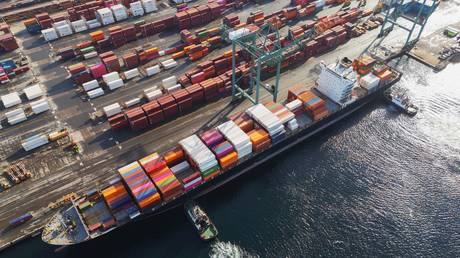
International shipping through the Bab el-Mandeb strait operates on tight commercial margins dictated by fuel efficiency, insurance premiums, and delivery timeframes. When security conditions force maritime operators to bypass the Suez Canal and circumnavigate the African continent via the Cape of Good Hope, the global cost function changes immediately. Transit times increase by roughly ten to fourteen days, bunker fuel consumption spikes, and freight rate indices adjust upward. This mechanism demonstrates how asymmetric non-state actors impose macroeconomic penalties on global trade networks using low-cost projectile assets. The asymmetry lies in the ratio between attacker expenditure and defender mitigation costs; intercepting inexpensive loitering munitions with high-end naval defense missiles creates an unsustainable financial drain for state militaries over a protracted timeline.
Yemeni domestic dynamics compound this international pressure. The anti-Houthi coalition, nominally anchored by the Presidential Leadership Council and supported by regional partners such as Saudi Arabia and the United Arab Emirates, suffers from internal fragmentation. Competing political objectives, distinct territorial ambitions, and fractured command structures prevent the formation of a unified offensive front. Consequently, military engagement remains contained within a low-intensity stalemate along internal demarcation lines in governorates such as Marib, Taiz, and Hodeidah. This fragmentation grants the Houthi leadership operational initiative, allowing them to calibrate maritime harassment campaigns independently of domestic military pressure.
External state sponsorship provides the technical scaffolding necessary for sustained maritime targeting. While the Houthi movement maintains indigenous manufacturing capacity for basic unguided rockets and short-range drones, sophisticated anti-ship ballistic missiles, precision guidance systems, and over-the-horizon intelligence, surveillance, and reconnaissance data require external transfer networks. These supply vectors exploit porous maritime borders and land routes, defying maritime interdiction efforts. Understanding the durability of the Houthi campaign requires analyzing the cost-benefit calculus of their primary external patron, whose strategic posture benefits from maintaining a controlled state of regional instability without triggering direct, full-scale military escalation.
Global supply chains have adapted to this persistent friction through structural risk pricing rather than operational withdrawal. Major container shipping lines maintain contingency protocols that treat Red Sea transit disruptions as a permanent operating variable rather than a temporary anomaly. Insurance underwriters continually recalibrate war risk premiums based on real-time threat intelligence, transforming maritime security into a continuous financial overhead. This normalization of high-cost routing institutionalizes the economic drag, shifting the burden onto consumer markets through elevated import costs and prolonged inventory cycles.
Strategic resolution or operational suppression of the maritime threat profile faces severe limitations. Comprehensive neutralization via air power alone remains historically ineffective against dispersed, hardened insurgent networks deeply embedded within civilian infrastructure. Ground offensives aimed at retaking the Hodeidah coastal strip would require massive resource commitments, risking humanitarian catastrophe and renewed urban warfare that neither regional coalition partners nor international actors are currently willing to finance. Ground operations also risk solidifying internal Houthi recruitment narratives by framing the conflict as a defense against foreign intervention.
Future operational trajectories depend heavily on the threshold of economic tolerance among importing nations and the evolutionary pace of counter-uas technology. As naval forces deploy directed-energy weapons and low-cost interceptors to counter the missile expenditure imbalance, the cost curve of defensive operations will begin to flatten. Simultaneously, diplomatic channels operating through regional intermediaries will continue to test the boundaries of permanent cease-fire frameworks tied to broader Yemeni economic relief and salary disbursements for civil servants in Houthi-controlled zones.
The immediate strategic priority for affected commercial and governmental entities involves transitioning from reactive crisis management to predictive asset protection. Maritime operators must institutionalize dynamic routing algorithms that factor in real-time kinetic telemetry, intelligence-derived threat vectors, and fluctuating insurance indices. Supply chain architects should decentralize inventory holding patterns, establishing localized buffers that insulate manufacturing schedules from maritime chokepoint volatility. Relying on the assumption of a return to pre-2023 maritime stability represents a systemic planning failure; strategic frameworks must treat regional maritime interdiction as an enduring baseline condition of modern global trade.