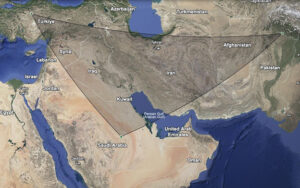
The signing of the Mecca Joint Defence Agreement by Saudi Arabia, Türkiye, and Pakistan, alongside parallel developments in Iranian shipping frameworks, marks a profound architectural shift in West Asian security. Traditional analyses frequently mischaracterize these shifts as reactive diplomacy. Instead, they represent a calculated exercise in structural hedging, driven by the degradation of external security guarantees and the necessity of internalizing regional deterrence.
Deconstructing these concurrent pacts requires examining the mechanics of deterrence, the operational limits of the new trilateral framework, and the economic recalibration of Gulf transit routes.
The Tripartite Security Architecture
The core operational thesis of the Mecca Agreement is straightforward: an armed attack against any single signatory constitutes an act of aggression against all three. While public commentary frequently draws superficial parallels to collective security clauses found in transatlantic organizations, the structural reality of the Mecca pact is fundamentally different. It lacks an integrated permanent command structure, a unified joint force, or automated mobilization triggers.
Instead, the agreement formalizes a tripartite risk-sharing matrix combining three distinct national assets:
- Saudi Capital and Energy Infrastructure: Provides the financial liquidity to fund joint defense industrial development and anchors the strategic importance of the energy grid.
- Turkish Defense Technology: Supplies advanced unmanned aerial systems, electronic warfare capabilities, and extensive industrial manufacturing output rooted in NATO-standard interoperability.
- Pakistani Manpower and Strategic Assets: Offers a large, battle-tested standing military alongside specialized technical forces and a nuclear deterrent framework.
This convergence establishes a geopolitical triangle surrounding the Iranian plateau. By fusing Turkish operational doctrine with Pakistani strategic depth and Saudi economic weight, the signatories are substituting the historical security umbrella of external powers with an indigenous balance of power.
The Deterrence Deficit and Cost Functions
To evaluate why this pact was executed, one must analyze the cost function facing Riyadh. Repeated missile and drone disruptions targeting Gulf energy infrastructure demonstrated that traditional bilateral defense arrangements contained critical vulnerability thresholds. The financial and operational cost of intercepting low-cost asymmetric projectiles far exceeded the cost of deployment for aggressors, creating an unsustainable asymmetry.
The Mecca Agreement attempts to alter this cost function through credible collective deterrence. By binding Türkiye and Pakistan directly to Saudi security, Riyadh raises the potential diplomatic and military cost for any hostile actor contemplating strikes against Saudi territory. For Ankara, the pact expands its strategic depth southward into the Gulf, institutionalizing defense-industrial exports. For Islamabad, the agreement cements financial backing and solidifies long-standing military advisory relationships into a formal treaty obligation.
However, the efficacy of this deterrence remains bounded by execution variables. Without a centralized military headquarters or predefined burden-sharing protocols, response times during an active crisis will depend entirely on ad-hoc political alignment among the three capitals. Consequently, the pact operates primarily as a political tripwire rather than an instantaneous military shield.
Maritime Realignment in the Strait of Hormuz
Simultaneously, the geopolitical geography of energy transit is undergoing a parallel structural transformation. Ongoing negotiations between Iranian and Omani delegations to establish a temporary commercial shipping framework through the Strait of Hormuz signal a departure from sixty years of established transit routing.
Under the proposed model, a significant proportion of commercial shipping traffic will navigate directly through Iranian territorial waters. This does not constitute a full liberalization of the strait. Rather, it is a risk-mitigation mechanism designed by Tehran to capture transit rents, institutionalize a cooperative maritime presence, and exert localized regulatory control over vessels traversing the chokepoint.
This creates a bifurcated security environment in West Asian waters. On one side, Saudi-led maritime coalition initiatives attempt to secure southern approaches via the Red Sea and the Bab al-Mandeb Strait. On the other side, the northern energy corridor through the Persian Gulf is being funneled into a bilateral administrative framework dictated heavily by Iranian maritime parameters.
Strategic Vulnerabilities and Systemic Limits
Despite the ambition of these realignments, systemic vulnerabilities persist across both the trilateral pact and the emerging shipping frameworks.
First, internal friction among the signatories cannot be discounted. Türkiye maintains complex diplomatic and economic equations with actors across the region, including entities fundamentally opposed to Gulf security priorities. Second, the absence of automated response mandates means that if a low-intensity asymmetric attack occurs, each state retains the sovereign right to interpret the severity of the incident, risking paralysis during a crisis.
Furthermore, India is closely monitoring these developments due to the expansion of Turkish-Pakistani defense cooperation, introducing external diplomatic pressures that could complicate the long-term cohesion of the bloc. On the maritime front, a transit framework dependent on Iranian territorial waters remains subject to sudden policy reversals in Tehran, meaning commercial operators will continue to price substantial geopolitical risk premiums into regional freight and energy shipping costs.
Implementation Vectors
The viability of the Mecca Joint Defence Agreement will not be judged by its founding text, but by subsequent operational integration. Observers must monitor three specific indicators over the next twenty-four months:
- Institutionalization: The establishment or omission of a permanent joint military coordination committee or rotational command post.
- Defense Industrial Integration: The scale of joint manufacturing contracts signed between Saudi Arabia and Türkiye utilizing Pakistani technical integration.
- Crisis Behavior: The speed and uniformity of diplomatic and military responses by all three capitals when minor security infractions occur along their respective contested peripheries.
If these variables yield institutional depth, the arrangement will permanently alter the security architecture of West Asia, shifting the region from a client-patron security model to a polycentric, self-sustained balance of power. If they stall, the pact will remain a diplomatic deterrence signal without operational teeth.


