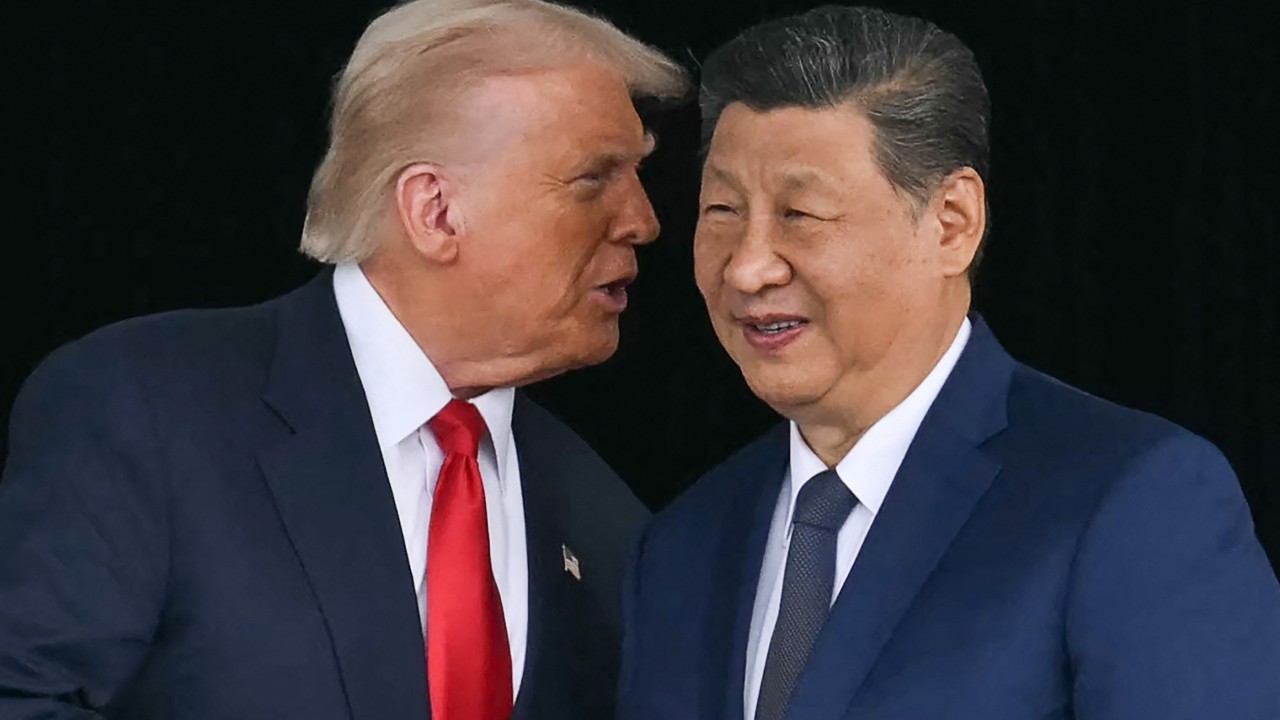
The domestic shift in American sentiment toward China represents a fundamental recalibration of the geopolitical risk premium, transforming what was once a liability into a tactical opening for executive diplomacy. As Donald Trump prepares for a state visit to Beijing, the mission is not merely a diplomatic formality but a high-stakes negotiation aimed at balancing the trade deficit against a backdrop of shifting public perception. The warming of domestic sentiment serves as the primary lubricant for this friction-heavy machinery, allowing for a pivot from purely adversarial protectionism toward a framework of structured reciprocity.
The Tripartite Framework of Evolving Domestic Sentiment
The softening of domestic hardline stances is driven by three distinct variables that govern the American public's perception of the U.S.-China relationship. Understanding these drivers is essential to predicting the outcomes of the Beijing summit. You might also find this similar story interesting: Why Trump and Xi are Playing a High Stakes Game Over Iran.
- Economic Interdependence as a Stabilizing Force: Despite the rhetoric of "decoupling," the operational reality of global supply chains enforces a baseline of pragmatic cooperation. The American consumer’s sensitivity to inflationary pressures, particularly in the electronics and manufacturing sectors, has created a ceiling for how much hostility the electorate will tolerate. When trade barriers threaten the domestic cost of living, sentiment trends toward stabilization.
- The Geopolitical Counterweight Effect: The emergence of secondary and tertiary global conflicts has forced a reprioritization of threats. In a world of fragmented security concerns, the public increasingly views China through the lens of strategic competition rather than existential conflict. This nuance provides the executive branch with the "political capital" required to pursue direct engagement without appearing weak to a domestic audience.
- Technological Parity and Intellectual Asset Management: There is a growing realization that total containment is an outdated strategy. As China achieves parity in specific AI and green-energy verticals, the domestic narrative is shifting from "blocking" to "competing and collaborating." Public sentiment now rewards leaders who can secure favorable terms for market access and intellectual property protections rather than those who propose total isolation.
The Cost Function of Diplomatic Engagement
Every diplomatic maneuver carries an inherent cost, calculated as the sum of domestic political risk and international credibility. For the Trump administration, the Beijing visit is an exercise in optimizing this cost function.
$$Total Cost = (R_p \times V_d) + (C_i \times G_s)$$ As reported in detailed reports by Associated Press, the effects are significant.
Where:
- $R_p$ is Domestic Political Risk.
- $V_d$ is Voter Disruption.
- $C_i$ is International Credibility.
- $G_s$ is Global Stability.
The objective of the visit is to minimize $R_p$ by leveraging the current "warming trend" while maximizing the concessions gained from the Chinese leadership. The primary mechanism for this is the Trade Reciprocity Protocol, a structural demand that goes beyond simple tariff adjustments to address deep-seated issues in state-sponsored industry subsidies and currency valuation.
Strategic Bottlenecks in the Negotiation Architecture
The Beijing summit faces three structural bottlenecks that could impede the translation of sentiment into tangible policy wins.
The Enforcement Gap
Historically, U.S.-China agreements suffer from an enforcement gap—the delta between signed memorandums of understanding (MOUs) and ground-level implementation. Previous administrations relied on "good faith" mechanisms; however, the current strategy involves Phased Implementation Triggers. These are binary conditions where specific trade relaxations are tied directly to verifiable data points, such as a measurable increase in U.S. agricultural exports or a reduction in the theft of proprietary software.
The Dual-Use Technology Paradox
The most significant friction point is the export of dual-use technologies—innovations that have both civilian and military applications. As domestic sentiment warms, there is pressure to reopen markets for high-end semiconductors. However, the security apparatus views these exports as a direct contribution to China’s defense infrastructure. This creates a bottleneck where economic goals are in direct opposition to national security mandates.
Currency Elasticity and Debt Holdings
The relationship is further complicated by the $1.1 trillion in U.S. Treasury securities held by China. Any significant disruption in diplomatic relations threatens the stability of the bond market. The "warming sentiment" at home is partially a reflection of the market's desire to avoid a "Black Swan" event involving a sudden sell-off of these assets. The visit must address the long-term management of this debt to ensure that the U.S. maintains its sovereign fiscal autonomy.
The Mechanics of the "Great Power" Narrative
The visit is designed to project a narrative of "Competitive Coexistence." Unlike previous eras of globalization that sought to integrate China into the Western liberal order, the current approach accepts systemic differences as a permanent fixture.
This leads to the Bifurcated Market Strategy. In this model, the U.S. and China maintain deep integration in consumer goods, agriculture, and non-sensitive manufacturing, while enforcing a strict "digital curtain" around AI, quantum computing, and telecommunications. The warming sentiment allows the administration to sell this bifurcation to the public as a "Smart Win"—protecting the future while securing the present.
Vulnerabilities in the Warming Trend
The current uptick in positive or neutral sentiment is fragile. It is highly susceptible to external shocks, such as maritime incidents in the South China Sea or shifts in the Taiwan Strait status quo. Strategic analysts must account for the Sentiment Decay Rate, which accelerates whenever security concerns overshadow economic benefits. If the Beijing visit fails to produce a "visual win"—such as a massive purchase agreement for U.S. energy or aircraft—the domestic sentiment will likely revert to its previous hawkish baseline within a single fiscal quarter.
Operationalizing the State Visit
The administration’s success depends on moving beyond the optics of a state dinner and into the mechanics of institutional reform. To elevate this visit from a PR event to a strategic milestone, the delegation must execute the following tactical layers:
- Subsidized Industry Audits: Demanding transparency in the "Made in China 2025" program to ensure American companies are not competing against a bottomless state treasury.
- Market Access Parity: Establishing a "mirror policy" where Chinese firms in the U.S. are subject to the same regulatory hurdles and ownership caps that American firms face in China.
- Direct-to-Consumer Energy Pacts: Securing long-term Liquefied Natural Gas (LNG) contracts that provide China with energy security while reducing the U.S. trade deficit by billions.
The strategic play is to use the temporary window of favorable domestic sentiment to lock in structural changes that are difficult to reverse. By codifying these changes in the form of binding bilateral treaties rather than executive agreements, the administration can insulate the progress from future political volatility. The goal is not a "reset" of the relationship, but the establishment of a new, sustainable friction point where both powers can operate without the constant threat of systemic collapse.
Execution must prioritize the Sectoral Disengagement Model: identify the specific industries where competition is zero-sum and isolate them from the broader economic relationship. This allows for growth in "Safe Zones" while maintaining a defensive posture in "Contested Zones." The Beijing visit is the opening move in this decades-long chess match of managed competition.