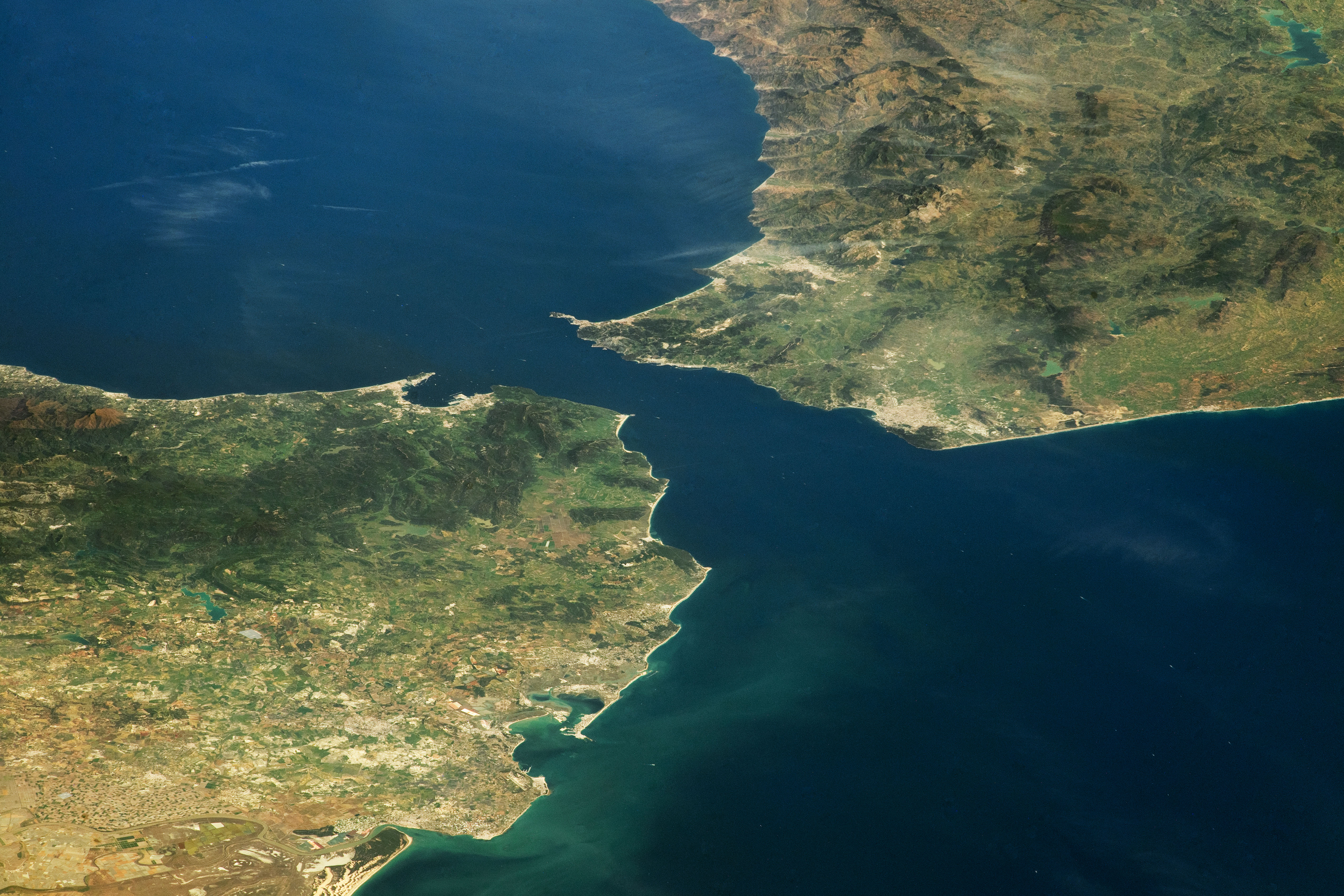
When daily commercial vessel transits through a critical global maritime chokepoint drop to single digits, the baseline assumption of continuous global supply chain elasticity breaks down completely. The Strait of Hormuz handles roughly a fifth of the world's petroleum consumption and a massive share of liquefied natural gas flows. When maritime traffic through this narrow body of water decelerates to a crawl, the disruption is not merely regional. It represents an immediate shock to maritime logistics, insurance pricing models, and international energy arbitrage.
Navigational risk through the Gulf has transitioned from a localized geopolitical friction point to a permanent operational tax on maritime asset owners. To understand why ship operators choose to anchor offshore rather than risk transit, we must deconstruct the financial and physical mechanics governing modern energy shipping. The decision-making calculus relies on three distinct variables: hull and machinery insurance premiums, vessel charterer liability, and the absolute availability of sovereign naval protection.
The Economics of Risk Asymmetry
The primary driver behind single-digit daily transits is a severe market failure in maritime insurance. War risk insurance underwriters adjust pricing based on instantaneous probability calculations. When the threat vector shifts from theoretical interception to confirmed kinetic targeting of commercial tonnage, underwriting rates spike exponentially.
Under normal operational conditions, war risk premiums represent a fraction of a percent of a vessel's total hull value per voyage. During periods of heightened kinetic hostility, underwriters either quote prohibitive premiums that destroy the economic viability of the voyage or withdraw coverage entirely. Shipowners face a stark binary choice. They can self-insure, which violates mortgage covenants and corporate risk mandates, or they can idle the vessel outside the zone of conflict.
This creates a capital utilization bottleneck. Supertankers and liquefied natural gas carriers represent massive capital expenditures, often exceeding hundreds of millions of dollars per hull. Leaving these assets idle destroys return on invested capital. Yet, the expected loss of a catastrophic strike outweighs the opportunity cost of temporary deployment freezing. Charterers and shipowners calculate that absorbing demurrage costs and delaying delivery schedules is preferable to total hull loss or crew capture. Consequently, the commercial incentive to transit evaporates the moment insurance markets price the route as a war zone rather than a trade lane.
Operational Friction and Spatial Constraints
Geography compounds the financial pressure. The Strait of Hormuz is roughly twenty-one miles wide at its narrowest point, with inbound and outbound traffic separation schemes compressing deep-draft vessels into two two-mile-wide corridors. These physical corridors sit entirely within territorial waters controlled by states with conflicting strategic interests.
This geographic constriction strips vessels of maneuvering room. In open ocean navigation, a ship facing a hostile approach can execute evasive maneuvers, alter speed, or divert hundreds of miles off-course with minimal fuel penalty. In the Strait, a vessel is locked into a predictable, linear track. The speed restrictions imposed by traffic separation schemes further prolong exposure time within range of shore-based anti-ship missiles and fast attack craft.
Maritime operators evaluate this spatial vulnerability through the lens of kinetic exposure time. Every additional hour spent navigating the traffic separation scheme multiplies the probability of interception. Because alternative pipeline bypasses, such as the East-West pipeline in Saudi Arabia or the Habshan-Fujairah pipeline in the United Arab Emirates, possess finite throughput capacities, they cannot absorb the displaced maritime volume. The physical infrastructure of energy transport has no instantaneous workaround. When the maritime lane closes, the oil stays in the ground or backs up in storage terminals until floating storage economics shift.
The Downstream Supply Chain Shockwave
The reduction of transits to single digits alters global commodity pricing structures before physical shortages actually materialize on docks. Commodity markets operate on forward expectations and physical availability. When spot market transits dry up, refiners in Asia and Europe immediately reprice crude feedstock procurement.
Refining margins depend heavily on continuous feedstock inputs. Heavy and medium sour crudes originating from Gulf producers have specific chemical profiles tailored to complex refineries in countries like China, India, Japan, and South Korea. Substituting these feedstocks requires altering refinery configurations to process sweet crudes from the Atlantic basin or the Americas. This reconfiguration process incurs operational downtime and efficiency losses.
Freight rate volatility accelerates the price distortion. Shipowners who maintain vessels willing to enter the high-risk zone demand astronomical premiums, known colloquially as threat multipliers on top of standard Worldscale freight rates. These inflated transport costs flow directly into refined product prices, disproportionately impacting import-dependent economies. The cost of moving a barrel of oil spikes not because of bunker fuel price fluctuations, but because the risk premium demanded by the market prices in the potential destruction of the carrier itself.
Strategic Asset Allocation Under Perpetual Uncertainty
Navigating this operational environment requires shifting from tactical voyage planning to absolute asset redeployment. Energy majors and independent tanker operators no longer optimize for route efficiency. They optimize for capital preservation and regional diversification.
Vessels currently trapped on the wrong side of the chokepoint face prolonged containment, while those positioned outside the Persian Gulf increasingly execute long-term charters on alternative trade routes, such as US Gulf Coast to Asia or West Africa to Europe. This structural realignment of global tanker fleets takes months to reverse. Even if maritime security guarantees are restored overnight, shipowners will demand sustained, verifiable risk reduction before reallocating capital back into the Persian Gulf trade lanes.
Maritime regulatory bodies and flag states must re-engineer how they handle convoy protection and naval escort coordination. Ad hoc responses leave commercial operators guessing about the rules of engagement and the speed of military intervention during an active crisis. Without a standardized, pre-engineered framework for commercial naval escorts that institutionalizes risk-sharing between governments and private insurers, transit volumes will remain permanently suppressed.
The structural repair of the Strait of Hormuz transit mechanism depends entirely on the decoupling of commercial shipping from active geopolitical conflict zones through institutionalized insurance backstops or permanent naval deterrent corridors. Until underwriting syndicates regain actuarial visibility, single-digit daily transits will remain the baseline reality of Gulf energy logistics.

