Donald Trump’s recent assertions that the United States will intervene to clear traffic congestion in the Strait of Hormuz rest on a fundamental misunderstanding of how maritime chokepoints actually function. The promise suggests that a simple deployment of American naval might can untangle a knot of tankers and bulk carriers as if they were cars in a suburban gridlock. It is a tempting narrative for a domestic audience, but the reality on the water is governed by a brutal mix of international law, insurance premiums, and the sheer physics of moving 300,000-ton vessels through a narrow, volatile corridor.
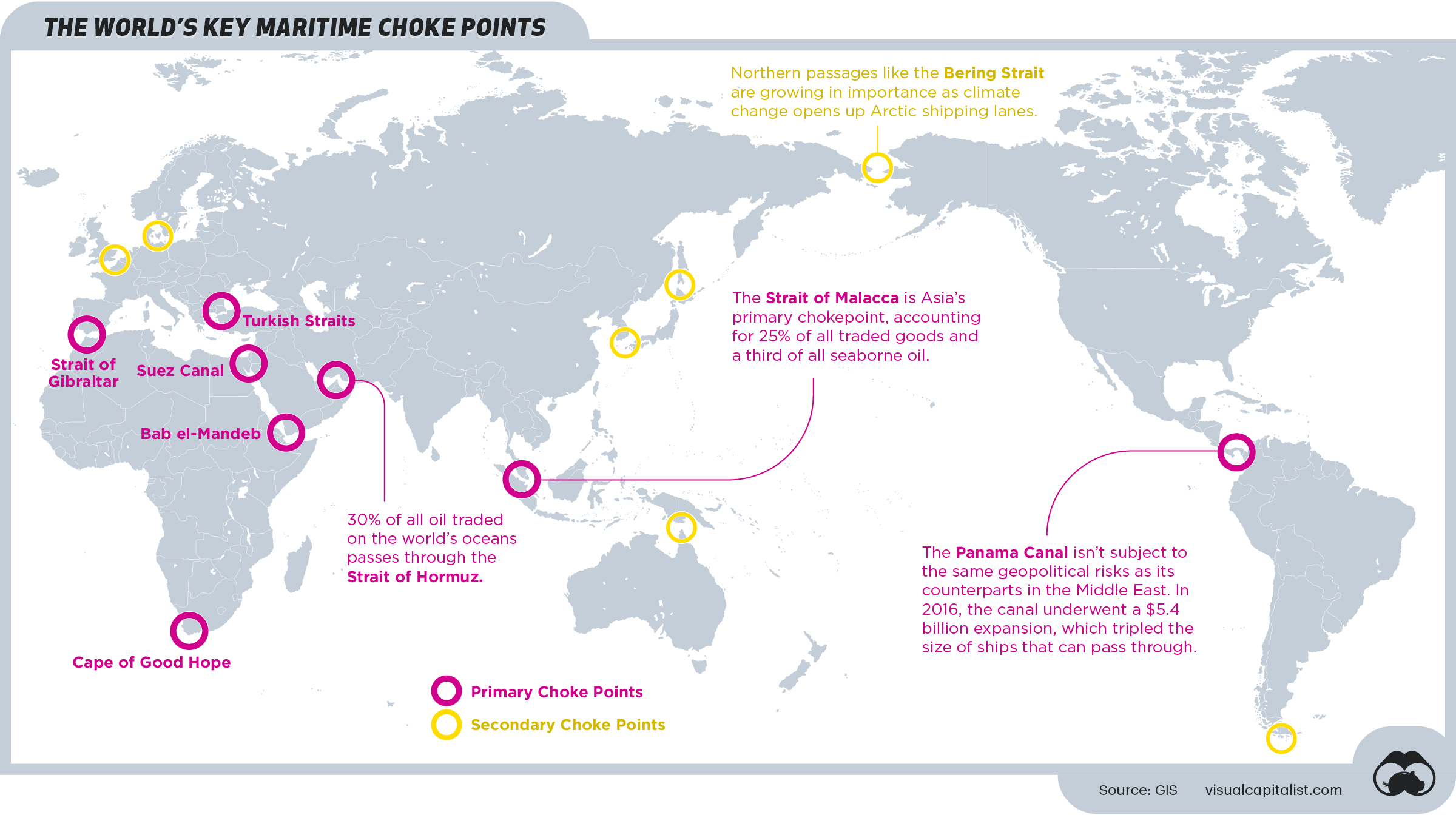
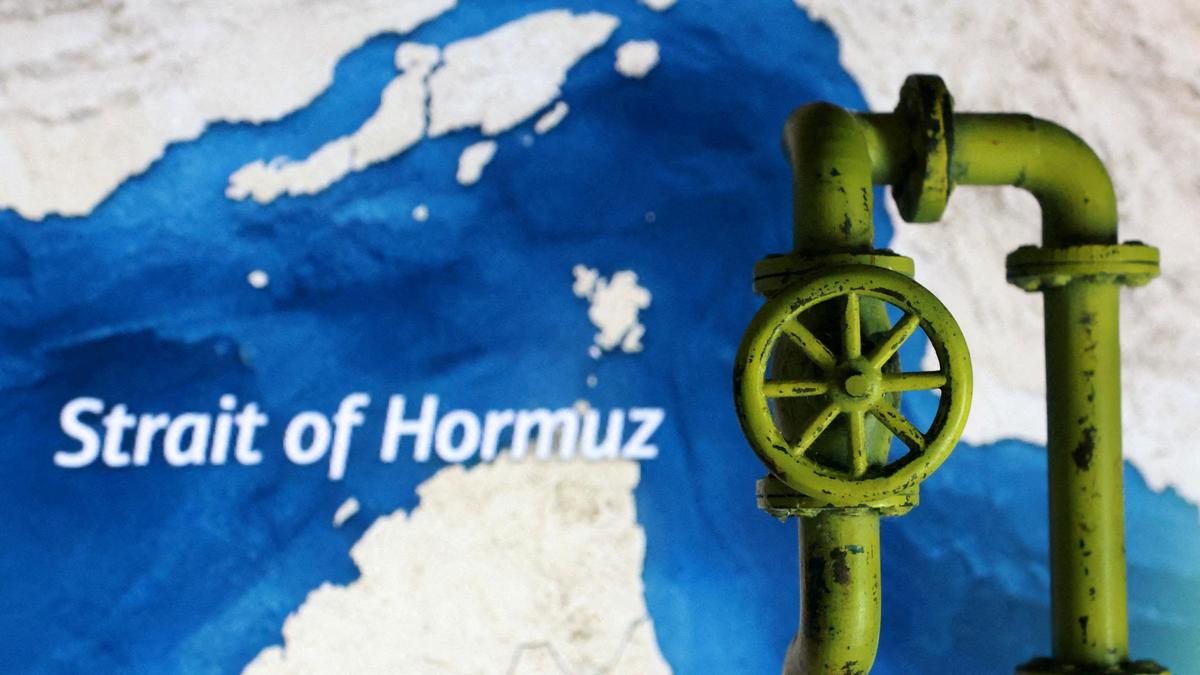
The Strait of Hormuz is not merely a waterway. It is a 21-mile-wide throat through which roughly one-fifth of the world’s total oil consumption passes every single day. When the flow slows down, the global economy feels a collective tightening in its chest. However, the current "buildup" isn't a matter of poor traffic management or a lack of police presence. It is the result of a high-stakes psychological war between regional powers, primarily Iran, and the global shipping industry that must weigh the cost of a barrel of crude against the risk of losing a $100 million hull.
The Physical Reality of the Chokepoint
To understand why a military "quick fix" is a fantasy, one must look at the geography. While the Strait is 21 miles wide at its narrowest point, the shipping lanes themselves—the Traffic Separation Scheme—consist of only two-mile-wide channels for inbound and outbound traffic, separated by a two-mile wide buffer zone.
These lanes are nestled almost entirely within Omani and Iranian territorial waters. Under the United Nations Convention on the Law of the Sea (UNCLOS), ships enjoy the right of "transit passage," provided they move quickly and refrain from activities that threaten the coastal states. The moment the United States Navy begins "directing" traffic or forcibly moving vessels, the legal status of the Strait shifts. If the U.S. attempts to act as a maritime traffic controller without the explicit cooperation of the littoral states, it risks transforming a commercial bottleneck into a direct military confrontation.
Tankers cannot simply "speed up" or "swerve." A Loaded Very Large Crude Carrier (VLCC) can take miles to come to a complete stop and has a turning radius that makes a freight train look nimble. When these vessels bunch up, it is usually because the receiving ports are backed up or because the risk of harassment from the Islamic Revolutionary Guard Corps (IRGC) has forced captains to wait for escorted convoys. Adding more grey-hulled warships to the mix can sometimes increase the physical crowding in these narrow lanes, creating more opportunities for the very accidents the intervention aims to prevent.
The Insurance Hand on the Tiller
The true masters of the Strait of Hormuz are not the admirals in Bahrain or the clerics in Tehran. They are the underwriters at Lloyd’s of London. Shipping is a business of margins. When tensions rise in the Gulf, the Joint War Committee in London designates the area as a high-risk zone. This triggers "Additional Premium" charges.
A single transit through the Strait for a modern supertanker can see insurance costs spike by tens of thousands of dollars in a matter of hours if a security incident is reported. Trump’s rhetoric about US intervention is intended to signal stability, but for an insurer, the promise of "help" often sounds like the promise of "escalation." If the market perceives that the US Navy is going to take a more aggressive stance, insurance rates do not fall; they climb.
Higher insurance costs lead to "slow steaming," where ships reduce speed to save fuel and offset the premium hikes, or they cause ships to anchor outside the Gulf of Oman, waiting for a clearer political signal. This creates the very traffic buildup the administration claims it wants to solve. You cannot clear a maritime jam by shouting at it; you clear it by lowering the perceived risk. Currently, Washington’s verbal posturing is achieving the opposite.
The Asymmetric Challenge from the Shoreline
Iran’s strategy in the Strait is not to win a naval battle. They know they would lose that in an afternoon. Instead, their goal is to make the cost of business unsustainable. They use "swarm" tactics—hundreds of fast, small boats armed with cruise missiles, mines, and torpedoes.
These assets are hidden in the jagged coastline and on islands like Abu Musa and the Tunbs. When the US speaks of "helping with traffic," it implies a degree of control that is nearly impossible to maintain against an adversary that uses the geography of the Persian Gulf like a fortress. A US destroyer is a formidable platform, but it is also a massive target in a confined space.
If the US Navy attempts to clear the "buildup" by aggressively patrolling or pushing back Iranian maritime patrols, they move into the "kill zone" of land-based anti-ship missiles. The history of the "Tanker War" in the 1980s showed that even with a massive US presence (Operation Earnest Will), tankers were still hit by mines and missiles. The US eventually succeeded, but at the cost of significant escalation and the accidental downing of a civilian airliner. Modern policymakers seem to have forgotten that "clearing traffic" in 1988 required the largest US naval surface engagement since World War II.
The False Promise of Energy Independence
A common counter-argument used to justify a more hands-off approach—or a more aggressive one—is that the US is now energy independent. The logic follows that because the US produces more oil than it consumes, the Strait of Hormuz is someone else’s problem, or conversely, that we can afford to be aggressive because we aren't dependent on the flow.
This is a fundamental misunderstanding of the global oil market. Oil is a fungible commodity. If the Strait is blocked or even significantly slowed, the global price of crude will skyrocket. It doesn't matter if the oil in a Texas refinery came from the Permian Basin; that refinery will still charge the global market price. A disruption in Hormuz would send gas prices in Ohio and Florida soaring within 48 hours.
The "traffic" in the Strait is the lifeblood of the global economy. By framing the solution as a simple military logistical task, the administration is downplaying the economic catastrophe that would follow a miscalculation. The US isn't just "helping" with a local problem; it is attempting to subsidize the security of a global supply chain that it no longer has the undisputed power to command.
Regional Allies and the Sovereignty Gap
Any US-led effort to manage traffic in the Strait requires the cooperation of the Gulf Cooperation Council (GCC) states, specifically Saudi Arabia and the UAE. However, these nations are currently caught in a delicate balancing act. They want US protection, but they are terrified of a full-scale war on their doorstep that would destroy their desalination plants and oil infrastructure.
When the US talks about intervening, it often does so without consulting the very nations whose waters are being discussed. Oman, which manages the southern half of the shipping lanes, has traditionally maintained a neutral stance, acting as a bridge between Washington and Tehran. An overly assertive US presence risks alienating Muscat and turning the "management" of the Strait into a unilateral American occupation of international shipping lanes.
Furthermore, the "traffic" is increasingly destined for Asia. China, India, Japan, and South Korea are the primary customers for the oil flowing through Hormuz. There is a growing sentiment in Washington that if the US is going to provide the "police force" for these lanes, the beneficiaries should pay up. This adds another layer of friction. Managing traffic isn't just about ships moving; it’s about who pays for the fuel, the sailors, and the risk of the warships doing the patrolling.
The Logistics of a Naval Convoy
If the "help" Trump mentions takes the form of convoys—where warships escort groups of tankers—the efficiency of the Strait will actually drop. Convoys move at the speed of the slowest vessel. They require massive coordination and create gaps in the supply chain as ships wait for their turn to be escorted.
During the 1980s, the convoy system was a logistical nightmare. It didn't speed up traffic; it formalized the delay. If the goal is to reduce "buildup," convoys are the wrong tool. They are a tool for survival, not for throughput. To suggest that the military will fix a traffic jam by implementing a system that inherently slows down movement is a contradiction that no one in the administration has addressed.
The Missing Diplomatic Gear
The congestion in the Strait is a political symptom, not a mechanical failure. It is the physical manifestation of the collapse of the JCPOA (the Iran nuclear deal) and the subsequent "maximum pressure" campaigns. You cannot fix the traffic with a bigger engine; you have to fix the road.
As long as Tehran feels backed into a corner, they will use their only real leverage: the ability to threaten the world's oil supply. No amount of US naval "help" can change the fact that Iran sits on the long side of the Strait. They have the "home field" advantage. They can disrupt the flow with a handful of $20,000 mines that cost the US Navy millions to find and clear.
The focus on "traffic buildup" is a convenient distraction from the lack of a coherent long-term strategy for the region. It frames a complex geopolitical standoff as a simple infrastructure project. This appeals to a certain brand of voter who views the world's problems as things that can be solved with "common sense" and a firm hand. But the sea is not a highway, and tankers are not trucks.
The US Navy is already overstretched, facing challenges in the South China Sea and the Red Sea. Committing more resources to "manage traffic" in Hormuz is a massive drain on a fleet that is already struggling with maintenance backlogs and recruitment shortfalls. Every destroyer sent to escort a tanker in the Gulf is a destroyer that isn't countering Chinese expansionism or protecting cables in the Atlantic.
The "buildup" will persist as long as the underlying conflict remains. If the US truly wants to help, it will need to move beyond the rhetoric of naval dominance and engage in the grueling, unglamorous work of regional diplomacy. Otherwise, the "help" offered will merely be a more expensive way to watch the world’s most important waterway grind to a halt.
Realize that the Strait of Hormuz is a place where a single mistake can trigger a global recession. Treating it like a congested exit on the New Jersey Turnpike is more than just a simplification; it's a dangerous delusion that ignores a century of maritime history and the hard realities of modern naval warfare. The buildup isn't a problem to be solved; it's a warning to be heeded.