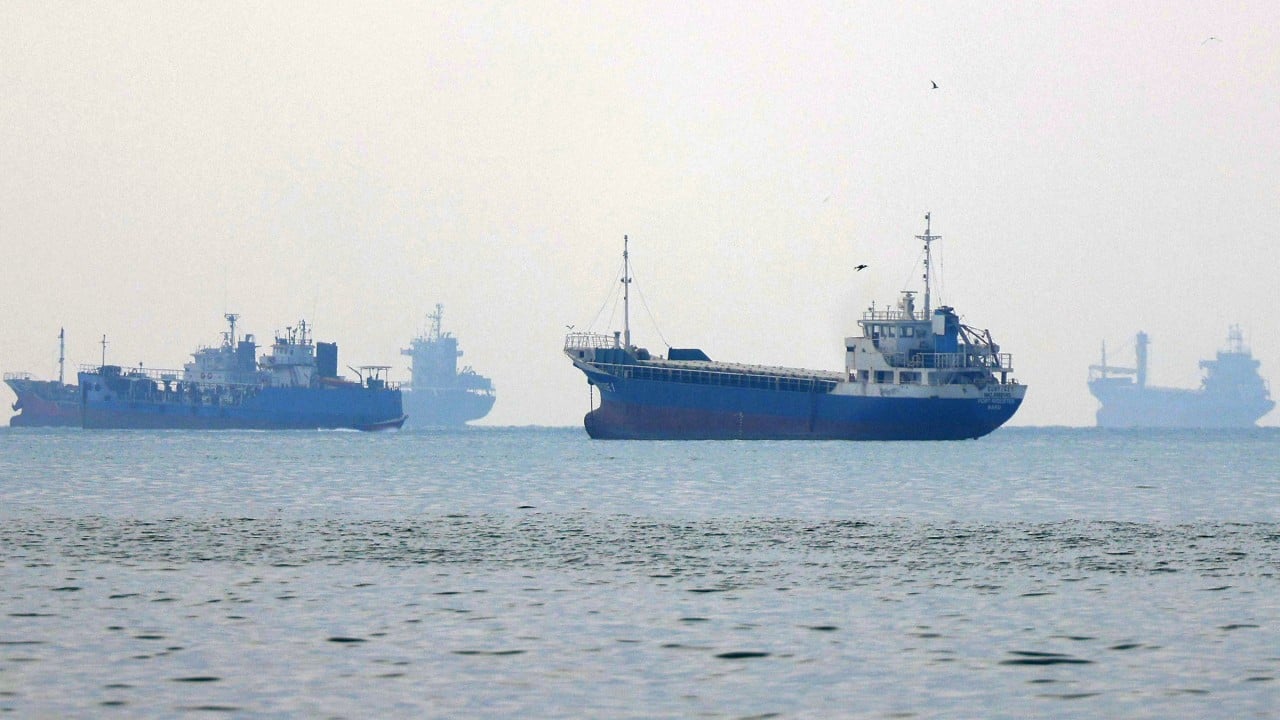
The dispatch of a South Korean military assessment team to the United Arab Emirates marks an operational shift in how Seoul calculates energy security vulnerabilities during active conflict. Rather than a routine diplomatic gesture, the deployment of this fact-finding delegation functions as a risk-mitigation mechanism designed to weigh the operational exposure of a potential maritime contribution against severe geopolitical penalties. With maritime traffic through the Strait of Hormuz effectively paralyzed by the ongoing United States-Iran conflict, South Korea faces a structural squeeze between alliance management demands and immediate energy supply vulnerability.
The economic exposure is quantifiable. The Strait of Hormuz handles roughly a fifth of global petroleum and liquefied natural gas flows. For an export-driven, energy-dependent industrial economy like South Korea, sustained blockages or exorbitant risk premiums on Gulf hydrocarbons threaten baseline industrial output. Seoul has historical precedent for operating in these waters through the Cheonghae anti-piracy unit, which previously expanded its operational envelope into the Persian Gulf and the Gulf of Oman during prior tanker seizures. However, the current theater represents an active combat zone rather than localized maritime piracy, altering the risk-reward ratio of any naval or non-combat asset deployment.
The structural dilemma facing the South Korean Ministry of National Defense centers on three competing friction points: alliance coercion from Washington, direct retaliation warnings from Tehran, and domestic military readiness constraints on the Korean Peninsula.
The Strategic Trilemma of South Korean Maritime Projection
Alliance economics dictate that asymmetric security dependents must frequently provide out-of-theater validation to primary security guarantors. The administration in Washington expects allied participation to secure freedom of navigation in critical choke points. Conversely, Tehran issued direct warnings, stating that any South Korean military contribution or presence in the Persian Gulf will be classified as direct participation in aggression, carrying severe diplomatic and economic consequences.
Navigating this divide requires Seoul to evaluate the operational utility of non-combat versus combat assets. Internal defense reviews have modeled multiple operational tiers:
- Direct Combat Integration: Deploying surface combatants such as Aegis destroyers directly into coalition formations under active fire, maximizing alliance scoring but drastically raising kinetic risks.
- Logistics and Support Scaffolding: Utilizing auxiliary support ships, maritime patrol aircraft like the P-8A, or explosive ordnance disposal teams to provide functional utility without direct offensive positioning.
- Information-Gathering Intermediary: Deploying localized assessment units to evaluate operational parameters on the ground before committing capital or personnel assets.
The current fact-finding mission serves the third tier. By examining regional security parameters directly in the UAE, military planners can calculate the exact threat matrix facing auxiliary units, including anti-ship missile ranges, asymmetric drone vectors, and mine warfare hazards.
The Energy Transmission Mechanism
The primary driver behind Seoul's reluctant engagement is not abstract alliance solidarity, but the domestic cost function of energy imports. When throughput velocity in the Strait of Hormuz drops, the friction manifests instantaneously in spot LNG and crude oil freight rates, insurance war-risk premiums, and extended transit times via alternative routing.
South Korean heavy industry, petrochemical complexes, and power generation grids operate on tight inventory buffers. A prolonged paralysis of Persian Gulf shipping forces procurement diversification toward higher-cost Atlantic basin suppliers or North American markets, driving up baseline manufacturing costs. Consequently, the defense ministry's calculus weighs the cost of inaction—chronic vulnerability to energy price shocks—against the cost of action, which includes potential Iranian asset targeting, cyber retaliation, or diplomatic isolation within regional Asian markets.
Operational Execution and Forward Posture
The findings compiled by the assessment team upon their return to Seoul will feed directly into the National Security Council's decision-making apparatus. If Seoul opts for a calibrated, low-signature deployment—such as specialized logistics or search-and-rescue assets rather than integrated strike elements—it aims to satisfy alliance expectations minimally while preserving enough strategic ambiguity to deter direct Iranian retaliation.
The structural outcome depends on whether Washington views token non-combat contributions as sufficient. If allied pressure escalates past the threshold of diplomatic accommodation, South Korea risks being drawn deeper into a maritime security architecture that fundamentally alters its traditional regional defense posture. The immediate tactical play requires utilizing the assessment team's ground data to establish a risk ceiling, decoupling domestic force readiness from external alliance demands until the cost of non-participation outweighs the hazards of engagement.