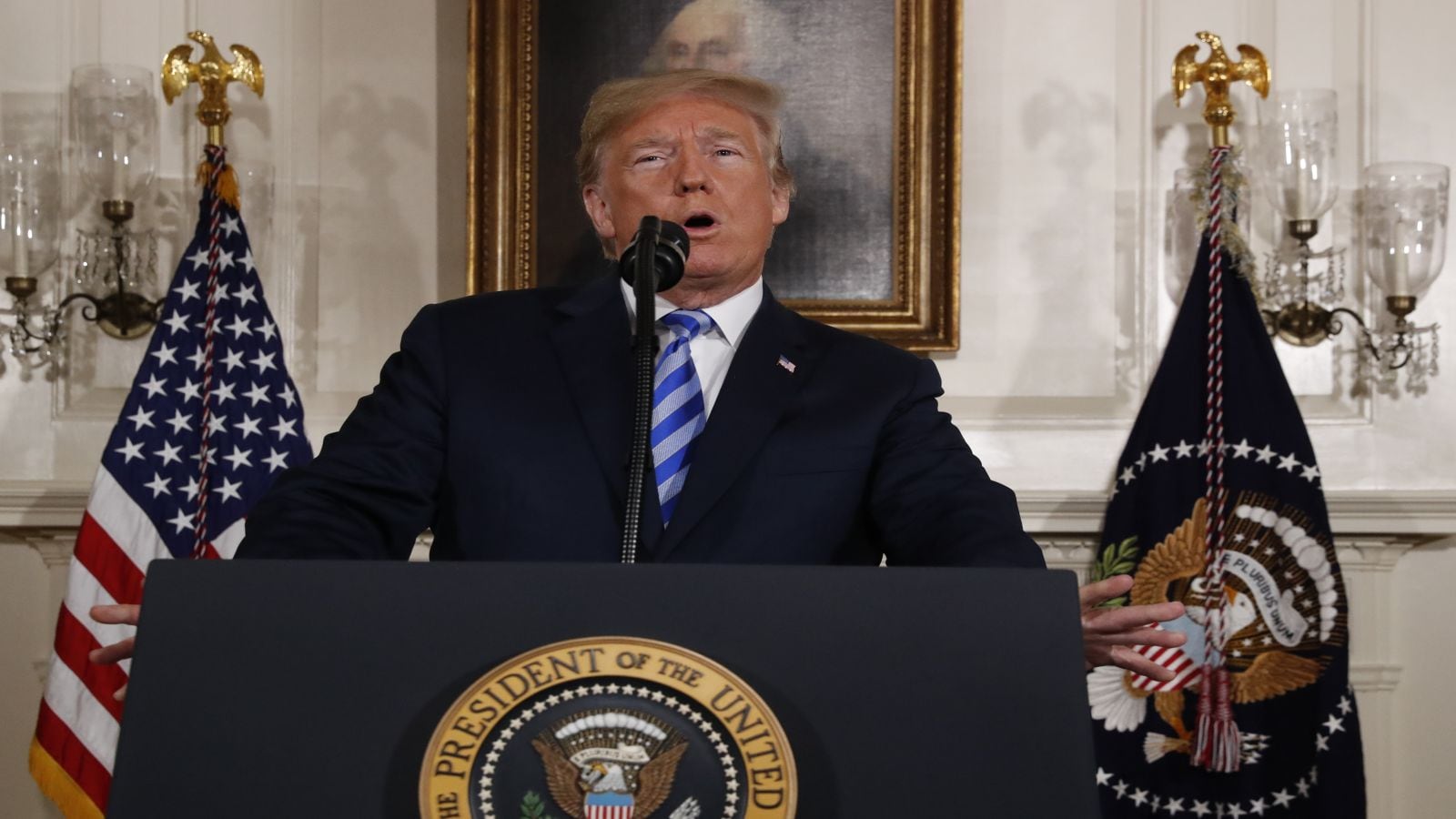
The mainstream media is running the exact same playbook it has used for three decades. A politician stands at a podium, points a finger at the Strait of Hormuz, shouts about Iranian drones violating a ceasefire, and the defense establishment nods in unison. The narrative is comforting in its simplicity: bad actors fly cheap drones, global shipping faces an existential crisis, and the solution is more naval patrols and standard defensive posturing.
It is a neat, digestible story. It is also entirely wrong.
Focusing on the drone strikes themselves misses the fundamental mechanics of modern maritime asymmetric warfare. Drones are not the ultimate weapon in these choke points; they are the loudest. They are kinetic theater designed to drive up insurance premiums, dominate the 24-hour news cycle, and force Western militaries to burn multimillion-dollar air defense missiles on thousand-dollar styrofoam targets. The real threat to global trade in the Strait of Hormuz is not a sudden blockade or a swarm of quadcopters. It is the sophisticated, calculated weaponization of maritime bureaucracy, civil law, and low-tech sabotage that completely bypasses traditional naval deterrence.
Standard reporting views these incidents through a purely kinetic lens. The "lazy consensus" presumes that if we shoot down the drones, we win the engagement. If you talk to anyone who has actually managed risk for a global shipping conglomerate or negotiated hull war risk premiums in London, they will tell you a completely different story.
The Economics of Kinetic Theater
We need to look at the math because the math is brutal. When a state actor launches a wave of loitering munitions toward commercial vessels, they are not necessarily trying to sink a Panamax container ship. Sinking a ship creates an environmental and geopolitical disaster that forces a massive, unpredictable international response.
Instead, the goal is economic friction.
Consider the cost-exchange ratio. A standard loitering munition utilized in these theater operations costs anywhere from $20,000 to $50,000. To counter this, a modern naval destroyer fires an interceptor missile that costs between $1 million and $4 million. From a pure attrition standpoint, the defender loses the economic war on day one.
But the real damage happens in the boardrooms of London and Singapore, not on the water. Within hours of a reported drone incident, Lloyd's Joint War Committee adjusts its listed areas of perceived enhanced risk.
- War Risk Premiums: A vessel transiting the Strait might see its additional war risk premium spike from 0.01% to 0.7% of the ship's total value for a single transit. For a $150 million crude carrier, that is an extra $1 million per voyage just to cross a line on a map.
- The Re-routing Illusion: Pundits scream that ships will simply avoid the area and route around Africa. For the Strait of Hormuz, this argument collapses under its own weight. Unlike the Red Sea, where routing around the Cape of Good Hope is a viable (though costly) alternative, the oil and gas leaving the Persian Gulf has nowhere else to go. You either pass through the 21-mile-wide choke point, or the energy stays in the ground.
By focusing on the physical drones, the mainstream media treats a symptom while ignoring the disease. The drone is merely the trigger that activates a massive, self-inflicted economic tax on global commerce.
Lawfare is the Weapon You Aren't Watching
If you want to disrupt global shipping without firing a single shot or drawing a declaration of war, you don't use a drone. You use a lawyer.
The true vulnerability of global shipping lies in its absurdly complex legal structure. A single vessel might be owned by a Japanese company, registered under a Panamanian flag of convenience, managed by a Greek firm, crewed by Filipino mariners, and carrying oil owned by a Swiss commodities trader to a refinery in South Korea.
State actors in the region understand this fragmentation perfectly. While the world watches for drone swarms, the far more effective strategy is regulatory harassment and judicial seizure under the guise of maritime law.
Imagine a scenario where a state-backed maritime authority detains a chemical tanker under the pretext of an alleged "environmental infraction" or a "collision with a local fishing boat." No shots are fired. No ceasefires are technically broken in a way that triggers a conventional military response. Yet, the ship is boarded, steered into sovereign territorial waters, and tied up in a legal quagmire for months.
This isn't a theoretical exercise. It has happened repeatedly. When a vessel is caught in judicial limbo, the entire supply chain fractures. The cargo loses value, the charter parties default, and the legal costs stack up. Yet, because there are no dramatic explosions or satellite photos of missile smoke trails, it barely registers on the international news radar. It is quiet, legalistic, and devastatingly effective.
The Failure of Traditional Deterrence
The conventional response to increased tension in the Strait is always the same: send in a carrier strike group.
This response assumes that the adversary plays by the rules of Westphalian state conflict, where the display of overwhelming conventional force compels the weaker party to back down. But asymmetric actors do not want a conventional naval battle. They know they would lose it in minutes.
Instead, they operate in the "gray zone"—the space between peace and open warfare.
When a superpower deploys a multi-billion-dollar naval asset to patrol a narrow body of water, it actually creates a target-rich environment for low-cost asymmetric tactics. A carrier strike group in a confined space like the Persian Gulf or the Strait of Hormuz lacks the operational depth it enjoys in the open Pacific. It is constrained by traffic lanes, shallow waters, and the constant proximity of sovereign coastlines.
By sending massive conventional warships to play traffic cop, Western militaries are using a sledgehammer to kill a mosquito, all while exposing their most valuable assets to high-consequence, low-cost vulnerabilities.
The Hard Truth About Maritime Security
What is the actual solution? It isn't more navy patrols, and it certainly isn't writing strongly worded letters to international bodies about ceasefire violations.
First, commercial shipping must accept that security cannot be entirely outsourced to state navies. The industry has spent decades stripping crews down to the bare minimum to cut costs. A massive container ship today might have a crew of fewer than twenty people. They are overworked, exhausted, and utterly incapable of maintaining proper visual watch or executing basic damage control while navigating a high-threat zone.
Second, we must de-escalate the rhetorical value of these incidents. Every time a politician holding a press conference acts as though a cheap drone launch is an act of total war, they deliver a massive psychological and economic victory to the attacker. They validate the strategy. They guarantee it will happen again.
Stop looking at the sky expecting a massive clash of fleets. The real conflict in the world's most critical choke points is a war of economic attrition, legal manipulation, and psychological manipulation.
If you continue to measure the threat by the number of drones launched, you will remain perfectly prepared for a war that nobody else is planning to fight.


