Donald Trump recently declared that the Strait of Hormuz remains wide open and that Tehran has entirely lost its strategic leverage over the vital waterway. This assertion lands at a strange intersection of military reality, economic vulnerability, and political theater. The former president's assessment relies on a specific premise: American naval dominance and expanded domestic oil production render foreign chokepoints largely irrelevant to Western economic survival. Yet, international shipping executives, energy analysts, and naval strategists view the situation through a far grimmer lens. A single narrow passage carrying roughly one-fifth of the world’s petroleum consumption cannot be dismissed simply because domestic shale wells are pumping at high capacities.
Geopolitics rarely operates in isolation. When rhetoric collides with the physical geography of the Middle East, the vulnerabilities of global supply chains become painfully apparent. Meanwhile, you can explore similar developments here: Inside the Nepal Flood Disaster and the Logistics of Cross-Border Relief.
The Anatomy of a Chokepoint
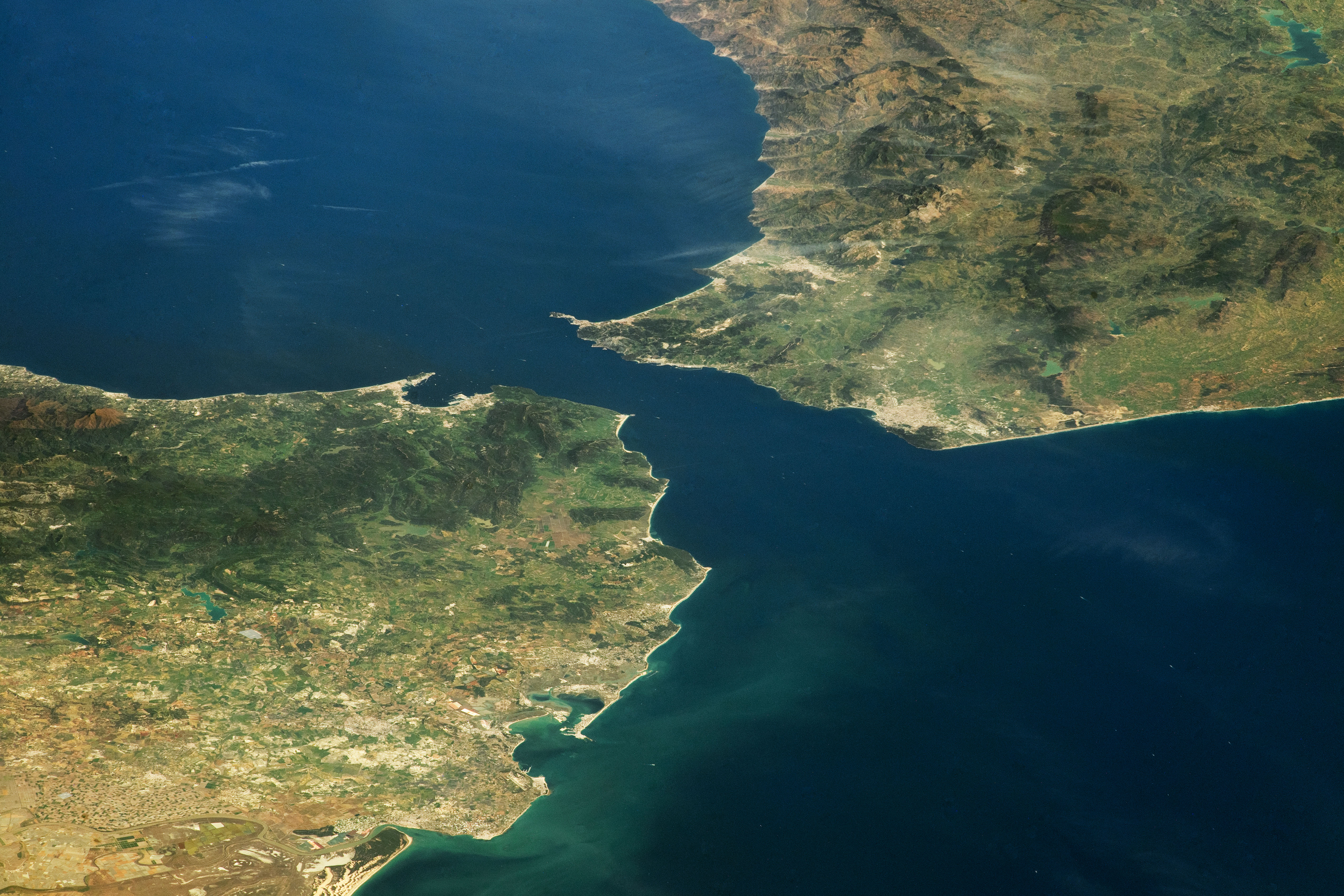
Geography dictates vulnerability. The Strait of Hormuz connects the Persian Gulf with the Gulf of Oman and the Arabian Sea, narrowing to just twenty-one miles at its pinch point. Within that corridor, inbound and outbound shipping lanes are each a mere two miles wide, separated by a two-mile buffer zone. This leaves oil supertankers operating inside the territorial waters of Oman and Iran, creating a permanent geographic friction point.
Over decades of escalating tensions, Tehran has mastered the art of asymmetric pressure in this exact corridor. Fast-attack craft, anti-ship cruise missiles, and extensive maritime minefields form a layered defense system designed to disrupt traffic without triggering a full-scale conventional war. When officials in Washington proclaim the strait is safe because the U.S. Fifth Fleet maintains a persistent presence, they overlook the psychological and economic impact of localized disruption. Insurance rates for tankers navigating the Persian Gulf skyrocket at the first sign of trouble. Underwriters do not care whether a waterway is technically open if the risk of a missile strike or a naval seizure makes the voyage financially ruinous. To see the bigger picture, check out the detailed report by The Washington Post.
A blocked strait does not require a physical wall of steel from coast to coast. It requires only enough chaos to make shipowners decide the transit is not worth the risk.
The Domestic Production Fallacy
A core argument underpinning the narrative of lost Iranian leverage is the transformation of the United States into a net energy exporter through the hydraulic fracturing boom. Proponents of this view suggest that because American consumers are insulated from Middle Eastern crude imports, shocks in the Gulf no longer register on domestic pump prices.
This argument collapses upon basic economic inspection. Oil is a globally traded commodity priced on an international market. If a disruption in the Strait of Hormuz takes seventeen million barrels per day off the market, the price of Brent crude spikes instantly. A refinery in Texas, a manufacturing plant in Germany, and a power station in Japan all draw from the same global pool. When the global price doubles due to a supply shock, domestic American production does not shield consumers from inflation. Gasoline prices at local stations across the United States respond directly to global benchmarks, regardless of where the crude was pulled from the ground.
Pretending that domestic extraction decouples a nation from foreign maritime choke points ignores the interconnected nature of modern industrial capitalism.
Alternative Routes and Their Limits
Both Saudi Arabia and the United Arab Emirates have spent billions constructing bypass pipelines designed to circumvent the Strait of Hormuz entirely. The East-West Pipeline in Saudi Arabia carries crude from oilfields in the Eastern Province across the peninsula to the Red Sea port of Yanbu. The Habshan-Fujairah oil pipeline allows the UAE to pump oil directly to the Gulf of Oman, avoiding the bottleneck.
These projects offer a degree of strategic relief, but their capacity is finite. Together, they can move a fraction of the volume that sails through the strait on a daily basis. They serve as safety valves rather than complete replacements. When a crisis hits, the sheer volume of petroleum stranded by a closure overwhelms these overland alternatives within days. The world has grown accustomed to moving massive quantities of energy by sea because ships remain the most efficient logistical engine ever devised. Bypassing the water entirely requires infrastructure scales that simply do not exist at the magnitude required to stabilize a global supply shock.
The Shadow War at Sea
Maritime security analysts monitor a quieter conflict running parallel to public political pronouncements. Electronic warfare, GPS spoofing, and the harassment of commercial vessels have become standard operating procedure for state-backed actors in the Persian Gulf. Tankers routinely report mysterious navigation errors near Iranian waters, forcing crews to rely on visual fixes to avoid grounding or accidental incursions into hostile zones.
This gray-zone friction achieves what outright warfare cannot: deniable disruption. By keeping tensions at a simmer just below the threshold of military retaliation, Tehran maintains constant psychological leverage over shipping conglomerates. Insurance syndicates in London respond to these ambient threats by adjusting risk premiums upward. Those costs ripple outward, feeding global inflation long before a single shot is fired or a single tanker is formally impounded.
To claim that leverage has vanished is to ignore the cumulative economic weight of these persistent, low-level frictions.
The Reality of Global Interdependence
Security guarantees provided by superpower patrols are real, but they are not absolute shields against economic panic. The global economy remains tethered to narrow strips of water controlled by volatile regional actors. Pretending otherwise serves political narratives rather than strategic clarity. Until alternative energy grids achieve a scale that renders petroleum irrelevant to industrial civilization, the narrow waters between Iran and Oman will retain their disproportionate power over the fortunes of nations.