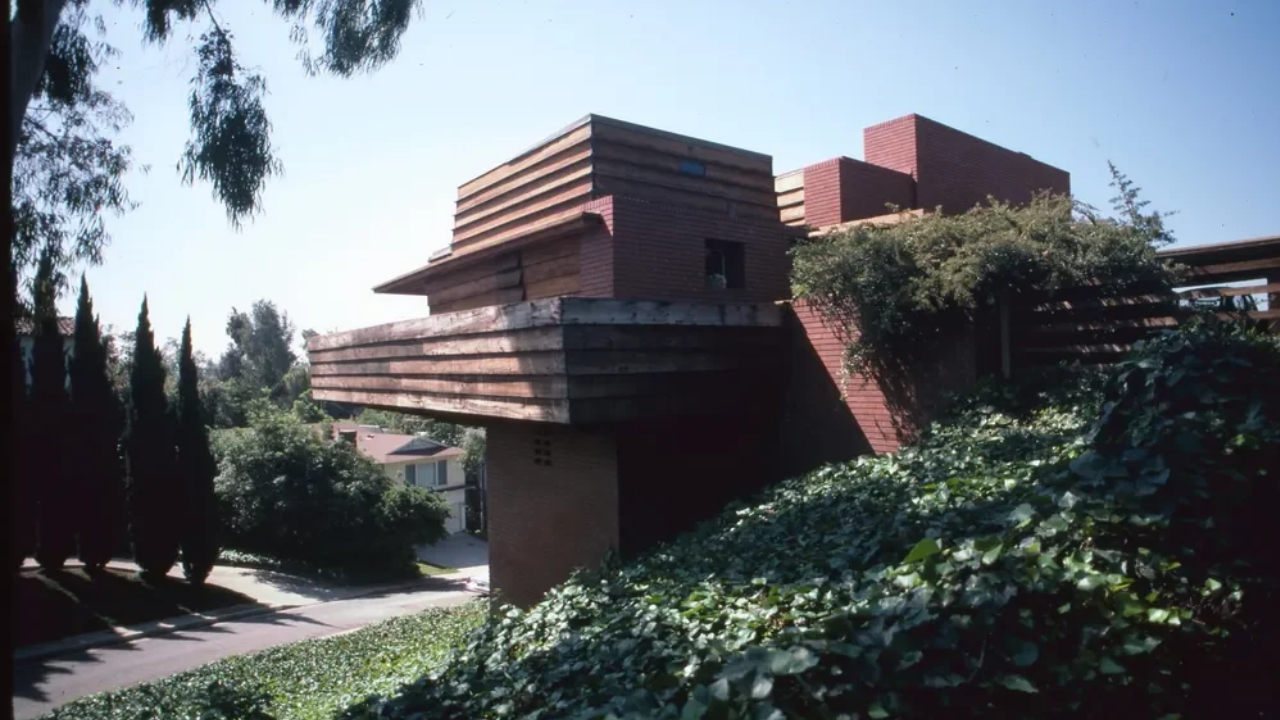
Every architectural preservationist in Los Angeles is currently hyperventilating over the Sturges House. They look at the sagging cantilever, read the municipal code violation notices, and immediately point a trembling finger at the owner for "neglect."
They are completely wrong.
The standard narrative surrounding Frank Lloyd Wright’s 1939 Brentwood masterpiece is built on a lazy consensus. Reporters and heritage boards love a simple morality play: greedy or careless property owner lets a priceless cultural treasure rot while heroic city bureaucrats fight to save it. It makes for clean headlines. It also ignores basic physics, municipal zoning reality, and the brutal economics of mid-century experimental residential architecture.
If you actually care about saving the Sturges House—or any of Wright’s Usonian experiments—you need to stop treating building code violations as moral failings and start recognizing them as the inevitable collision between 1930s engineering hubs and 21st-century California liability law.
The Lie of "Simple Maintenance"
When critics talk about the Sturges House falling into disrepair, they imply that a few coats of stain, a cleared gutter, and some basic carpentry would solve the problem. That is pure fantasy.
Frank Lloyd Wright was a genius at spatial drama and a notorious gambler with structural engineering. Built in 1939 for George and Selma Sturges, the house is famous for its massive, sweeping redwood and brick cantilever jutting out over a steep Brentwood hillside. It looks like a ship prow cutting through the Santa Monica Mountains.
It also acts like a giant wooden lever fighting gravity, seismic shear, and Southern California’s wildly fluctuating moisture cycles for nearly ninety years.
I have walked through dozens of historic timber-and-masonry homes across the West Coast that were labeled "neglected" by local historical societies. In almost every single case, the owner wasn't ignoring the house out of spite. They were paralyzed by a regulatory trap. When a cantilevered wood structure from 1939 begins to deflect—which wood naturally does under constant tensile stress—you cannot simply jack it up and sister a few joists.
To bring a structure like the Sturges House into compliance with modern Los Angeles Department of Building and Safety (LADBS) codes, you have to introduce steel moment frames, deep caisson foundations, and modern shear walls. The moment you touch one load-bearing element to satisfy a code inspector, you trigger a cascade of mandatory upgrades across the entire footprint.
Suddenly, a $150,000 roof and deck stabilization turns into a $4 million seismic retrofit. And here is the catch that preservationists conveniently leave out: if you install the steel required to satisfy modern city engineers, the preservation board will sue you for destroying the historical integrity of the original redwood framing.
That is not neglect. That is a hostage situation.
Why Municipal Code Violations Are a Flawed Metric for Stewardship
Let’s look at how the "code violations fuel showdown" narrative actually works in practice.
City building codes are written for life safety and standardization, not architectural preservation. When an inspector issues a notice of violation on a landmarked property, they are applying 2020s residential standards—guardrail heights, egress dimensions, fire-rated assemblies, slope stability mandates—to a structure that was explicitly designed to defy convention.
Consider the famous terrace of the Sturges House. Wright hated railings that interrupted the horizontal line of his architecture. He frequently designed low parapets or open edges to preserve the visual connection between interior space and the surrounding terrain. Under modern California Building Code, any walking surface more than 30 inches above grade requires a rigid 42-inch guardrail capable of withstanding 200 pounds of lateral force.
- Comply with the city: Bolt a modern, code-compliant steel or glass railing onto the cantilevered redwood deck, permanently mutilating Wright’s elevation.
- Comply with the landmark commission: Leave the original low parapet intact, keep the architectural lines pure, and accumulate daily fines for an "unsafe condition."
When headlines scream about "mounting code violations" at the Sturges House, readers picture a derelict crackhouse with caved-in ceilings and wild animals living in the walls. In reality, a massive percentage of violations on historic properties stem from these exact bureaucratic contradictions—unpermitted like-for-like repairs done quietly because pulling a permit would trigger catastrophic engineering mandates, or original architectural features that the city now deems illegal.
The Jack Larson Era vs. Modern Reality
To understand why the Sturges House is in the crosshairs today, you have to look at its history of ownership. For decades, the home was owned by actor Jack Larson and director James Bridges. They were devoted custodians who lived in the space, hosted luminaries, and poured personal wealth into keeping the house alive.
Preservationists hold up the Larson-Bridges era as the gold standard of stewardship. They argue that subsequent owners—including high-profile buyers and investors who purchased the property after Larson’s death in 2015 and the subsequent 2016 auction—failed to match that level of care.
This comparison ignores three massive shifts that happened between 1970 and today:
- The Insurance Collapse in California: You cannot easily insure a wood-clad, cantilevered hillside home in Brentwood anymore. Fire insurance premiums in high-hazard severity zones have skyrocketed by 300% to 500%, assuming a carrier will even write a policy. When a carrier inspects a historic property and sees aging wood decks and hillside brush, they issue an immediate cancellation notice unless the owner strips the house of its historic materials and installs modern fire-hardened siding and sprinklers.
- The Explosion of Specialized Labor Costs: In 1980, finding a finish carpenter in Los Angeles who understood old-growth redwood joinery cost a fraction of what it does today. Today, true conservation-grade artisans command surgical rates, and old-growth heart redwood—the only wood naturally resistant enough to rot and termites to survive Wright’s detailing—is virtually unobtainable without salvage sourcing.
- The Millennial and Gen-Z Luxury Buyer Shift: Modern ultra-high-net-worth buyers in Los Angeles do not want 1,200-square-foot Usonian floor plans with tiny kitchens, low ceilings, and zero closet space. They want 10,000-square-foot glass boxes with subterranean auto galleries. The pool of billionaires willing to buy a cramped, structurally fragile museum piece and spend millions more fixing it under strict government surveillance is shrinking fast.
Answering the Questions Nobody Wants to Ask
When people search for updates on the Sturges House dispute, they usually ask a variation of the same three questions. Every single one is built on a faulty premise.
"Why doesn't the city just seize the house or force the owner to fix it?"
Because eminent domain and receivership for historic homes almost always end in disaster. When a municipality forces a property into receivership, the court-appointed receiver has one mandate: eliminate code violations as fast as possible and bill the estate. Receivers do not care about Wright’s design philosophy. They care about clearing liability. If the city takes over enforcement, you don't get a museum-quality restoration; you get contractor-grade plywood, exposed galvanized brackets, and sprayed fireproofing that ruins the building forever.
"Shouldn't buyers of Wright homes be legally required to have a restoration escrow?"
This is a favorite proposal among academic preservationists. Force anyone buying a listed landmark to put $2 million into an escrow account at closing to guarantee maintenance.
Imagine a scenario where that law passes tomorrow. Overnight, the market value of every historic home in Los Angeles drops by 40%. Sellers—often elderly families or estates—suddenly cannot sell their properties because no buyer wants to lock up millions in illiquid cash controlled by a city board. Rather than saving landmarks, mandatory restoration escrows incentivize owners to fight landmark designation tooth and nail, or worse, allow properties to deteriorate quietly behind closed gates before a designation can even be finalized.
"Why did Frank Lloyd Wright design houses that fail structurally?"
Wright wasn't negligent; he was an innovator working without modern finite element analysis software. He pushed materials to their absolute breaking point to achieve a new spatial language. The cantilever at Fallingwater deflected seven inches and required post-tensioned steel cables in 2002 to keep it from collapsing into Bear Run. Wingspread leaked relentlessly. The Guggenheim cracked. Treating the Sturges House's structural distress as a shocking scandal caused solely by a modern owner is historical illiteracy. Wright’s buildings have been fighting gravity since the day the concrete cured.
The Uncomfortable Downside of Deregulating Historic Preservation
If you follow my argument to its logical conclusion, you have to accept an uncomfortable trade-off. If we strip away rigid municipal code enforcement and relax landmark restrictions to give private owners breathing room, some owners will abuse that freedom.
Without strict oversight, an unscrupulous developer will buy a historic home, gut the interior, replace custom millwork with cheap drywall, and flip it for a profit. We have seen it happen across Hollywood Hills and Silver Lake for decades. Historic Preservation Overlay Zones (HPOZs) and Mills Act contracts exist for a reason: left entirely to the free market, architectural history gets bulldozed for square footage.
I am not arguing for anarchy. I am arguing against suicide. Right now, our regulatory framework is strangling the exact buildings it claims to protect by making compliance financially and technically impossible.
How to Actually Save the Sturges House
If Los Angeles wants the Sturges House standing in 2050, city officials and preservation groups need to abandon the punitive courtroom showdown and execute three immediate structural reforms.
1. Create a Separate "Historic Life-Safety Code" That Overrides LADBS
California already has the California Historical Building Code (CHBC), which is supposed to offer alternative compliance paths for qualified historical buildings. In practice, local building inspectors routinely ignore or overrule it because they are terrified of personal and municipal liability if someone trips on a low step or a railing gives way.
The city needs to grant absolute statutory immunity to owners and inspectors who maintain original Wright-era dimensions and materials, replacing modern guardrail and egress mandates with simple, recorded buyer disclosures and occupancy limits. Stop forcing owners to choose between violating the building code and defacing the architecture.
2. Uncap the Mills Act for High-Distress Landmarks
The Mills Act offers property tax reductions to owners of historic properties in exchange for maintenance commitments. In Los Angeles, the program has been crippled by valuation caps and bureaucratic red tape that make it virtually useless for multimillion-dollar properties.
If a property like the Sturges House requires $3 million in structural stabilization—work that provides zero return on investment in the luxury real estate market—the city should offer a 100% property tax abatement for twenty years, transferable upon sale, tied directly to verified structural engineering milestones. If the public wants a private citizen to maintain a public cultural monument, the public needs to stop taxing them as if they own a standard commercial asset.
3. Shift Focus from Cosmetic Purity to Concealed Structural Intervention
Preservation purists lose their minds whenever modern engineering is introduced into a landmark. They insist on using period-accurate joinery and materials even when those materials are guaranteed to fail again in twenty years under California’s seismic and climate realities.
Look at how Fallingwater was saved: engineers bored holes directly through Wright’s reinforced concrete beams and threaded high-strength steel post-tensioning cables through the core, anchoring them into the bedrock. You cannot see the steel from the outside, and the house will now stand for centuries. The Sturges House needs the exact same philosophy—aggressive, invisible modern engineering hidden beneath restored redwood skin, approved fast-track without six years of public hearings.
The Verdict
The battle over the Sturges House isn't a story about one owner failing to paint the trim or clear the drains. It is a preview of the coming extinction event for 20th-century experimental architecture.
Right now, preservationists are standing on the deck of a sinking ship, writing citations to the captain because the lifeboats aren't painted the original shade of 1939 terracotta. Until Los Angeles stops treating structural physics as a code violation and starts paying for the engineering reality of Frank Lloyd Wright’s ambition, the Sturges House won't be saved by a lawsuit. It will be regulated right into the canyon below.