The mainstream travel media loves a good panic narrative.
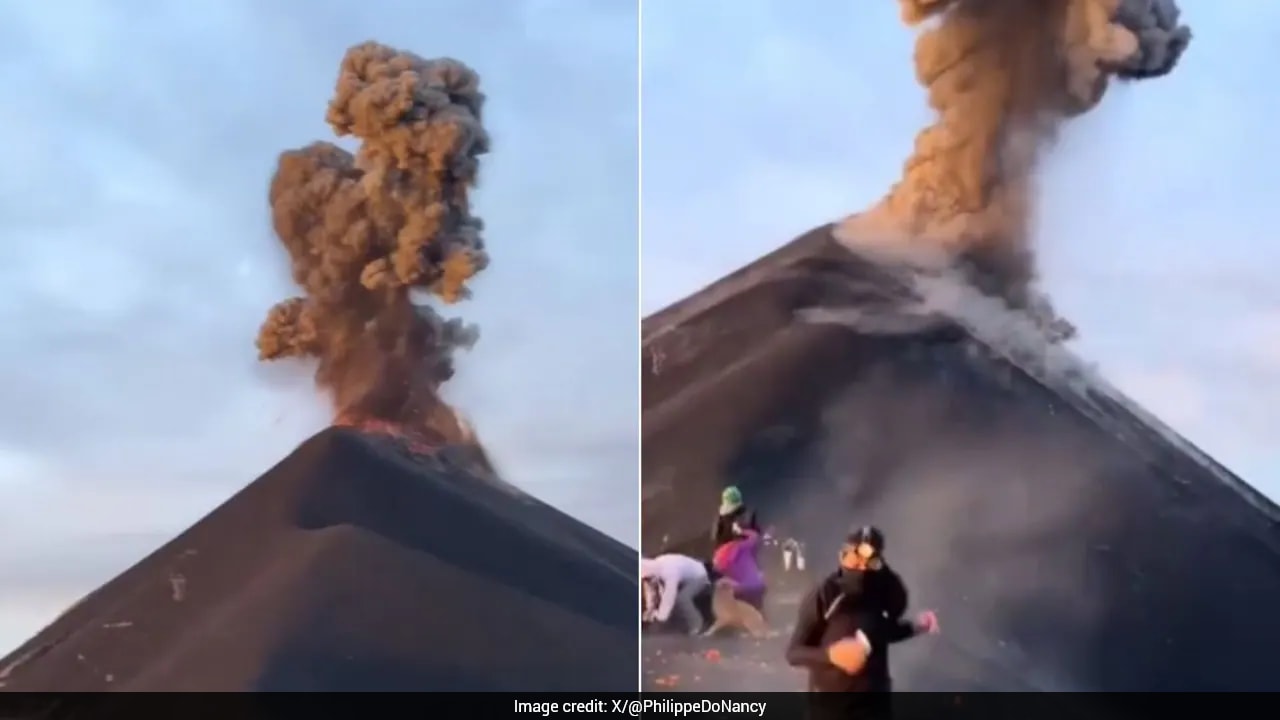
A video circulates online showing a group of hikers scrambling down a gravel slope in Guatemala while Volcán de Fuego spews a cloud of ash in the background. The headlines immediately scream about "absolutely terrified" tourists running for their lives. The comment sections fill with armchair experts decrying the recklessness of volcano tourism.
It is a neat, dramatic story. It is also entirely wrong.
The lazy consensus surrounding these events treats every volcanic burp as an unexpected, near-death catastrophe. This framing betrays a fundamental ignorance of volcanology and risk management. If you hike Acatenango or Pacaya to witness an active stratovolcano, an eruption is not a crisis. It is the itinerary.
The real danger on these mountains rarely comes from the magma. It comes from the panic manufactured by a complete lack of psychological preparation and the media engines that profit from it.
The Myth of the Surprise Eruption
Let us establish some basic geological facts. Volcán de Fuego is one of the most active volcanoes in the world. It does not sleep for centuries and suddenly wake up without warning like Vesuvius. It operates on an open-vent system. This means it releases pressure continuously.
Fuego erupts every fifteen to twenty minutes. It has been doing this for centuries.
When a tour group summits the adjacent Acatenango peak or walks the ridges near Fuego, they are entering a zone where explosive activity is the baseline norm. Crying foul when the volcano does exactly what it does seventy times a day is like buying a front-row seat at a heavy metal concert and complaining about the volume.
The media coverage frames these incidents as sudden survival scenarios because spectacular ash plumes look great on video. But a minor increase in eruptive pulse intensity is highly predictable. Local authorities monitor these peaks constantly. INSIVUMEH, the Guatemalan institute for volcanology, issues daily bulletins tracking gas emissions, seismic tremors, and shockwaves.
The narrative of the clueless tourist caught entirely off guard by a sudden wrath of nature is a fabrication. The tourists are there precisely because the mountain is erupting. The only breakdown occurring is a psychological one.
Panic is the Actual Hazard
When a larger-than-average pulse occurs, the immediate reaction of the untrained hiker is to bolt. This is the worst possible response on a steep, unstable volcanic scree slope.
Look closely at the footage the media loves to circulate. You rarely see people being hit by ballistic blocks or scorched by pyroclastic density currents. What you see are panicked individuals slipping, sliding, tripping over their own boots, and creating a human stampede on a sixty-degree incline of loose ash.
I have spent years observing high-altitude trekking operations and disaster response frameworks. The actual injuries sustained during these viral "escape" videos are almost exclusively orthopedic. Hikers snap ankles, tear ligaments, and suffer severe lacerations because they chose to sprint down a giant pile of loose gravel.
They are running away from an ash cloud that is thousands of feet above them, moving in a direction dictated by prevailing wind patterns that their guides already calculated. By turning a controlled observation into a frantic race, they create a localized crisis out of a standard geological event.
The Inversion of Real Risk
If you want to talk about what actually kills people on Central American peaks, step away from the camera lens. The real threats are incredibly mundane, completely unphotogenic, and heavily ignored by casual trekkers.
Hypothermia on the Equator
Guatemala is a tropical country. Because of this, tourists pack shorts, t-shirts, and cheap rain ponchos. They forget that the summit of Acatenango sits at nearly 4,000 meters above sea level. Temperatures at the high camps routinely drop below freezing, accelerated by brutal, biting winds. More hikers suffer from severe hypothermia on these routes than from volcanic burns. A sudden drop in temperature combined with sweat-soaked clothing is far more lethal than a standard ash ejection.
Altitude Sickness and Dehydration
Ascending thousands of vertical meters in a single afternoon wreaks havoc on the human body. Acute Mountain Sickness (AMS) causes dizziness, severe headaches, and impaired judgment. A hiker suffering from AMS cannot make rational decisions when a volcano increases its activity. They panic because their brain is starved of oxygen, not because the danger has actually escalated.
The Illusion of Safety in Numbers
The massive influx of budget tour operators has created a false sense of security. Tourists assume that because forty other people from their hostel are doing the hike in sneakers, the environment must be safe. This dilution of personal responsibility leads to a complete lack of basic gear—like helmets, proper boots, and windproof layers.
Rethinking the Adventure Tourism Model
The solution to this problem is not to ban volcano trekking or to issue blanket travel warnings every time a mountain clears its throat. The solution is to dismantle the consumer mindset that treats extreme environments like theme park rides.
When you sign up to climb an active stratovolcano, you are entering a dynamic, unmanaged natural environment. You must accept the operational reality that the mountain will change. An increase in ash output or a loud sonic boom is a cue to execute a planned, orderly descent under the direction of trained local guides—not a cue to shoot a shaky vertical video while running blindly down a ridge.
The industry needs to shift its focus away from sensationalized disaster response and toward strict client screening and gear compliance. If a hiker does not possess the physical stability to walk down loose scree or the psychological fortitude to witness a loud explosion without losing their mind, they have no business booking the trip.
Stop buying into the narrative of the terrified tourist. The volcano did not attack anyone. It simply performed exactly as advertised. The only failure was the expectation that nature would remain quiet for the convenience of a smartphone camera.