The media loves a crying victim.
A dusty, torn photograph held by trembling, dirt-stained hands. A weeping mother clutching a scorched child's toy. It sells papers. It generates clicks. It opens the wallets of guilty westerners sitting in comfortable, structurally sound living rooms. For another perspective, consider: this related article.
When the 2015 Nepal earthquake leveled entire districts, the narrative wrote itself instantly. Competitors ran headlines like "Nepal survivors return to ruins to salvage memories." It sounds poetic. It frames the survivor as a noble, tragic figure clinging to the past.
It is also entirely wrong. Similar reporting on the subject has been provided by NBC News.
Survivors are not clawing through concrete slabs and shattered timber to find their high school yearbooks. They are executing desperate, high-stakes archaeological digs to recover their economic existence. They are searching for the paper trail that proves they exist. They are digging for survival capital.
We need to kill the romanticized narrative of the "memory salvage" because it actively harms disaster recovery. When we frame post-disaster excavation as an emotional journey for closure, we send trauma counselors and teddy bears. When we understand it as a frantic search for buried assets, we send heavy machinery, structural engineers, and legal advocates.
The Economics of Rubble
I spent six months auditing reconstruction grants in Sindhupalchok and Kathmandu after the tremors stopped. The reality of a disaster zone is deeply unromantic. It is a logistical nightmare driven by the cold mechanics of poverty and bureaucracy.
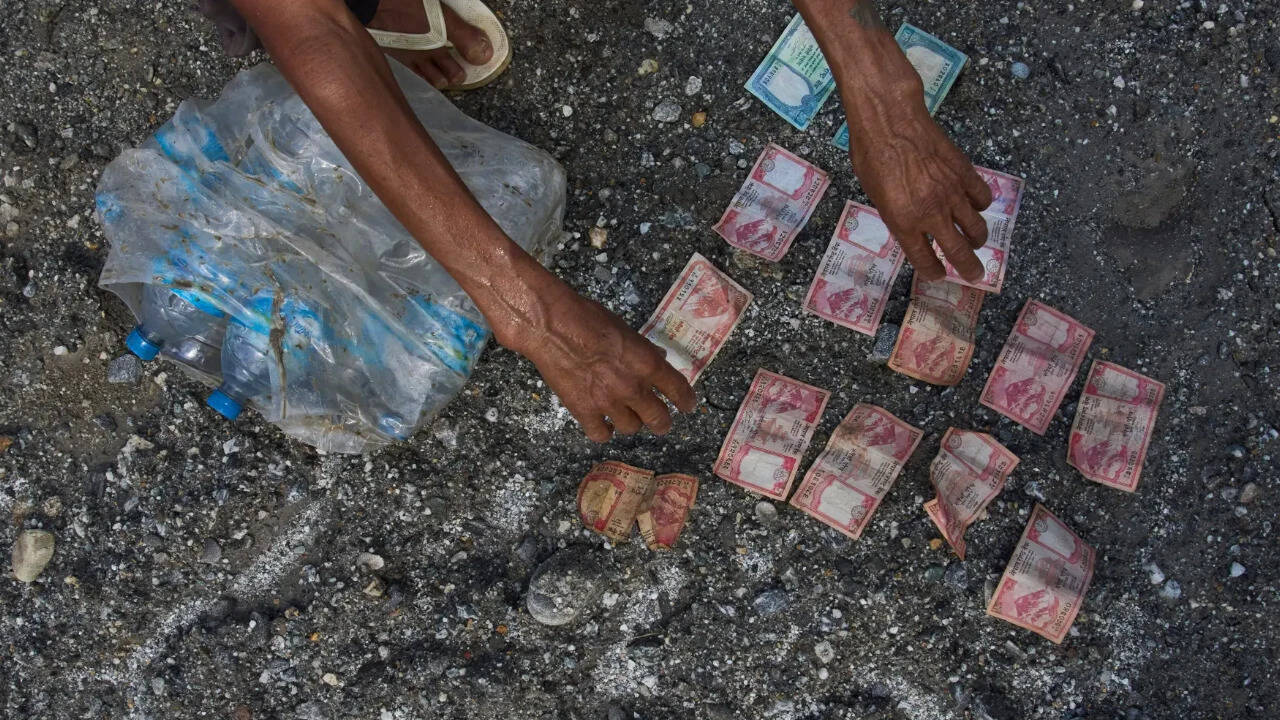
In rural Nepal, and indeed across much of the developing world, the banking system is not a digital ledger sitting on a secure cloud server. The banking system is a heavy brass pot buried under the floorboards of the kitchen. Wealth is physical. It is measured in gold bangles, silver anklets, and stacks of rupees wrapped in plastic and hidden inside the unreinforced masonry walls of a family home.
When a 7.8 magnitude quake hits, it does not just destroy a shelter. It vaporizes a family's entire net worth.
Imagine a scenario where your bank is blown up, your digital accounts are wiped, and your wallet is incinerated. Now imagine you have a family to feed, winter is approaching, and the promised international aid is stuck in a bureaucratic bottleneck in Geneva. You would not be digging through the ruins of your home to find a photo album. You would be digging with bloody fingers to find your cash.
The people returning to their destroyed homes are executing a salvage operation to avoid starvation. They are looking for metal roofing sheets that can be repurposed. They are looking for intact timber beams that cost a year's wages to replace. They are looking for the family gold so they can pawn it in the nearest functional market to buy rice and tarpaulins.
Framing this brutal economic necessity as a search for "memories" strips these survivors of their agency. It reduces rational, calculating survivors managing a severe economic crisis into helpless victims weeping over nostalgia.
The Bureaucratic Erasure
You type a question into a search engine: "How to help Nepal earthquake survivors recover their history."
You are asking the wrong question. Your premise is flawed.
The question you should be asking is: "How do survivors prove their identity when the government registry office and their home have both collapsed?"
To understand the frantic digging in the ruins, you have to understand the bureaucracy of survival in South Asia. In Nepal, two pieces of paper dictate your ability to exist in the eyes of the state: the Nagarikta (citizenship certificate) and the Lalpurja (land ownership deed).
Without your Nagarikta, you cannot open a bank account. You cannot apply for a passport to seek migrant work in Qatar or Malaysia to send remittances home. You cannot legally prove who you are.
Without your Lalpurja, the land you have farmed for three generations no longer legally belongs to you.
When the government and international NGOs announced rebuilding grants of 300,000 rupees for affected families, there was a catch. You had to prove you owned the destroyed house. You had to produce the paperwork.
Where was the paperwork? Buried under three tons of shattered brick, mud mortar, and corrugated tin.
The people you saw on the news, digging through the dust, were not looking for memories. They were digging for the legal right to claim aid. They were fighting against bureaucratic erasure. If they failed to find that plastic-wrapped land deed, they would become internal refugees on their own ancestral land, ineligible for reconstruction funds.
The international community loves to send thoughts, prayers, and used clothing. What the survivors actually needed were secure, decentralized digital property registries.
The Weaponization of Resilience
We need to confront the most toxic word in the disaster relief vocabulary: Resilience.
"The Nepali people are so resilient."
I have heard this exact phrase uttered by foreign diplomats sitting in air-conditioned UN vehicles, sipping bottled water while driving past tent cities. I have read it in a thousand glossy NGO annual reports.
Calling victims resilient is a psychological cop-out. It is a rhetorical trick used by the global north and corrupt local governments to absolve themselves of responsibility.
If the survivors are "resilient," if they are finding beautiful "closure" by digging up old photos in the ruins, then we do not have to fix the systemic rot that caused the ruins in the first place. We can marvel at their spiritual strength instead of investigating the corrupt contractors who diluted the cement in the local school.
Resilience is not a virtue. It is a forced reaction to catastrophic systemic failure.
People are not naturally resilient; they are simply trapped. They have no choice but to dig through the rubble because the state has abandoned them. Glorifying this survival mechanism distracts from the absolute failure of the built environment. Earthquakes do not kill people. Collapsing buildings kill people.
The unreinforced masonry structures in rural Nepal collapsed because building codes were either non-existent or ignored. The reinforced concrete structures in the Kathmandu valley collapsed because contractors saved money by using substandard rebar and bribing building inspectors.
When we write tear-jerking articles about survivors salvaging memories, we provide cover for the politicians and contractors who built the death traps. We shift the focus from a crime of negligence to a human interest story of emotional endurance.
Admitting the Emotional Reality
My approach sounds cynical. I know the immediate pushback this perspective generates. Denying the emotional devastation of losing family photos, heirlooms, and the physical markers of a life feels incredibly cold.
The psychological weight of a disaster is entirely real. Trauma exists. I have sat with mothers who lost children and fathers who lost their entire extended families. The grief is suffocating, and finding a small, undamaged token from the "before" time can trigger a profound emotional release.
But prioritizing the emotional narrative over the material reality creates terrible, inefficient aid policy.
When a policy is designed around the assumption that victims are primarily experiencing emotional loss, the resulting aid is patronizing. We see this when international charities ship thousands of stuffed animals to disaster zones, clogging up airport tarmacs and supply lines that should be reserved for antibiotics, water filtration systems, and heavy lifting equipment.
The emotional release of finding a family photo is a byproduct of the excavation. It is not the primary objective.
If we want to honor the emotional trauma of survivors, we must first secure their physical and economic reality. You cannot process trauma while you are starving. You cannot find emotional closure while you are facing eviction from your own land because your Lalpurja is destroyed.
The NGO Industrial Complex
The romanticization of the disaster victim feeds directly into the NGO industrial complex.
Following the 2015 quake, billions of dollars were pledged to Nepal by foreign governments and private donors. A massive influx of international non-governmental organizations descended upon Kathmandu.
Many of these organizations were highly effective, staffed by dedicated professionals who saved lives. The experts in structural engineering at organizations like Build Change, for example, did phenomenal work training local masons in seismic-resistant construction.
But a significant portion of that aid money evaporated into the ether of overhead costs, logistical mismanagement, and "capacity building" seminars held in five-star hotels in the capital.
Why? Because the international aid system is fundamentally designed to cater to the emotional narratives of the donors, not the brutal realities of the victims.
Donors want to fund photogenic projects. They want to fund the rebuilding of a picturesque temple. They want to fund an orphanage so they can see pictures of smiling children holding the toys they bought. They want to fund the narrative of "salvaging memories and building hope."
They do not want to fund the digitization of the district land registry. They do not want to fund the salaries of local lawyers to help illiterate farmers navigate the bureaucracy of the National Reconstruction Authority. They do not want to fund the incredibly boring, unsexy work of auditing cement quality in rural hardware stores.
By feeding the media narrative of the emotional, memory-seeking survivor, we ensure that the funding continues to flow toward cosmetic, feel-good projects rather than structural, permanent solutions.
The Actionable Reality
If we actually care about communities shattered by natural disasters, whether in Nepal, Turkey, Haiti, or anywhere else sitting on a fault line, we have to radically change our approach. We have to stop viewing them through the lens of tragedy tourism.
Here is what actual, effective disaster response looks like:
1. Digitize Identity and Ownership
Governments in high-risk seismic zones must prioritize the secure, decentralized digitization of property deeds, citizenship records, and bank ledgers. A natural disaster should destroy physical infrastructure, not legal identity. If a survivor's identity is backed up off-site, they do not have to risk their lives digging through unstable rubble to find a piece of paper.
2. Fund Legal First Responders
Medical first aid is critical in the first 72 hours. Legal first aid is critical for the next five years. Disaster zones need immediate deployments of advocates who can help survivors navigate the labyrinth of reconstruction grants, insurance claims, and property disputes.
3. Retrofit the Reality
Stop treating structural collapse as an act of God. It is a failure of engineering and regulation. Aid money should be aggressively funneled into subsidizing seismic retrofitting for unreinforced masonry before the quake hits. Punish the contractors who bypass building codes with severe criminal liability.
4. Provide Direct Cash Transfers
Stop assuming survivors need you to buy things for them. The most effective form of aid is direct, unconditional cash transfers to the victims. They know what they need better than a project manager in Washington or London. If they need to buy zinc sheets, they will buy zinc sheets. If they need to pay a bribe to get their citizenship paper reprinted, they will do that. Give them the liquidity to manage their own survival.
The people digging through the ruins of their lives do not need our pity. They do not need us to write poetic essays about the resilience of the human spirit or the tragedy of lost memories.
They need their land deeds. They need their cash. They need heavy machinery.
Stop sending thoughts and prayers. Start building better walls.