Every few months, Washington policy circles and tech journalists hyperventilate over the exact same headline. A shipment of restricted silicon turns up inside a sanctioned research lab in Shenzhen or Beijing. Pundits scream about broken export controls, corporate greed, and impending national security collapse.
They are looking at the wrong problem entirely. Expanding on this idea, you can find more in: Nvidia’s Board Isn't Planning Jensen Huang’s Exit They Are Building His Cage.
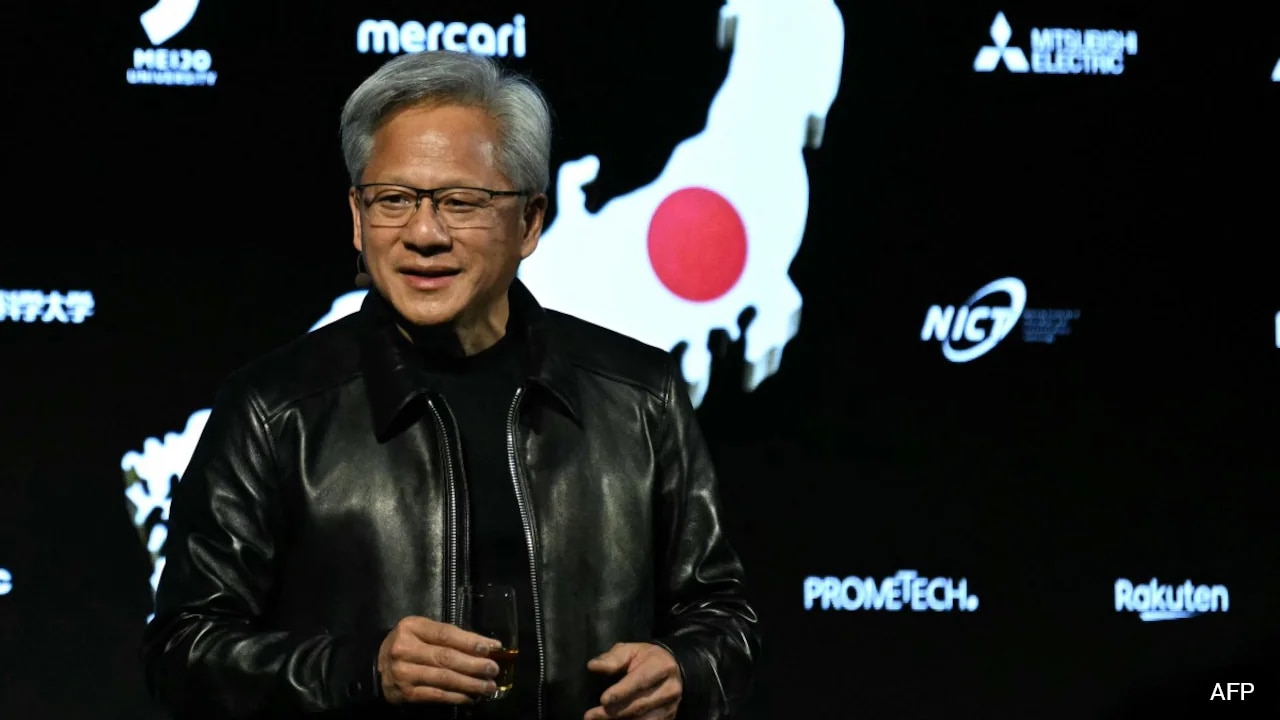
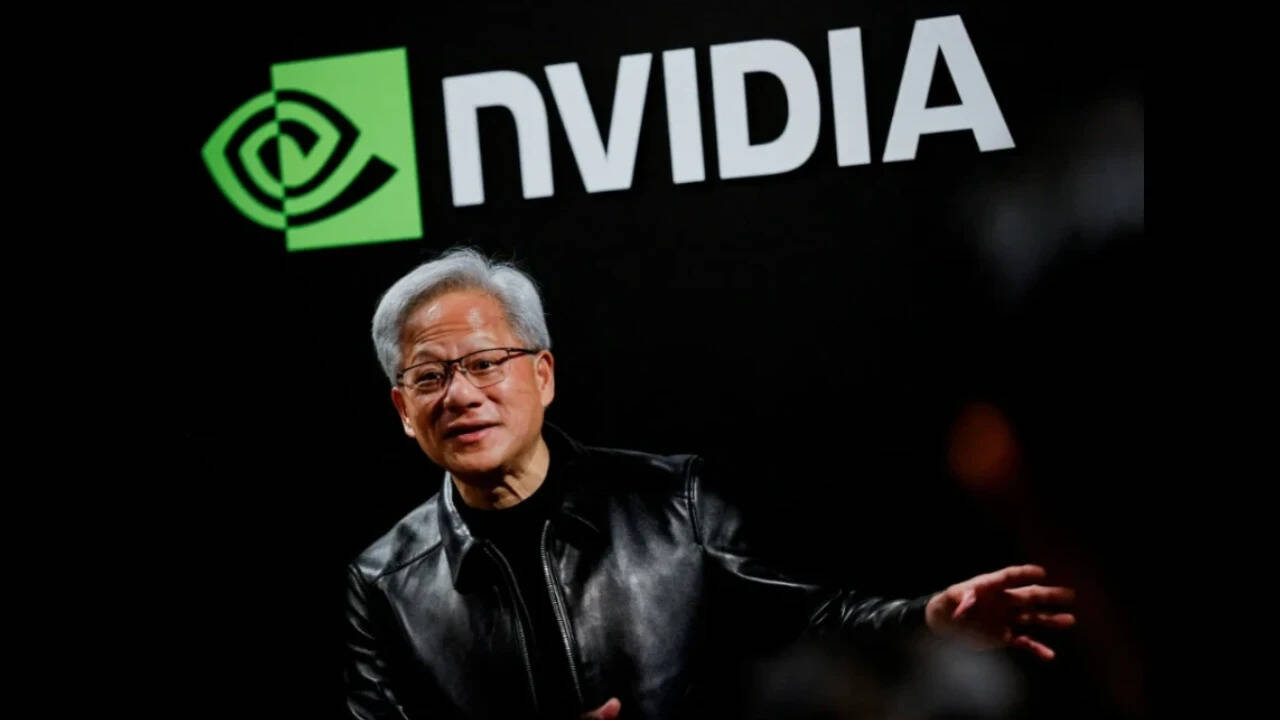
The panic surrounding Nvidia H200 processors reaching a blacklisted Chinese university—and the accompanying political friction between Nvidia CEO Jensen Huang and critics—misses how modern artificial intelligence infrastructure actually operates. A handful of smuggled GPUs sitting in an academic server rack is not a strategic breakthrough. It is an expensive distraction that proves export controls are working exactly as intended: by turning routine hardware procurement into a slow, fragmented, and astronomically expensive black-market ordeal.
The Anatomy of the Smuggling Illusion
To understand why the media narrative falls apart, you have to look at the physical reality of frontier AI training. Reporters treat an Nvidia H200 like a suitcase nuclear weapon, assuming that acquiring ten or fifty of them instantly grants an adversary parity with Western AI labs. Analysts at The Next Web have shared their thoughts on this trend.
That assumption ignores basic computer engineering.
Training a competitive foundation model does not happen on a few loose cards tucked under a university desk. It requires tens of thousands of accelerators operating as a single, unified supercomputer. In a legitimate hyperscale data center, H200 GPUs are bound together using NVLink and InfiniBand networking fabrics that move data at 900 gigabytes per second between chips. Without that ultra-low-latency interconnectivity, adding more GPUs yields diminishing returns. The processors spend more time waiting for data from their neighbors than actually executing matrix multiplications.
I have watched enterprise teams burn millions of dollars trying to stitch together mismatched hardware clusters sourced from secondary brokers. Even with full vendor support, getting a multi-thousand-GPU cluster to train stably without silent data corruption or network bottlenecks is a brutal engineering challenge. When a blacklisted university acquires H200s through shell companies in Malaysia, Singapore, or the Middle East, they do not get a turnkey supercomputer. They get isolated server nodes, zero official firmware updates, voided warranties, and no direct access to Nvidia’s enterprise engineering teams when a rack fails at three in the morning.
Inference Is Not Training
The distinction between training and inference is where most policy commentary completely unravels.
- Frontier Training: Requires massive, synchronous clusters running continuously for months. A single hardware failure or networking drop can force a checkpoint rollback that wastes hundreds of thousands of dollars in compute time.
- Inference and Fine-Tuning: Requires vastly less compute. Running an already-trained open-weights model like Llama or Qwen, or fine-tuning a smaller model for specialized academic research, can easily be done on a handful of H200s.
When a Chinese university lab gets caught with H200 chips, they are almost certainly running inference, conducting narrow scientific simulations, or fine-tuning existing architectures. None of those activities alter the global balance of AI power. In fact, forcing elite Chinese researchers to spend their grant money paying 200 percent markups to gray-market middlemen for unserviceable hardware drains capital that would otherwise fund domestic semiconductor R&D.
The Real Meaning Behind the Jensen-Alice Huang Friction
Media coverage loves a personal feud, framing the tension between Jensen Huang and regulatory hawks—including figures like Alice Huang—as a simple morality play of profit versus patriotism. That framing is lazy.
Jensen Huang is running a multi-trillion-dollar public company whose primary fiduciary duty is to maintain global market dominance. His warning to Washington is simple and grounded in hard economics: if you completely sever American chipmakers from the Chinese market, you hand domestic Chinese competitors like Huawei a captive customer base with unlimited state backing.
When Nvidia is legally barred from selling its top-tier silicon in China, Chinese tech giants do not simply shut down their AI divisions. They pour billions of yuan into Huawei’s Ascend 910B and 910C chips, and they force their software engineers to rewrite codebases away from Nvidia’s proprietary CUDA platform.
Critics argue that any high-end Nvidia chip entering China accelerates Beijing’s military and technological ambitions. Both sides are right about their own narrow incentives, which is why the public debate remains deadlocked. What neither side admits publicly is that total containment of physical hardware was never physically possible in a globalized electronics supply chain.
Why Supply Chain Traceability Hits a Hard Wall
A modern AI server is not a single microchip; it is a complex assembly built by Original Design Manufacturers (ODMs) like Supermicro, Foxconn, Dell, and Gigabyte. Nvidia sells the GPUs and networking gear to these partners, who integrate them into motherboards, chassis, and liquid-cooled racks before shipping them to cloud providers and distributors worldwide.
Once a server rack leaves a loading dock in Taiwan and enters the global distribution channel, Nvidia loses direct custody. If a shell company in Southeast Asia buys twenty servers legitimately, strips the H200 modules out of the chassis, and ships them across a border in unmarked crates, no software patch can physically stop the silicon from booting up.
Policymakers demand that Nvidia install hardware-level location tracking or remote kill switches on every GPU. Ask any enterprise chief information security officer what happens if a chipmaker builds a remote bricking mechanism into critical data center infrastructure. Every sovereign government, bank, and defense contractor on earth would immediately refuse to buy it, terrified that a rogue employee, a hostile intelligence agency, or a geopolitical dispute could shut down their entire compute infrastructure with a single command.
Dismantling the Common Myths Around Chip Bans
Can the U.S. completely stop H200 chips from entering China?
No, and pretending otherwise sets policy up for failure. Semiconductors are small, high-value, and traded across millions of legitimate commercial transactions every day. You can stop a container ship carrying an extreme ultraviolet lithography machine from ASML because it weighs 180 tons and requires dozens of Boeing 747 flights to transport. You cannot stop every diplomatic pouch, commercial courier, and shell company moving briefcase-sized GPU modules. The goal of export controls is friction, not an airtight seal.
Does CUDA lock-in still protect Nvidia if China uses smuggled chips?
Temporarily, yes, which is actually a strategic advantage for the United States. Every time a Chinese university researcher uses a smuggled H200, they continue writing code optimized for Nvidia’s CUDA software ecosystem. That keeps Chinese AI talent dependent on American software architecture rather than migrating to domestic alternatives like Huawei’s CANN framework. The moment those researchers are forced off Nvidia hardware entirely, they start building the software tools that will eventually make Chinese silicon globally competitive.
Are gray-market H200s actually used for military AI breakthroughs?
Defense contractors and state-backed military laboratories rarely rely on gray-market hardware with unknown provenance. High-stakes military systems require verifiable supply chains, long-term component availability, and guaranteed replacement parts. If a gray-market GPU burns out after six months of heavy load, a defense program cannot simply call up a shadowy broker in Shenzhen and ask for an RMA replacement. Military programs rely on domestic fabrication—even if it is two generations behind—because reliability and supply security matter more than peak theoretical FLOPs.
The Uncomfortable Downside of Strategic Friction
To be completely candid, relying on supply-chain friction rather than total containment carries a real risk. If smuggling networks become efficient enough to move thousands of H200s per month into a single unified cluster, the friction argument breaks down. At scale, black-market procurement stops being an academic annoyance and becomes a parallel supply chain capable of supporting frontier model training.
There is also the compliance trap. Aggressive enforcement actions that punish Western suppliers for downstream diversion without giving them realistic tracking tools can push legitimate distributors out of emerging markets altogether. If a cloud provider in the Middle East or Southeast Asia faces existential regulatory risk every time a customer subleases compute capacity, those regions will eventually turn to non-Western hardware suppliers just to avoid Washington’s legal jurisdiction.
What Policymakers and Tech Leaders Should Actually Do
If the goal is maintaining a durable lead in artificial intelligence rather than scoring cheap political headlines, the playbook needs a complete overhaul.
- Shift Enforcement From Individual Chips to Data Center Infrastructure. Stop obsessing over loose GPUs crossing borders in luggage. Focus intelligence and export enforcement on the massive physical footprints required for frontier training: high-voltage power substations, industrial liquid-cooling equipment, and high-bandwidth optical networking switches. You can hide fifty GPUs in a van; you cannot hide a 100-megawatt power draw from satellite imagery.
- Audit Cloud Compute, Not Just Physical Silicon. Buying physical hardware is becoming obsolete for frontier AI development. Renting compute remotely from legitimate data centers in unrestricted countries is faster, cheaper, and leaves zero physical customs trail. Know-Your-Customer (KYC) verification for large-scale cloud GPU rentals is vastly more effective than chasing serial numbers on secondary hardware markets.
- Accelerate Domestic Deployment Instead of Relying on Bans. Export controls only buy time; they do not generate innovation. If American energy permitting, grid bottlenecks, and data center construction delays slow down domestic compute buildouts, China will close the gap regardless of how many H200s get seized at customs.
Every hour Washington spends arguing over whether a university lab in China got its hands on a handful of smuggled H200s is an hour not spent fixing the power grid bottlenecks holding back the next generation of gigawatt-scale data centers at home. You do not win a technology race by obsessing over the scraps falling off your opponent’s truck—you win by building faster than they can copy.