You’re sitting on a cold plastic chair or a thin mattress, the air is thick with the smell of dust and old concrete, and a siren is screaming outside. This is a public bomb shelter in Tel Aviv, March 2026. Usually, you’d just stare at your phone, scrolling through horrific news updates or texting your mom that you’re safe. But now, there’s a QR code taped to the heavy steel door. You scan it, and suddenly, you aren’t just a target in a bunker—you’re a profile in a localized dating pool.
This isn’t a joke or a plot from a dystopian Netflix series. It’s the reality of dating in Israel right now. As the conflict with Iran intensifies, the "Startup Nation" has done the most Israeli thing possible: they’ve gamified the bunker experience. If you’re going to be stuck underground for twenty minutes while the Iron Dome works its magic overhead, you might as well find out if the person sitting three feet away from you is single.
Love in the time of ballistic missiles
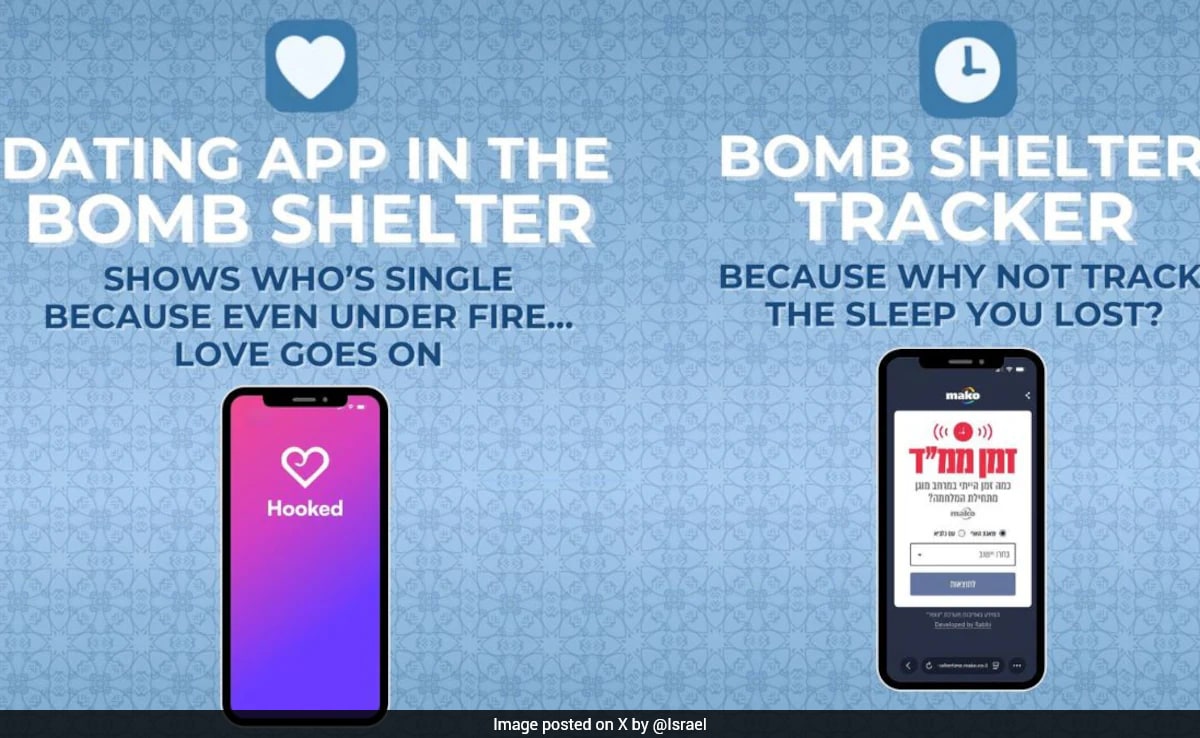
The app making headlines is called Hooked. It wasn't actually built for war. Developers Noa Barazani and Roi Revach originally designed it as a way to kill the "swipe fatigue" of traditional apps by focusing on live events. The idea was simple: you go to a bar or a party, scan a code, and see who else is there. Then the war escalated. Purim parties moved underground, and the developers realized their "event" was now the neighborhood bomb shelter.
Honestly, it’s a brilliant pivot. Traditional dating apps feel shallow when you’re worried about shrapnel. But Hooked taps into a very specific kind of wartime psychology. When the sirens go off, your adrenaline spikes. Your heart rate is already up. In any other context, that’s a physiological response we associate with attraction. By the time you’re safely inside the mamad (protected room), you’re primed for a connection.
Why "Shelter Tinder" actually works
Most people get the "bomb shelter dating" trend wrong. They think it’s about desperation or some weird "end of the world" kink. It’s not. It’s about cutting through the nonsense.
In a normal world, you spend three weeks messaging a person before you meet them, only to realize within five seconds that there’s zero chemistry. In a shelter, the physical meeting happens first. You see how they handle stress. Do they help the elderly woman with her dog? Do they keep their cool, or do they crack? It’s the ultimate vibe check.
The features keeping people sane
It’s not just Hooked. The Israeli app ecosystem has adapted to the Iran conflict with a level of dark humor and practicality that’s honestly impressive.
- The "Can I Shower?" App: This uses real-time Home Front Command data to calculate the probability of a siren interrupting your shampoo. It looks at the frequency of alerts over the last six hours and gives you a "Safety Score."
- ShelterTime: This tracks exactly how many hours of your life you’ve spent underground. It’s a grim statistic, but users share it like a badge of honor.
- Hooked’s Shelter Mode: Once a QR code is generated for a specific shelter, it creates a temporary "room." You can see names, ages, and interests of everyone in that specific concrete box.
The psychological shift of 2026
We’ve seen a massive shift in what people want. Data from apps like OkCupid showed that even back in 2024, Israeli singles started moving away from "situationships" and toward serious commitment. By 2026, that trend has solidified. When the sky is falling, nobody wants a "casual hang." They want someone to hold their hand while the building shakes.
But it’s not all romance and roses. The war has created a "loneliness hierarchy." If you’re a reservist with a family, you get community support—meals, laundry, check-ins. If you’re a single reservist or a single person living alone in a rented apartment, you’re often invisible. These apps aren't just for dating; they’re a digital bridge for people who are tired of being alone in the dark.
Is it ethical or just opportunistic?
Critics argue that turning a life-threatening situation into a dating opportunity is tacky. They aren't totally wrong. There’s something jarring about seeing a "Match!" notification pop up at the same time as a Red Alert.
But talk to anyone actually living through it. The consensus is pretty clear: if we don't laugh, we’ll go crazy. US Ambassador Mike Huckabee even weighed in on X, noting that someday these couples will tell their kids they met while dodging ballistic missiles. It’s a declaration of continuity. Choosing to look for a partner while Iran is launching drones is an act of defiance. It says, "You can disrupt my night, but you can't stop my life."
How to actually use Hooked in a bunker
If you find yourself in a public shelter and see that QR code, don't overthink it. Here is the move:
- Scan immediately. Don't wait for the "all clear." The window of shared adrenaline is short.
- Keep it real. Your profile picture doesn't matter much when you’re standing right there in your pajamas.
- Look up. As Noa Barazani herself said, no one falls in love with a profile. They fall in love with the person in front of them. Use the app to break the ice, then put the phone away.
- Save battery. This is the most important tip. If the power goes out, your "match" won't do you much good if your phone is dead.
The reality of 2026 is that the line between "normal life" and "war zone" has blurred into a weird, high-tech hybrid. We’re using algorithms to find love in the middle of an existential crisis. It’s messy, it’s chaotic, and it’s deeply human.
If you’re single and in a high-risk area, stop waiting for the war to end to start your life. Download the local alert apps, keep your shoes by the bed, and next time you're in the shelter, just scan the code. You might find a soulmate, or at the very least, someone to split a bag of Bamba with while you wait for the sirens to stop.