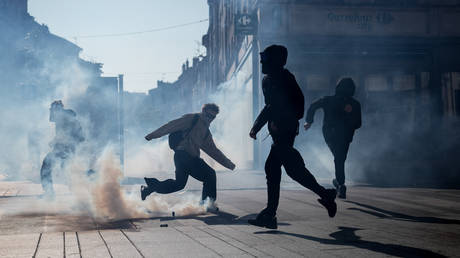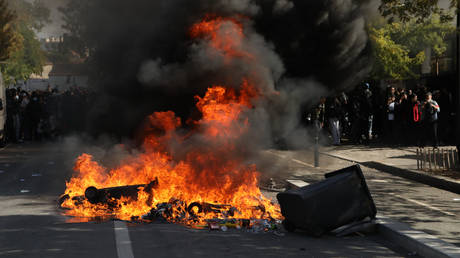
Every time tear gas fills the Boulevard Saint-Germain or smoke billows outside a university hall in Brussels, media rooms erupt into romantic applause. Op-eds drop by the dozen praising the fiery spirit of youth, the eternal rebellion of the Sorbonne generation, and the sacred democratic right of the young to tear up cobblestones. It is treated as an organic, grassroots uprising against the machinery of state oppression.
It is nothing of the sort.
I have watched this theater play out across European capitals for decades. I have stood behind police barricades while student union leaders negotiated media appearances on encrypted messaging apps before the first dumpster was even set on fire. The lazy consensus calls these riots spontaneous rejections of economic injustice. The reality is far more cynical. Modern student uprisings in Western Europe are not existential struggles against the system. They are highly choreographed staging grounds, resume-padding exercises for elite political scions, and safety valves for an over-educated, under-employed managerial class that treats civil unrest like a semester abroad credit.
Let us dismantle the mythology brick by brick.
The Myth Of The Grassroots Working Class Rebel
The central lie of the French-to-Belgian student protest pipeline is that these kids represent the exploited proletariat. Look closer at the faces holding the megaphones outside the Université Libre de Bruxelles or blocking the gates at Sciences Po. You are not looking at the children of struggling night-shift workers or rural factory employees. You are looking at sociology post-graduates, political science majors, and future parliamentary aides whose parents own vacation homes in Normandy or the Ardennes.
Real working-class youth do not spend four days occupying a lecture hall while their tuition is paid by the state or comfortable allowances. They are working shifts, managing logistics, or trying to break into local economies that treat entry-level labor as disposable.
When university blocks happen, they are organized by institutionalized student federations that receive state subsidies, university funding, and administrative protection. The leaders wear designer parkas beneath their makeshift protest banners. They treat a street blockade like a high-stakes networking event where the currency is police brutality statistics and airtime on BFM TV.
The Resume Inflation Of Civil Disobedience
Why do these protests always follow the exact same predictable script?
Step one: A minor administrative adjustment to pension ages, university selection criteria, or labor market flexibility is announced.
Step two: A coalition of elite student unions calls an emergency general assembly.
Step three: Trash cans burn, minor property damage occurs, and riot police deploy tear gas for the evening news cycle.
Step four: A minor government concession is offered, everyone shakes hands, and the student leaders quietly step into junior consultant roles or political party internships six months later.
For the ambitious political science major, getting arrested once or twice on camera is not a punishment. It is the premier extracurricular activity on a CV designed for Brussels technocracy or the National Assembly. It signals to party bosses that the applicant is aggressive, media-trained, well-connected, and willing to mobilize crowds for political leverage.
Imagine a corporate boardroom where an ambitious mid-level manager stages a staged walkout to force an executive retreat. That is what a Parisian student blockade looks like from the inside. It is internal corporate politics fought with cobblestones instead of PowerPoint decks.
The Economic Illiteracy Of Permanent Entitlement
The stated grievances of these movements usually center around preserving a status quo that is mathematically impossible to maintain. When French students riot against labor market reforms designed to ease hiring restrictions for young people, they are fighting to protect a rigid, calcified system that locks them out in the first place.
Europe's obsession with lifetime job security, state-guaranteed cushions, and hyper-regulated labor markets has created a permanent insider-outsider divide. The insiders are entrenched public sector workers and protected union members. The outsiders are the young people who cannot get hired because companies are terrified of the legal nightmare required to fire anyone if market conditions shift.
By shutting down universities to protest reforms that would actually inject fluidity into the labor market, these students are acting as useful idiots for the very status quo that is starving them of genuine economic opportunity. They scream about precarity while demanding the preservation of the exact institutional rigidities that cause it. It is economic self-harm disguised as revolutionary heroism.
The Complicity Of The Academic Industrial Complex
Universities love these protests. That is the dark secret nobody in academic administration will admit over a glass of Bordeaux.
When students are occupying buildings and debating grand socio-political theories in the courtyard, they are not complaining about bloated tuition fees, crumbling campus infrastructure, or the abysmal quality of adjunct-taught lectures. The administration happily trades a few broken windows and canceled exams for weeks of free publicity that positions the institution as a bastion of radical intellectual freedom.
Deans and department heads roll their eyes privately, but they sign off on excused absences for the ringleaders. They know that a university with a reputation for militant student activism attracts high-fee international students and ideological endowment donors who want to feel like they are funding the next May 1968. It is a symbiotic grift. The students get their revolutionary aesthetic; the university gets its radical branding.
The Real Cost Of Performative Rebellion
While the professional protest class plays revolutionary dress-up, real damage is done to the fabric of actual public discourse.
When every minor policy disagreement is treated like an existential fascist threat requiring street blockades and police batons, genuine democratic governance breaks down. Compromise becomes impossible because everyone is performing for an audience of online peers. Real grievances get drowned out by the theatrical noise of urban elites who treat civil unrest like an extreme sport with zero long-term consequences.
The next time you see footage of smoke rising over a European campus, do not look at it as a sign of democratic vitality. Look at it for what it is: a screaming manifestation of entitlement, institutional decay, and elite careerism masking as grassroots resistance.
Stop buying the romance. Stop cheering for the actors. And stop pretending that burning a dumpster outside the Sorbonne ever built a single sustainable job.