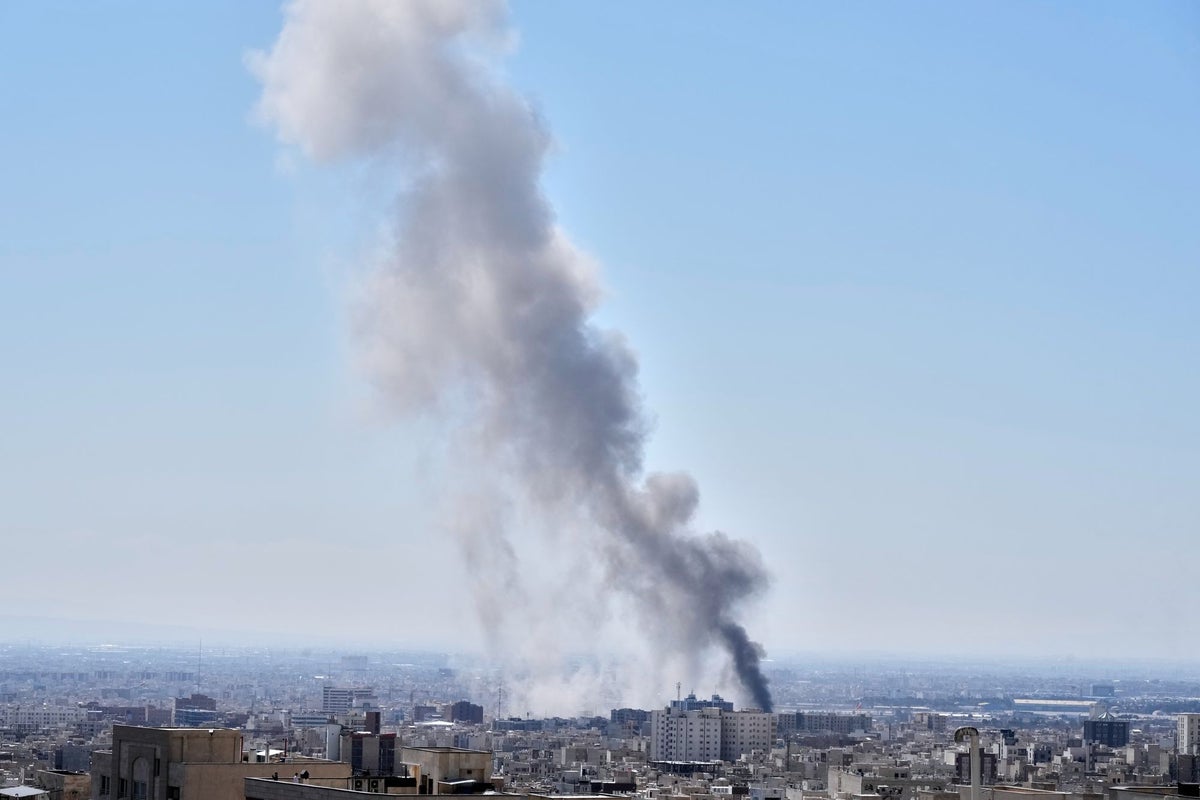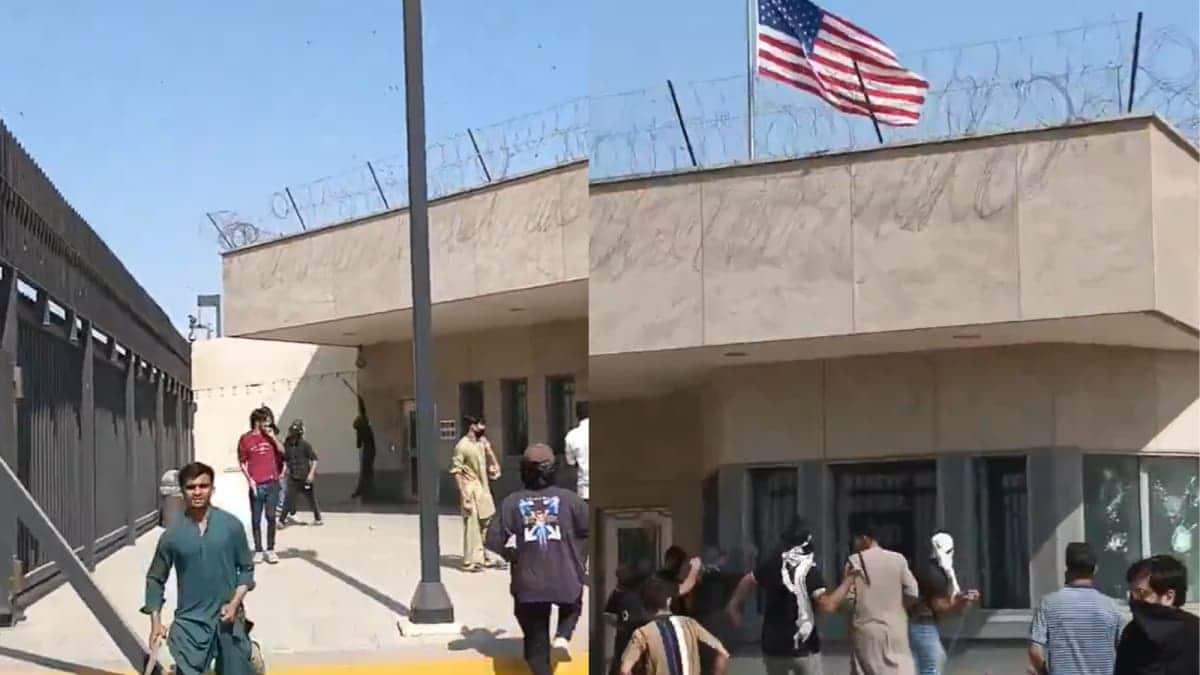
The headlines are bleeding today with the same tired script: a "mob" stormed the US Consulate in Karachi, eight people are dead, and parts of the building are charred ruins. The media is framing this as a spontaneous eruption of grief over the death of Ali Khamenei. They want you to believe this is just another cycle of Middle Eastern volatility spilling over into South Asia.
They are wrong.
What we witnessed in Karachi wasn't a riot. It was a failure of the West’s fundamental misunderstanding of 21st-century asymmetrical signaling. When you look at the smoldering remains of a diplomatic outpost, don’t look for "angry protesters." Look for the structural decay of the very idea of a protected neutral zone.
The Myth of the Spontaneous Mob
The "lazy consensus" dictates that these events are organic. The narrative suggests that a few thousand people got together, got angry, and somehow bypassed a multi-million dollar security apparatus.
I have spent a decade analyzing security breaches in high-threat environments. Mobs do not "spontaneously" breach a Tier-1 US diplomatic facility. These buildings are fortified with reinforced concrete, anti-ram barriers, and ballistic glass designed to withstand sustained assaults.
To believe eight deaths and a partial burn-down are the result of an accidental surge is to ignore the logistical reality of urban warfare. This was a coordinated penetration. The timing—immediately following the confirmation of Khamenei’s death—shows a pre-planned activation of local proxies.
If you think this is about "outrage," you’re asking the wrong question. The question isn't "Why are they mad?" The question is "Who provided the breach equipment?"
Diplomatic Immunity is a Relic of the 19th Century
We are operating on the Vienna Convention on Diplomatic Relations, a document signed in 1961 based on norms from the 1800s. It assumes that the host country—in this case, Pakistan—has the will and the absolute capacity to protect a foreign mission.
This assumption is dead.
In a world where digital mobilization can put 50,000 people at your front gate in twenty minutes, the "host nation protection" model is a liability. By relying on local police forces who often share the ideological leanings of the crowd, the US is essentially handing the keys to the vault to the people trying to pick the lock.
We need to stop pretending that a flag on a piece of dirt makes it "sovereign soil" in any way that matters when the Molotov cocktails start flying. The Karachi incident proves that physical geography is irrelevant if you cannot control the information flow that surrounds it.
The Security-Industrial Complex Failed
The US spends billions on "Hardening the Target."
- High-definition thermal imaging.
- Automated gate systems.
- Armed Marine detachments.
And yet, eight people are dead. Why? Because security theater prioritizes the appearance of safety over the utility of defense. I’ve seen facilities where the "state-of-the-art" sensors were calibrated so poorly they were ignored by the guards because of frequent false positives from stray cats.
When the Karachi perimeter fell, it wasn't because the technology failed. It was because the human element—the local law enforcement—stepped aside. You cannot build a wall high enough to keep out a crowd that your "allies" invited inside.
The Data Gap: Telegram and the New Command Structure
The competitor articles will talk about "the street." They won't talk about the encrypted channels.
While the mainstream news was waiting for a press release from the State Department, the siege was being live-steamed on private Telegram groups. This wasn't a protest; it was a content-generation event. Every frame of that fire was designed to be clipped, edited, and redistributed to destabilize other regions.
The death of Khamenei is a vacuum. In physics, a vacuum sucks in surrounding matter. In geopolitics, it sucks in violence. The Karachi siege was a "stress test" for the US response.
The data suggests a terrifying trend:
- Response Time: It took local authorities nearly three hours to deploy tear gas.
- Breach Point: The fire was started in the administrative wing, not the high-security vault. This implies a specific knowledge of the building layout.
- Lethality: The death toll reflects a lack of non-lethal crowd control options on the interior.
When you lose eight people in a "protest," you haven't had a riot. You’ve had a tactical defeat.
Why "Stability" is a Dangerous Lie
Western analysts love the word "stability." They want the Pakistani government to "restore order."
Here is the brutal truth: The Pakistani government benefits from the chaos. It allows them to pivot to Washington and demand more aid, more hardware, and more "counter-terrorism" funding. At the same time, it allows them to signal to their domestic religious base that they won't stand in the way of "popular will."
By trying to "fix" the situation through standard diplomatic channels, the US is playing a game where the rules were rewritten a decade ago.
The Cost of Doing Business
We have to admit the downside of the contrarian view: If we accept that consulates in high-risk zones are indefensible, the alternative is "Fortress Diplomacy."
Imagine a scenario where:
- Consulates are located in remote, desert-shielded compounds away from city centers.
- Physical interaction with the local population is reduced to zero.
- All diplomatic functions are handled via high-security telepresence.
It sounds dystopian. It is. But it’s also the only way to stop bringing bodies home in flag-draped coffins. The "human touch" of diplomacy is what gets people killed in Karachi. Is a face-to-face meeting with a local official worth the lives of eight staff members?
I’ve sat in those briefing rooms. The answer is always "we must maintain a presence." But "presence" is just another word for "target."
Stop Asking if it Will Get Better
The "People Also Ask" sections on search engines are currently flooded with: "Is it safe to travel to Karachi?" or "Will the US retaliate?"
These are the wrong questions.
The right question is: "When will the US acknowledge that its physical footprint is its greatest strategic weakness?"
We are using 20th-century hardware to fight 21st-century ideological software. You cannot shoot an idea with a M4 carbine, and you cannot stop a coordinated swarm with a concrete wall.
The Karachi consulate wasn't burned by a mob. It was burned by the hubris of an empire that thinks a piece of paper signed in 1961 protects its people from the reality of a globalized, radicalized, and digitally-synchronized world.
Get the staff out. Flatten the ruins. Move the mission to a server farm in Virginia.
The era of the "embassy on the hill" is over. The smoke over Karachi is just the signal fire.
Stop pretending the building still matters.