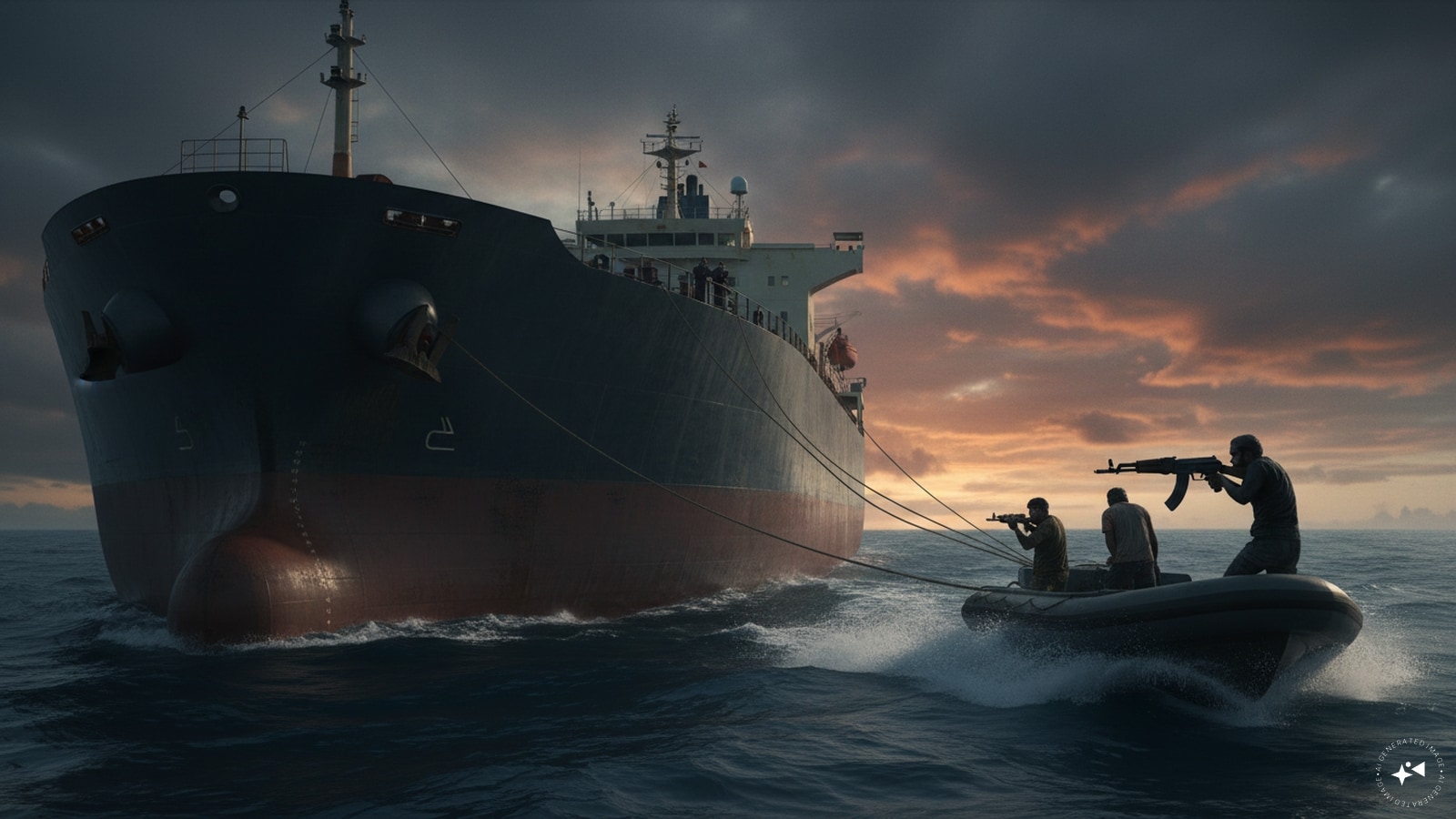
Another headline blares about twenty-two Indian seafarers caught in a double hijacking off Yemen and Somalia. The mainstream commentary immediately dusts off tired scripts from two decades ago. Analysts drone on about the Horn of Africa, poverty-driven maritime crime, and the desperate return of skiffs in the Gulf of Aden.
They are missing the entire plot.
This is not a nostalgic revival of vintage Somali piracy. Treating the seizure of the Eritrea-flagged tanker Sibu 1 and the Cameroon-flagged Lutuf as routine banditry is lazy, dangerous, and completely detached from the geopolitical realities of modern maritime choke points.
The Shadow Fleet Blind Spot
Let us look at the actual data instead of relying on nostalgic panic. The Sibu 1—sanctioned internationally as part of the Iranian shadow fleet—was not just innocently strolling past Yemen when lightning struck. It was moving crude under the radar, operating within a parallel maritime economy engineered to bypass Western sanctions.
When you strip away compliance and transparency, you invite chaos. Shadow tankers invite predatory opportunistic boardings because they lack standard insurance backstops, official naval protection details, and transparent tracking protocols.
Pirates do not target compliant, heavily guarded mega-container ships operated by majors with private armed security teams. They hunt the grey-market anomalies. The lazy consensus pretends these ships are random victims of regional lawlessness. In reality, they are casualties of a sanctioned shadow economy that treats risk management as an optional line item.
Geopolitical Collateral Damage
Look closer at the second vessel, the Lutuf. Reports confirmed it was hauling military equipment and communications gear bound for a foreign training facility in Mogadishu. This was not a routine cargo run carrying bulk commodities or consumer electronics. It was a high-value, politically sensitive military logistics transit operating in a war zone.
To call these incidents simple acts of maritime robbery is like calling a drone strike a fireworks malfunction.
The security architecture in the Red Sea and the Gulf of Aden has fractured because the Western naval coalitions are entirely preoccupied with Houthi missile exchanges and regional deterrence. Commercial shipping lanes have become an open-source testing ground for opportunistic actors who realize international naval assets are spread too thin to protect non-compliant, low-profile tramp steamers.
The Seafarer Crisis We Ignore
The human cost falls squarely on contract mariners—predominantly from nations like India, who make up the structural backbone of global merchant shipping. Crew members are treated as disposable inputs in high-risk geopolitical chess games.
Shipowners chasing high charter rates in high-risk zones routinely cut corners on hardening protocols. When the citadel doors fail—as they did on the Lutuf where pirates successfully breached safety spaces and marched crews to the bridge—it exposes a systemic failure of onboard security compliance. Relying on basic wire mesh and a locked door while sailing through active conflict zones is institutional negligence.
Stop waiting for a miraculous return to naval policing stability that nobody is funding. If you own, charter, or crew a vessel in the Western Indian Ocean right now, compliance is your only armor.
Quit calling it a pirate comeback. Call it what it is: the predictable tax on a lawless shadow trade.