Exit polls are the autopsy reports of political amateurs. They tell you the patient died of cardiac arrest while completely ignoring the twenty years of chain-smoking and artery-clogging fast food that caused the heart to stop.
When the Associated Press drops a post-mortem claiming to explain how Donald Trump and the Republican Party lost the U.S. midterms, the beltway media treats it like sacred scripture. They point to cross-tabs. They nod sagely at percentages of suburban women, independent voters, and late-deciding swing ballots. They reduce a structural, multi-year operational collapse into a tidy list of talking points about "messaging" and "candidate quality."
That is lazy consensus. It is comfortable, surface-level commentary designed to absolve political consultants of their own incompetence.
If you actually want to understand why the GOP fumbled an election cycle that historical fundamentals practically handed them on a silver platter, throw the AP poll in the trash. Polls measure the symptom at the moment of impact. They do not measure the rot in the foundation.
Having spent fifteen years watching campaigns burn hundreds of millions of dollars on vanity metrics and television ads nobody watches, I can tell you the real story is far less glamorous than a cable news chyron. Republicans did not lose because of a single issue, a bad week in October, or a sudden shift in voter sentiment. They lost because they treated a modern data-and-logistics war like a 1990s talk-radio show.
The Myth of the Persuasion Election
Every two years, mainstream political coverage falls into the exact same trap. Reporters assume elections are won by convincing undecided voters in the middle to change their minds. The AP poll narrative leans heavily into this fantasy, framing the midterm outcome around how voters "felt" about the economy, healthcare, or executive leadership.
Here is the reality of modern American politics. True swing voters barely exist anymore.
According to longitudinal data from the Pew Research Center and the American National Election Studies, the share of genuinely undecided voters who bounce between parties from cycle to cycle has shrunk to single digits. Modern federal elections are not persuasion contests. They are turnout and ballot-collection operations.
Think about what that means for the standard media narrative. When an exit poll shows Democrats outperforming among low-propensity voters, pundits say, "Democrats had a better message." No. Democrats had a better ground game. They identified their targets six months early, tracked their mail-in ballot requests, chased unreturned ballots with paid canvassers, and cured rejected signatures before the county deadline.
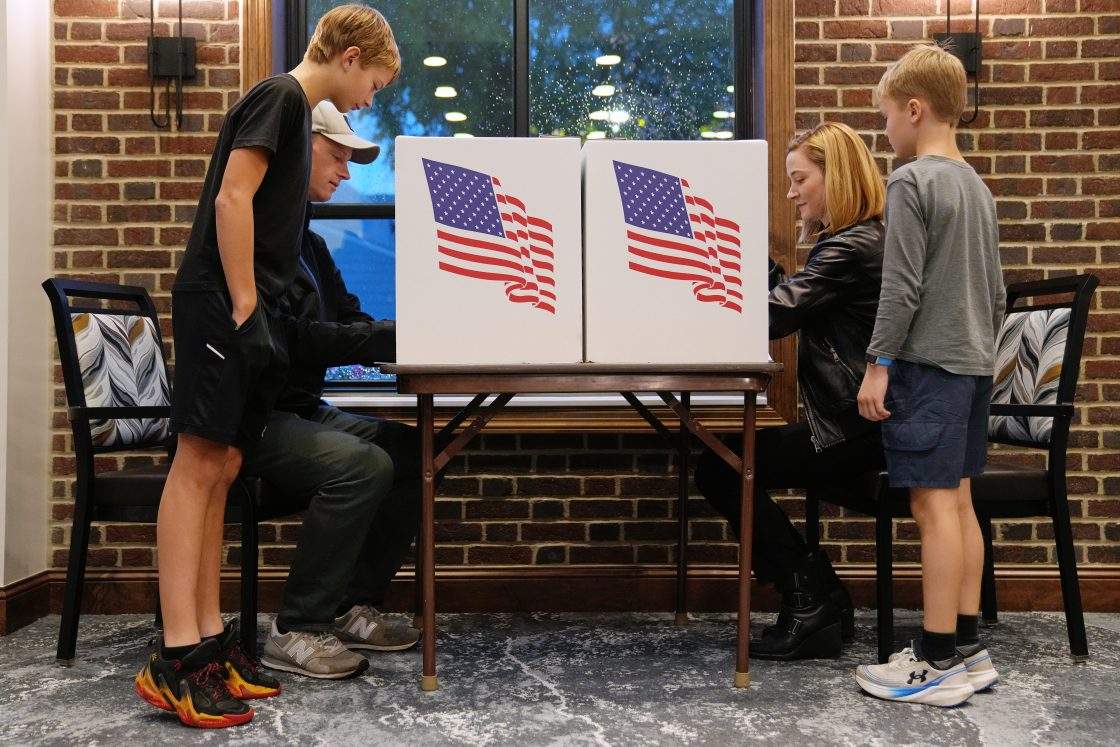
Meanwhile, the Republican apparatus spent the bulk of its cycle arguing over whether early voting was ideologically pure. You cannot boycott the primary mechanism of modern vote casting for eight months, reverse course three weeks before Election Day, and expect to match an opponent who has been banking votes since September.
Imagine a scenario where a basketball team refuses to shoot three-pointers for three quarters because the coach prefers the aesthetics of mid-range jump shots, then tries to launch thirty threes in the final four minutes to catch up. When they lose by fifteen points, you do not blame the shooting percentage in the fourth quarter. You blame the coaching staff for refusing to play by the rules of the current era.
How Consultants Burned Millions on Vanity Metrics
Follow the money if you want to see why the GOP stalled out.
In any major congressional or Senate race, between 60% and 75% of the campaign budget goes straight into media placement—specifically broadcast television and bloated digital ad buys. Why? Because political media buyers take a standard commission, often ranging from 10% to 15%, on gross ad spend.
There is zero financial incentive for a traditional DC consulting firm to tell a candidate, "Stop buying thirty-second spots on local news and spend that three million dollars hiring two hundred full-time field organizers." Field organizers do not generate media commissions. Television ads do.
I have sat in war rooms where campaigns had massive cash-on-hand advantages in August and still lost by three points in November. When you look at the post-election FEC filings, the autopsy is obvious. They flooded the airwaves with generic negative ads that voters tuned out by Labor Day, while leaving precinct captain slots completely empty in critical suburban counties.
- Broadcast TV saturation: Reaching the same high-propensity 65-year-old voter forty times a day does not yield forty votes. It yields one vote and thirty-nine wasted impressions.
- Small-dollar fundraising traps: Campaigns spent millions on predatory direct-mail and SMS blasts that yielded a dismal net return, draining donor lists dry before the general election even began.
- Outsourced field operations: Instead of building permanent state party infrastructure, national committees parachuted out-of-state vendors into swing districts six weeks before the election. These vendors didn't know the local precincts, didn't know the community leaders, and packed their bags the morning after Election Day.
The AP poll will never show you an FEC expenditure report. It will never ask a voter, "Did a neighbor you actually trust knock on your door three times, or did you just see a grainy attack ad during Wheel of Fortune?" Yet that difference is where two-point margins live and die.
The Trump Factor Nobody Wants to Analyze Honestly
Whenever Republicans underperform, the commentary splits into two predictable, equally useless camps. The anti-Trump wing blames the former president entirely, claiming his presence poisons the suburban well. The MAGA wing claims the establishment didn't fight hard enough or betrayed the base.
Both sides miss the actual operational dynamic.
Donald Trump possesses a unique political superpower: he can turn out low-propensity, working-class voters who otherwise never participate in politics. We have seen this repeatedly in presidential cycles. When his name is at the top of the ticket, rural turnout spikes to historic highs, breaking traditional polling models.
The fatal flaw in the Republican midterm strategy was assuming that enthusiasm is transferable by proxy. It is not.
Low-propensity Trump voters do not care about down-ballot congressional races unless someone actively drags them through the voting process. They do not watch Sunday morning political shows. They do not read editorial boards. And crucially, they do not automatically show up in November just because a candidate got an endorsement post on social media.
When the GOP relied on nationalized rally rhetoric instead of localized voter registration and ballot-chase infrastructure, they left millions of their own voters sitting on the couch. At the same time, nationalizing every local House race gave Democratic fundraising machines—led by platforms like ActBlue—an easy villain to raise record-breaking sums against.
It was the worst of both worlds: maximum opposition mobilization paired with incomplete base turnout.
Dismantling the "Candidate Quality" Excuse
Let’s address the favorite buzzword of the beltway establishment: candidate quality.
Whenever a non-traditional, populist, or outsider candidate loses a tight race, party insiders immediately blame the primary electorate for picking someone "unelectable." They point to exit polls showing independent voters viewed the Republican nominee as too extreme or unready for office.
There is a kernel of truth here, which is why the excuse survives. Amateur candidates make unforced errors. They say foolish things on podcasts from five years ago. They struggle to raise institutional money.
However, blaming candidate quality is often just an alibi for an institutional failure to vet, train, and support nominees. Look at how the Democratic Congressional Campaign Committee operates compared to its Republican counterpart. When Democrats have a flawed, inexperienced, or ideologically rigid nominee in a swing district, they surround that candidate with seasoned communications directors, opposition researchers, and disciplined campaign managers before the primary dust even settles. They build a protective wall around the candidate and execute a disciplined local strategy.
Too often, Republican leadership takes the opposite approach. If an outsider wins a primary against the establishment's preferred pick, national donors freeze their checkbooks until October. National committees withhold data access or delay ad reservations until the price of airtime has doubled. By the time the party decides the race is winnable after all, the opposition has already defined the nominee in the minds of every voter in the district.
You cannot starve a candidate of resources for four months, watch them get pounded on the airwaves unopposed, and then point to an AP exit poll in November saying, "See? Voters didn't like them." Of course voters didn't like them. You let the other team write their biography.
Why Voters Actually Rejected the "Referendum" Framing
Historically, midterm elections are referendums on the party in power. When inflation is high, consumer confidence is shaky, or the sitting administration is unpopular, the opposition party sweeps the board. Look at 1994, 2010, or 2014. The out-party didn't even need a detailed legislative agenda; they simply ran as a check on the White House.
Republicans walked into this midterm cycle assuming history would repeat itself automatically. They treated the election like a layup.
They ignored a massive structural shift in voter behavior: negative partisanship has killed the pure referendum election.
Political scientists like Alan Abramowitz have documented this phenomenon for over a decade. Today, voters are driven far more by fear and loathing of the opposing party than by dissatisfaction with their own side. A voter might be furious about the cost of groceries or housing, and express that anger clearly to an AP pollster. In 2010, that voter would have pulled the lever for the opposition party as a protest vote.
Today, that same voter looks at the alternative, decides the other party poses an existential threat to their values or rights, and begrudgingly votes for the incumbent anyway.
You cannot run a purely negative, "look how bad things are" campaign in an era of hardened negative partisanship. When voters already hate both parties, simply pointing at the scoreboard and complaining does not close the deal. You have to give skeptical, exhausted voters a concrete, plausible alternative—and more importantly, you have to build the organizational machinery to ensure your supporters actually cast a ballot.
What Actually Wins Modern Elections (And the Hard Truth About Fixing It)
If political operatives want to stop losing winnable cycles, they need to abandon the punditry playbook entirely. Here is what actually moves the needle when the margins are razor-thin:
- Permanent Year-Round Infrastructure: Stop shutting down state party offices in December and reopening them in July of an election year. Voter registration, community presence, and data hygiene require continuous, unglamorous work during off-years.
- Shift Dollars from Air to Ground: Cap television ad spending in saturated media markets. Redirect those millions into paid, accountable field teams whose compensation is tied to verified voter contacts and completed ballot returns—not hours logged or doors knocked without contact.
- Aggressive Early Vote Adoption: Stop treating mail-in voting and early voting as moral compromises. Every vote banked in October is one less voter you have to worry about getting stuck in traffic, working overtime, or dealing with bad weather on Election Day.
- Data Integration Over Gut Instinct: Stop relying on public polling or campaign-commissioned vanity polls that tell the candidate what they want to hear. Invest in voter-file modeling that tracks individual behavioral triggers rather than broad demographic stereotypes.
Now for the hard truth that every political strategist knows but rarely admits publicly: fixing this is brutal, expensive, and politically thankless.
Rebuilding party infrastructure from the ground up means firing entrenched vendors who have made millions off the current broken system. It means telling donors their money is going toward boring database maintenance and county-level field staff rather than flashy television commercials they can brag about seeing at the country club. And it means accepting that in hyper-polarized districts, even a flawless ground game only buys you a one-to-three-point advantage.
But in modern American politics, one to three points is the difference between governing and writing bitter post-mortems.
The AP poll gave pundits exactly what they wanted: a neat, digestible story about voter attitudes that keeps the television panels spinning for another news cycle. Meanwhile, the real lesson of the midterms remains buried in the precinct-level turnout spreadsheets and FEC vendor filings.
Elections aren't lost on Election Day, and they aren't explained by exit polls. They are lost eighteen months earlier, in empty field offices, bloated ad budgets, and a refusal to adapt to how the game is actually played.