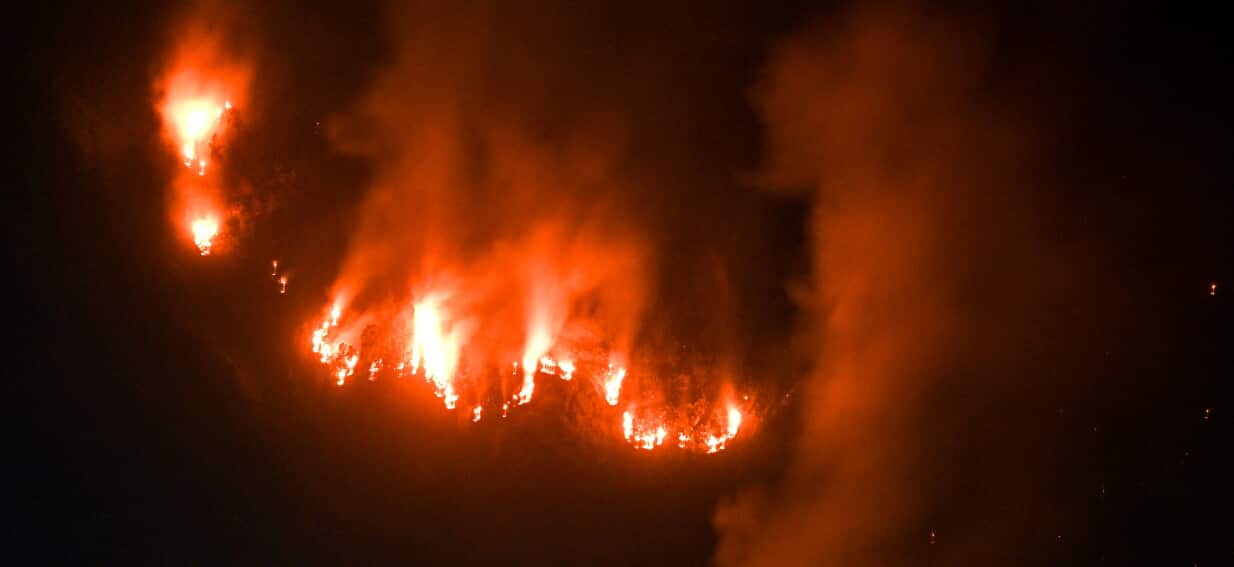
Every single dry season, the script rolls out like clockwork. Satellites blink red over Sumatra and Kalimantan. Smoke chokes Singapore and Kuala Lumpur. Headlines scream about thousands of burnt hectares, laying the entire catastrophe at the feet of El Nino. The narrative is lazy, convenient, and fundamentally dishonest.
It is easy to point fingers at a climate cycle. Mother Nature makes a great scapegoat because she refuses to hire a defense attorney. But let us look past the atmospheric theatrics. El Nino does not strike matches. El Nino does not drain peatlands, issue illegal land clearance permits, or look the other way when corporate balance sheets depend on cheap arson.
Blaming El Nino for Indonesia’s recurring fire crisis is like blaming gravity for a plane crash caused by a pilot flying drunk. The weather pattern loads the gun, but human policy pulls the trigger.
The Geography of Manufactured Disasters
To understand why the standard reporting misses the mark, you have to look at what lies beneath the brush. We are not just talking about ordinary dirt and timber. We are talking about peatlands.
Peat is essentially compressed organic matter that accumulated over thousands of years in waterlogged conditions. It is carbon locked in a freezer. Under natural conditions, these soils are wet, heavy, and virtually fireproof. You could drop a box of matches into a pristine, swampy peat forest and watch them sputter out.
Then came the agricultural transformation.
Over the past three decades, millions of hectares of these carbon-dense sponges were systematically drained through a dense network of canals to make way for pulpwood and palm oil plantations. Drainage turns an ancient wetland into a powder keg. When the dry season arrives—whether intensified by El Nino or running on a normal baseline—that dried peat does not just burn on the surface. It smolders underground at massive depths, releasing carbon dioxide rates that can temporarily dwarf the total daily industrial emissions of entire nations.
I have walked through these drained concessions. I have felt the ground under my boots sound hollow, burning from the inside out weeks after the surface flames were supposedly extinguished. That is not a natural disaster. That is an engineering failure engineered by short-term profit motives.
The Economics of Arson
Let us address the economic reality that environmental journalists love to whisper about but rarely dissect with actual rigor. Slash-and-burn clearing remains the cheapest method of land preparation known to commercial agriculture.
Clearing dense secondary forest or scrub mechanically requires heavy machinery, fuel, labor, and time. Setting a fire costs next to nothing. When corporate compliance is weak and enforcement is softer than a wet sponge, the risk-reward calculation for rogue operators heavily favors the match.
Imagine a scenario where a mid-tier palm oil supplier faces tight credit markets and high debt servicing costs. They need to plant immediately to hit yield targets promised to international financiers. Mechanical clearing takes six months. Fire takes an afternoon. The fine for illegal burning, even if caught, is frequently treated as a routine cost of doing business—a tiny fraction of the margin generated by the subsequent harvest.
Until the financial penalty for burning exceeds the cost of lawful clearing by an order of magnitude, no amount of meteorological hand-wringing about El Nino will change a single match-strike.
Dismantling the Smoke Screen
When international media outlets fixate on the acreage scorched, they misunderstand the metric that actually matters. It is not about the footprint of the burn; it is about the depth and composition of the fuel load.
Let us clear up a pervasive misconception. People assume that stopping the haze requires emergency cloud seeding and fire-fighting helicopters dumping water from the sky. This is operational theater. It looks good on the evening news, but it is the equivalent of throwing a bucket of water on a house fire while leaving the gas main wide open.
Aerial firefighting treats the symptom while the root cause—the canal networks draining the peat—continues to desiccate the soil below.
The heavy hitters in conservation science, including groups tracking land-use change and greenhouse gas inventories, have repeatedly shown that re-wetting peatlands through canal blocking is the only intervention that matters. If you raise the water table back to the surface, the fire hazard drops to near zero, regardless of how strong the El Nino cycle happens to be.
Yet, billions of dollars are repeatedly funneled into emergency response rather than structural hydrological restoration. Why? Because emergency response generates photo-ops. Hydrological restoration is boring, contentious, and requires standing up to powerful agricultural lobbies who prefer their land dry and cheap.
The Corporate Shell Game
Accountability in the supply chain is a masterclass in obfuscation. International consumer goods conglomerates love to publish glossy sustainability reports pledging zero deforestation and zero burning. They sign roundtables, hire auditors, and boast about supply chain transparency.
Yet, a complex web of shell companies and local middlemen insulates the ultimate parent corporations from direct liability. When a fire breaks out on a concession, the corporate office issues a statement expressing deep concern, blames local smallholders practicing traditional slash-and-burn farming, and promises an internal investigation.
This is a deliberate deflection. Satellite data routinely reveals that the largest and most destructive fires do not originate on smallholder plots. They concentrate inside the formal boundaries of commercial concessions. Smallholders burn hectares; commercial actors burn districts.
The traditional narrative protects these supply chains by framing the fires as an inevitable act of weather, perpetrated by impoverished local farmers who simply do not know any better. It is a paternalistic myth that absolves both corporate boardrooms and regulatory bodies of their direct complicity.
The Uncomfortable Truth About Prevention
If we want to stop the smoke from choking Southeast Asia every few years, we have to stop treating this as an environmental crisis and start treating it as a governance and enforcement failure.
The uncomfortable truth is that some local economies rely entirely on the land-conversion boom. Local governments often depend on plantation permits for regional revenue and employment. When national governments step in with aggressive moratoria on new forest conversions, they frequently collide with regional administrative autonomy.
Furthermore, real enforcement requires transparency that many stakeholders actively resist. Mapping concession ownership down to the ultimate beneficial owner remains an uphill battle across much of the region. Without knowing who actually profits from the land, holding anyone legally or financially responsible is nearly impossible.
We also have to admit the downside of strict supply chain blockades. When major western buyers instantly drop a supplier caught on the wrong side of a satellite hotspot, that supplier often simply redirects their commodity to domestic markets or less regulated international buyers where environmental compliance is an afterthought. Global boycotts without local market integration often drive unsustainable practices into the shadows rather than eliminating them.
The Real Question
Stop asking why the dry season is so intense. Start asking who benefits from the dryness, who profits from the drainage, and why the penalty for turning an ancient carbon sink into ash remains cheaper than buying a bulldozer.
The sky clears only when the boardrooms clear their incentives.


