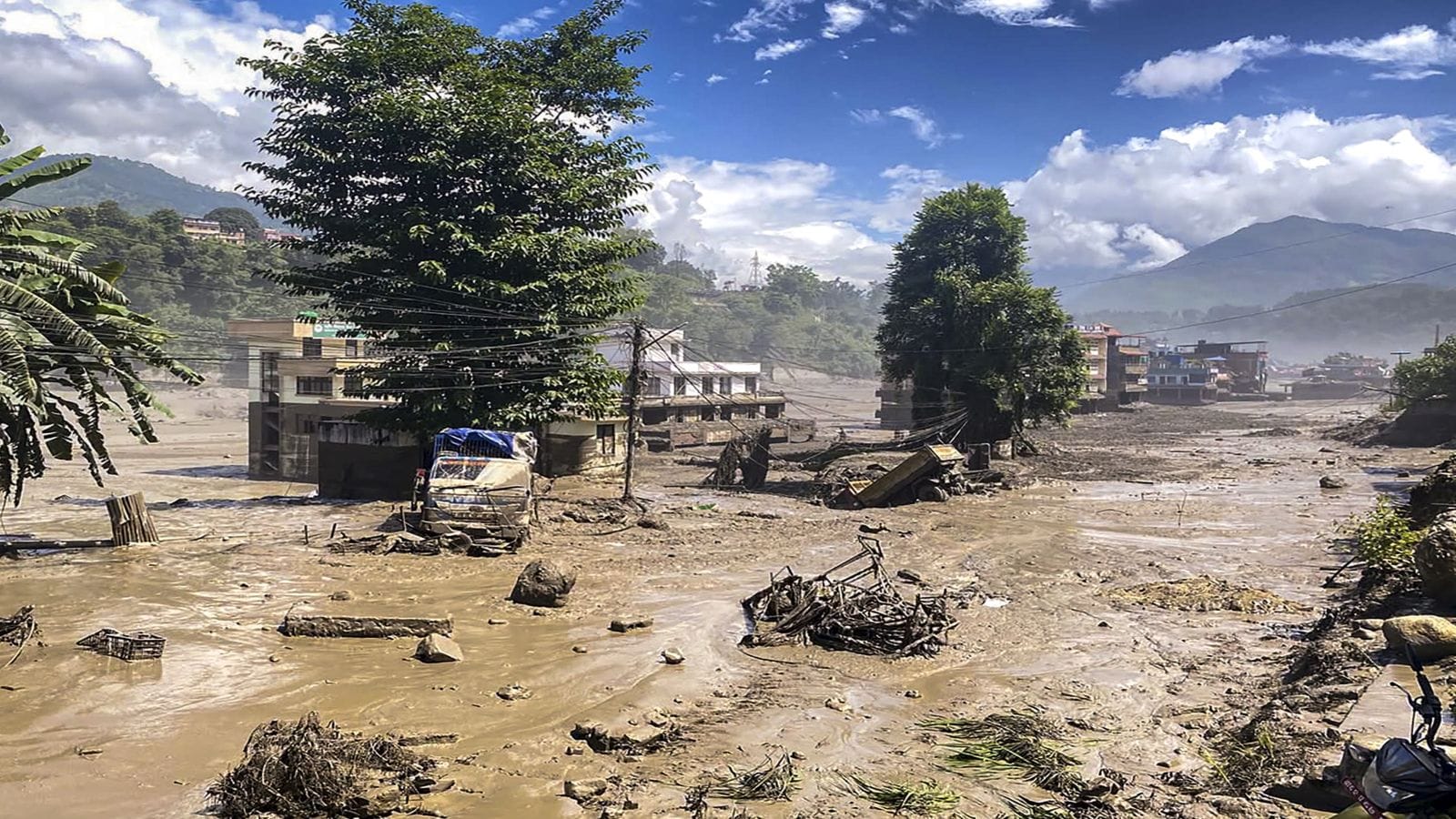
Every monsoon season, the headlines write themselves. Disaster strikes the Himalayas, cameras zoom in on churning brown water swallowing homes, and the experts march onto television screens to repeat the exact same comforting mantra. They point to shifting weather patterns, heavier cloudbursts, and unscientific land use. They demand more studies, more hazard mapping, and better zoning laws.
It is a comfortable narrative. It places the blame on atmospheric physics and bureaucratic inertia, absolving everyone of immediate responsibility.
It is also complete nonsense.
The crisis in Nepal is not an unpredictable act of God driven by climate change alone, nor is it merely a failure to draw nice maps on paper. It is the direct mathematical result of decades of concrete poured directly into active debris fans, riverbeds, and historic flood channels. When you pave over a sponge, do not act shocked when your basement fills up.
The Myth Of The Scientific Assessment
The standard prescription from international development agencies and local planners sounds reasonable on the surface. We need scientific assessments, they say. We need comprehensive environmental impact studies before we build another road or approve another housing colony on a hill slope.
I have watched consultants bill millions of dollars to produce multi-volume reports that sit in air-conditioned offices in Kathmandu, gathering dust while bulldozers carve unauthorized roads into unstable mountain shist five miles away.
More maps will not save anyone. Nepal does not suffer from a shortage of data. The data has been screaming for forty years. The Trishuli and Bagmati river basins do not care about your zoning ordinance or your municipal master plan. When a cloudburst dumps one hundred millimeters of rain on a saturated ridge in a matter of hours, gravity takes over. Water plus loose soil equals a debris flow. No amount of zoning bureaucracy will change the physics of a gravity-driven slurry weighing thousands of tons moving at sixty miles per hour.
The lazy consensus treats settlement planning as a paperwork problem. If we just get the permits right, the disaster won't happen. That is a dangerous delusion. The problem is that the entire economic gravity of the country pulls people toward narrow valleys and river corridors where flat land is cheap and accessible.
Why Smart Engineers Keep Building In Death Traps
Let us look at the economic reality. Land is scarce in a country where eighty percent of the terrain stands vertical. Valleys and river terraces are the only viable places to build dense markets, highways, and towns.
When a municipality expands, it naturally sprawls along the riverbanks because that is where the grade is manageable. Planners know this. They also know that historical flood lines recorded fifty years ago are completely useless today because we have altered the hydrology of every single watershed upstream. Every unpaved rural road cut into the mountainside acts as a gutter, channeling water straight down into the main stem at maximum velocity, turning a manageable seasonal rise into a flash torrent.
We do not need another committee to tell us that rivers flood. We need to accept that human infrastructure is occupying space that belongs to the monsoon cycle.
Imagine a scenario where a municipality strictly enforces a zero-tolerance setback rule, banning all permanent construction within five hundred meters of any major Himalayan river channel. Do you know what happens? Half of major trading hubs instantly become illegal. Entire local economies grind to a halt. Real estate values drop to zero, and displaced populations crowd onto even steeper, more dangerous slopes above the valley floor.
That is the dirty secret of modern settlement planning. The safe zones are already full or economically unviable. People live in high-risk zones not out of ignorance, but out of calculated desperation.
The Engineering Arrogance
For decades, civil engineers have tried to bully Himalayan rivers into submission. We build gabion walls, concrete embankments, and check dams, convincing ourselves that we can cage water coming down from the roof of the world.
It is an arrogant exercise in futility.
A mountain river in flood does not just carry water. It carries boulders the size of cars, massive pine trees, and millions of cubic meters of sediment. When that slurry hits a straight concrete channel engineered by someone sitting in a flatland bureau, it chokes. The river drops its load, rises over the top of the wall, and carves a brand-new path right through the middle of the town we spent millions protecting.
We are treating symptoms while subsidizing the disease. Every time we build an expensive embankment to protect a poorly sited settlement, we send a signal to developers that it is safe to build more behind it. We create a false sense of security that invites denser populations into harm's way.
The truth is that mitigation infrastructure often increases long-term risk. It encourages higher-value investments in high-risk zones. When the inevitable catastrophic failure occurs—because concrete always loses to geological time—the losses are ten times worse than they would have been if we had simply left the floodplain empty.
What We Should Be Doing Instead
If we are serious about stopping the cycle of seasonal carnage, we have to throw out the playbook written by consultants who have never spent a night in a remote hill district during a cloudburst.
First, stop funding reactive relief as a substitute for structural retreat. Millions of dollars flow into rescue operations and temporary tents every August, only for the same families to rebuild on the exact same eroded riverbank by October. That is not humanitarianism; it is a subsidy for permanent vulnerability.
Second, shift the focus from trying to control the water to getting out of its way. Managed retreat must become a core pillar of municipal strategy. That means identifying high-risk alluvial fans and actively buying out property owners, moving economic centers onto stable benchlands regardless of how inconvenient or expensive the initial grading might be.
Third, ban unmonitored road building by local politicians using cheap rental excavators. In many rural districts, local leaders commission haphazard road cuts just to show constituents they are doing something. These roads are vertical drainage pipes that destabilize entire slopes. Stop treating rural road expansion as a universal good. A bad road in the Himalayas is a loaded weapon pointed at every village below it.
Finally, we need to speak honestly to the public. Stop hiding behind comforting euphemisms about climate anomalies. The rain is heavy, yes, but the disaster is human. We built in the path of the mountain, and the mountain is simply clearing its throat.
Move the people. Clear the channels. Stop building monuments to human stubbornness in the middle of a debris chute.


