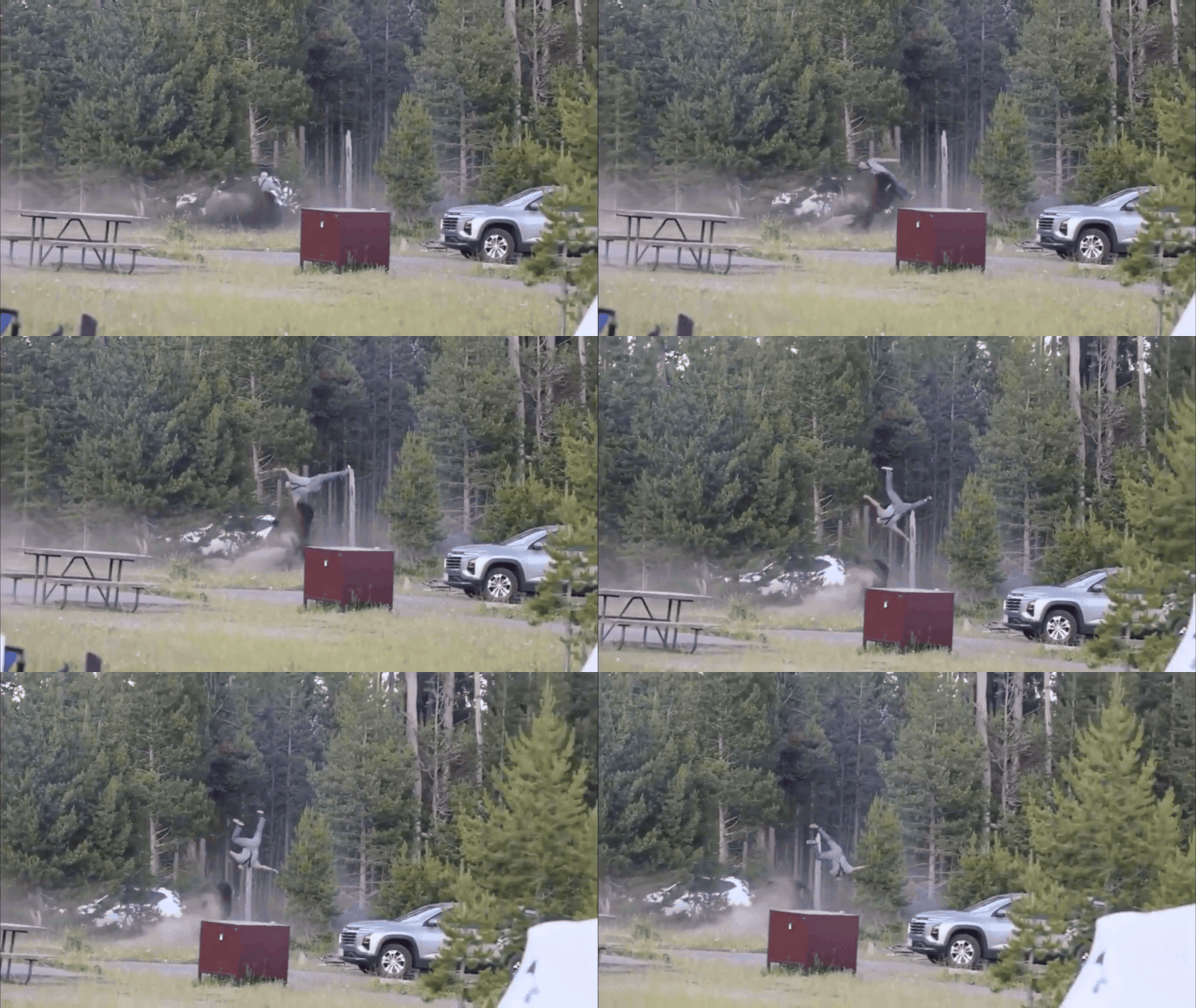
A 2000-pound mammalian missile launches a tourist eight feet into the air. The internet explodes with shock, horror, and a collective gasp at the "tragedy." Viral footage of a bison charging a human at Yellowstone National Park triggers the usual cycle of hand-wringing. Media outlets rush to publish sensational headlines framing the animal as an unpredictable monster and the visitor as a hapless victim.
They have the story completely backward.
The lazy consensus treats these incidents as freak wildlife attacks. They frame the park as a dangerous frontier where wild animals randomly snap. This perspective is not just flawed; it is actively dangerous. The reality is far colder: these are not animal attacks. They are systemic failures of human intelligence, driven by a toxic tourism culture that treats irreplaceable ecosystems like amusement parks.
We need to stop coddling the public. If you get flipped by a bison, you earned it.
The Illusion of the Disconnected Spectator
Mainstream travel journalism loves to treat national parks as outdoor museums. They imply that as long as you paid your entry fee, you are behind a pane of plexiglass. This psychological disconnect is where the danger starts.
A bison is not a prop. It is a post-glacial survival machine.
When a tourist edges within five feet of a bull to secure a selfie, they are violating an unspoken contract of biological scale. The National Park Service explicitly states visitors must maintain a distance of at least 25 yards (75 feet) from bison and elk, and 100 yards from bears and wolves. Yet, every summer, millions of people treat these boundaries as optional suggestions.
Consider the physics of the encounter. A mature male bison weighs up to a ton and can sprint at speeds topping 35 miles per hour. That is three times faster than the average human can run. When an animal of that mass accelerates, it does not "attack" in the human sense of malice. It clears its personal space. It executes a predictable, defensive maneuver that has kept its species alive for hundreds of thousands of years.
Framing this as a sudden, shocking ambush is a blatant lie. The bison gave warnings. It stomped its hooves. It raised its tail—the universal bovine signal for "back off or get leveled." The tourist simply chose to ignore the data.
The Economics of Entitlement
I have spent years tracking how public lands are managed and mismanaged. I have watched the shift from wilderness appreciation to high-density experiential consumption. The modern traveler does not want to observe nature; they want to document their dominance over it.
This entitlement is fueled by a massive tourism economy that sanitizes the wild. Parks are marketed as bucket-list checkmarks.
- Gift shops sell plush toy bison.
- Instagram feeds show influencers posing precariously close to geothermal vents.
- Travel blogs rank the "best spots for a wildlife selfie."
This commercialization creates a false sense of security. Visitors assume that because there is a paved path and a gift shop nearby, the immediate environment has been tooth-and-claw deactivated.
[The Tourism Delusion Loop]
Marketing Sanitization -> Inflated Visitor Entitlement -> Boundary Violation -> Physics Lesson via Horns -> Media Outlets Blame the Wildlife
When a boundary violation inevitably results in a trip to the regional trauma center, the media shifts the blame. They focus on the dramatic nature of the impact rather than the profound stupidity that preceded it. This coverage shields the tourist from accountability and perpetuates the myth that nature is an unpredictable aggressor.
Dismantling the Common Myths
Let us systematically break down the flawed premises that dominate the conversation around wildlife encounters.
"The animal came out of nowhere"
No, it did not. An animal the size of a small sedan does not materialize from thin air. In nearly every documented encounter, the human approached the stationary animal, or willfully remained in its path as it grazed toward them. The "nowhere" people refer to is usually just outside the frame of their smartphone screen.
"National parks need better signage and fencing"
This is the standard bureaucratic response, and it is entirely wrong. Turning Yellowstone or Yosemite into a grid of chain-link fences defeats the entire purpose of preserving wilderness. More signs will not fix a fundamental lack of respect. If a visitor ignores a massive, roaring bull bison, they are not going to be stopped by a piece of plywood with a polite warning on it.
"These incidents are rare anomalies"
They are common enough that the National Park Service has to issue annual warnings specifically about bison gorings. In fact, studies of Yellowstone hospital data show that bison injure more visitors than any other animal in the park—including bears. The anomalies are the days when thousands of people crowd these animals and somehow manage to escape without getting tossed.
The True Cost of Human Ignorance
The focus on human injury ignores the real victim of these encounters: the wildlife.
When a human forces a wild animal into a defensive reaction, the animal pays the ultimate price. Habituation to humans reduces their natural survival instincts. In worst-case scenarios, if an animal is deemed a persistent threat to public safety because humans keep crowding it, wildlife managers are forced to euthanize it.
Your desire for a close-up photo is literally a death sentence for the fauna you claim to admire.
Furthermore, these incidents stretch park resources to the breaking point. Search and rescue teams, park rangers, and emergency medical personnel are diverted from critical conservation work and genuine accidents to deal with the fallout of basic human negligence.
Re-Engineering the Park Experience
If we want to stop the cycle of viral gorings and wildlife harassment, we have to change how people access these spaces. The current model of unrestricted, vehicle-centric mass tourism is unsustainable.
We need to implement strict, mandatory education checkpoints before entry. If you want to enter a national park containing apex predators and megafauna, you should be required to pass a basic wildlife safety quiz. If you fail, you do not get the gate pass.
We must also drastically increase the fines for boundary violations. A couple-hundred-dollar citation is a minor inconvenience for a wealthy tourist. Make the penalty a $10,000 fine and a lifetime ban from all federal lands. Hit the entitlement where it hurts: the wallet and the ego.
We have to accept the downside of this contrarian approach. It will make parks less accessible. It will anger people who believe they have a god-given right to stand three feet from a grizzly bear. It will reduce the immediate ticket revenue for local concessionaires. But it is the only way to preserve the integrity of the ecosystem.
Stop asking how we can make parks safer for tourists. Start asking how we can make parks safer from tourists.
The next time you see a video of a person getting flipped like a pancake by a ton of muscle and fur, do not feel bad for them. Understand that you are watching a system reset itself. You are watching physics re-establish the boundary that common sense failed to maintain.
Step away from the bison. Shut up. Watch from a mile away through binoculars, or stay in your hotel room. Nature does not care about your social media metrics, and it has zero obligation to survive your stupidity.