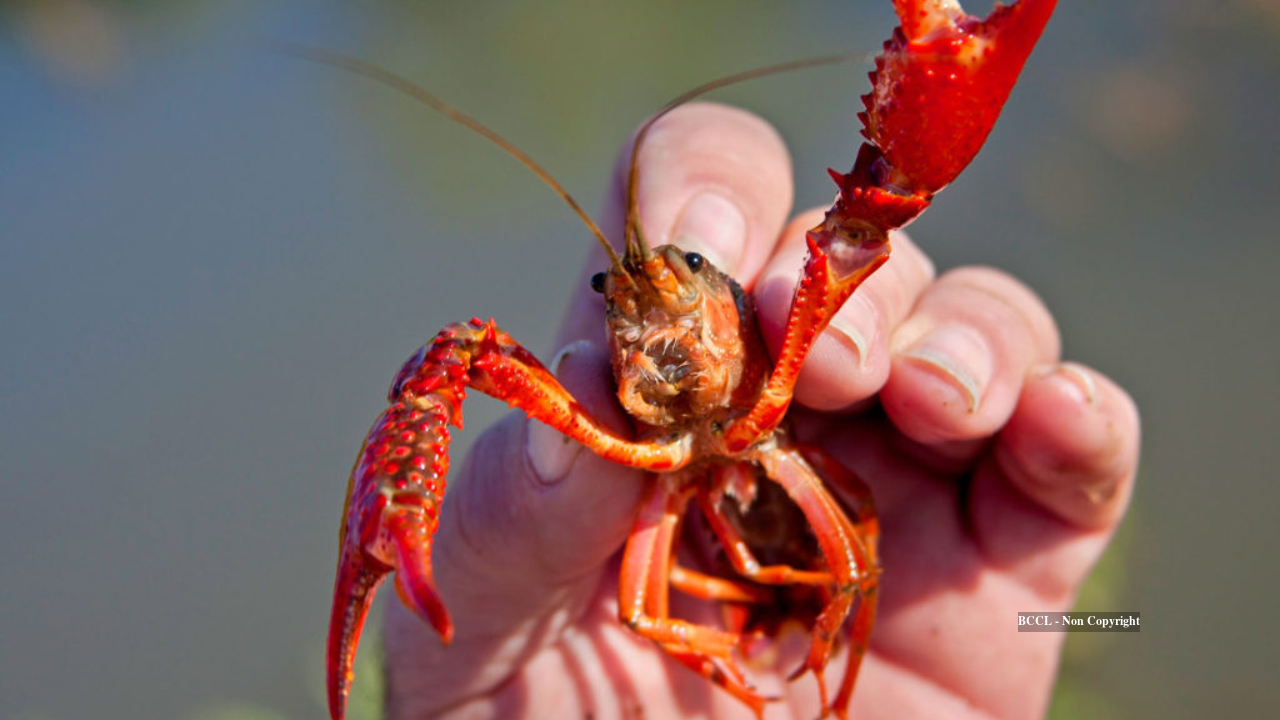
Britain loves a scapegoat. Point a trembling finger at a foreign interloper, blame it for all ecological rot, and watch the conservation industry pass the hat around for another decade of funding. The lazy narrative running through every mainstream outlet claims that North American signal crayfish crossed the Atlantic, armored up, and systematically wiped out the native white-clawed crayfish.
It is a neat story. It is also a lazy lie.
I have spent two decades wading through British chalk streams and peat-stained upland burns. I have seen millions of pounds funneled into pointless eradication traps that catch everything except the actual drivers of habitat collapse. The signal crayfish did not conquer Britain because they are invincible killing machines. They conquered Britain because British waters were already dying from the inside out, and the American invaders merely filled a vacuum left by human negligence.
The Myth of the Invincible Invader
Walk down to almost any English river today and conservationists will wring their hands over Pacifastacus leniusculus. They treat the signal crayfish like a biological Panzer division rolling through the countryside. They tell you that the American import outcompetes the native Austropotamobius pallipes for food and shelter, and carries the crayfish plague to boot.
Strip away the hysteria and look at the actual ecology.
Signal crayfish are opportunistic scavengers. They do not displace healthy native populations in pristine, shaded, fast-flowing streams with stable banks and clean gravel beds. Where the habitat is intact, the native white-clawed crayfish holds its ground. The displacement only happens when the environment has already been degraded by agricultural runoff, industrial abstraction, sewage discharges, and the wholesale removal of riparian trees.
Imagine a scenario where your house has no roof, the foundation is cracked, and raw sewage is pumping through the living room. Then a raccoon moves into the kitchen. Do you blame the raccoon for the ruin of your home, or do you look at the contractor who built a structural disaster?
Blaming the signal crayfish for the death of British rivers is a convenient sleight of hand. It absolves water companies of pollution, farmers of over-fertilization, and government agencies of regulatory cowardice.
The Trap Trap
For years, well-meaning volunteers have set out baited traps across the UK, convinced they are turning the tide. Here is the dirty secret of crayfish trapping: it does nothing.
Commercial and amateur trapping removes the largest, most dominant signal crayfish. What happens next is a textbook biological backlash. By removing the apex adults, you reduce cannibalism on the juveniles. The population responds with a reproductive boom. You end up with a denser population of smaller, faster-maturing crayfish that disperse wider and colonize new territory even faster.
I have watched local trusts spend tens of thousands of pounds on trapping programs that functioned as little more than expensive population management services for the species they were trying to eradicate. It makes the volunteers feel righteous on a Saturday morning, but it is ecological theater.
To make matters worse, trapping almost always results in accidental bycatch of native white-clawed crayfish, fish fry, and water voles. You cannot selectively trap an invasive crustacean in a mixed-species habitat using generic baited mesh boxes. Every time you drop a trap into a river, you run a high risk of accelerating the very decline you claim to fight.
The Plague Panic
The other great weapon in the conservationist panic arsenal is the Aphanomyces astaci fungus, commonly known as crayfish plague. Signal crayfish carry it; native crayfish die from it. Case closed, right?
Not quite.
The plague is real, but treating the signal crayfish as the sole vector of doom ignores the role of human activity. Spores travel easily on wet wading boots, kayak hulls, and fishing nets. The vector is not just a swimming crustacean crossing a watershed divide; it is a human being moving gear from one river basin to another without disinfection.
Furthermore, populations of native crayfish that survive initial plague outbreaks often develop resistance or persist in isolated headwaters. The clean-cut binary of "American invader brings death, native species falls instantly" ignores the messy reality of evolutionary adaptation. Nature is not a museum display frozen in amber. Species shift, diseases bottleneck populations, and resilient strains emerge. When we trap and poison indiscriminately under the banner of purity, we often wipe out the very resilient native genetics that could adapt to the new normal.
The Unspoken Solution
If trapping fails and eradication is a pipe dream, what do we do? We stop fighting a rear-guard war against biology and start fixing the water.
The real enemy of British freshwater biodiversity is chemical loading and thermal stress. When you strip trees from riverbanks, water temperatures rise, dissolving less oxygen. When you dump phosphates and nitrates from intensive farming and failing Victorian sewage infrastructure into catchments, you trigger algal blooms that choke the benthic zone.
Signal crayfish thrive in degraded, warm, nutrient-heavy, silted-up waters. Native crayfish require cold, oxygen-rich, gravel-bottomed sanctuaries.
Instead of blowing budgets on futile trapping campaigns, redirect every penny toward catchment restoration:
- Fencing livestock out of riverbanks to stop bank erosion and siltation.
- Planting native broadleaf trees to shade the water and lower summer temperatures.
- Enforcing strict fines on water companies dumping untreated sewage into chalk streams.
- Creating off-line sediment traps to keep agricultural runoff out of primary habitats.
Do this, and native crayfish will find the refuge they need to survive alongside, or even outcompete, their American counterparts in specific niches.
Eat the Problem
There is one more uncomfortable truth that makes conservation purists squirm in their waterproof trousers. You cannot trap your way out of an infestation, but you can eat your way through a resource.
Signal crayfish are large, meaty, and delicious. In Sweden, crayfish parties are a cultural institution precisely because the Nordic nations treated an invasive crustacean as a harvestable fishery rather than an untouchable ecological demon.
In the UK, strict licensing laws and well-meaning regulations have historically made it difficult to establish a commercial fishery for signal crayfish. We criminalize catching them without complex EA permits, effectively protecting the pest we claim to hate by keeping harvesting unprofitable and disorganized.
If we opened up regulated, high-intensity trapping by licensed commercial fishers for restaurant supply and local markets, we would achieve two goals simultaneously. We would place downward pressure on population densities in high-impact zones, and we would create a sustainable, local source of protein that reduces our reliance on imported seafood.
The purists recoil at this. They want a pristine Eden that no longer exists, managed through bureaucratic prohibitions. They want to police the river rather than heal it.
Stop funding the trap salesmen. Stop buying into the panic narrative that treats nature as a static postcard. Fix the water, shade the streams, and pass me the garlic butter.