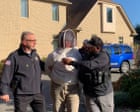
The air in Longmeadow, Massachusetts, usually smells of damp earth and suburban quiet. On a crisp October morning, that silence shattered. It wasn't the sound of gunfire or a high-speed chase that broke the peace. It was the low, rhythmic thrum of thousands of wings. A vibration felt in the teeth before it is heard in the ears.
Rorie Woods stood by her professional bee-hauling trailer, a woman defined by her devotion to a species most people avoid at all costs. She wasn't there for a honey harvest. She was there because a friend was losing a home, and in her mind, the legal machinery of the state was a predator that required a different kind of deterrent. Building on this idea, you can also read: The Chokepoint where Empires Hold Their Breath.
She didn't bring a lawyer. She brought the hive.
The Anatomy of a Desperate Defense
Imagine the scene through the eyes of the sheriff’s deputies. They arrived at a multi-million dollar property to serve an eviction notice, a routine piece of bureaucratic unpleasantness. They expected shouting. They expected tears. Perhaps they expected a locked door. Experts at NPR have provided expertise on this trend.
They did not expect a 55-year-old woman in a protective mesh suit to begin offloading wooden crates.
When the deputies moved in, Woods didn't hesitate. She tipped the covers. In an instant, the localized atmosphere changed from a civil dispute into a biological hazard zone. The bees, confused by the sudden agitation and the tilting of their homes, did what evolution commanded. They defended the queen. They defended the collective.
One deputy later described the sensation as a sudden, sharp peppering of fire against his skin. This wasn't a metaphor. Honeybees, when provoked to this degree, release a pheromone that signals "attack" to every other member of the colony. It is a chemical chain reaction. One sting becomes ten; ten become a hundred.
The officers retreated. Some were allergic. Others were simply overwhelmed by the primal instinct to flee a cloud of venom. Woods, meanwhile, reportedly donned her suit and continued her work, allegedly even carrying a hive to the front door of the home to ensure the perimeter was held.
The High Price of a Swarm
The legal system rarely has a sense of humor about creative resistance. While the internet might occasionally find a dark whimsy in the idea of a "bee-assisted standoff," the reality for Rorie Woods became grim very quickly.
She was arrested and charged with multiple counts of assault and battery by means of a dangerous weapon. In the eyes of the law, those insects were no different from a lead pipe or a getaway car. They were instruments of harm.
The stakes for the officers were high. Several were hospitalized. For those with severe allergies, a single sting isn't just a painful welt; it is a systemic shutdown. The throat tightens. The heart races. The world narrows down to the desperate need for an EpiPen. Woods’ supporters argued she was a modern-day folk hero fighting a broken housing system. The prosecution argued she was a public safety nightmare who weaponized nature against people just doing their jobs.
But look closer at the human cost. Woods wasn't a career criminal. She was a woman driven by a fierce, perhaps blinding, sense of loyalty to a friend. We see this pattern often: the person who feels so small against the weight of the government that they reach for the most radical tool available.
The Hidden Intelligence of the Hive
To understand why this happened, you have to understand the mind of a beekeeper. You don't just "own" bees. You serve them. You spend your days monitoring their health, checking for mites, and ensuring they have enough sugar to survive the winter. It is a relationship built on constant observation and a strange, quiet intimacy.
Beekeepers often talk about the "mood" of a hive. Some days the girls—as they call the workers—are calm and industrious. Other days, they are "spicy." A beekeeper learns to move with a specific kind of zen-like grace. If you are frantic, the bees know. If you are aggressive, they respond in kind.
Woods lost that grace that morning. She took a creature that represents life, pollination, and the delicate balance of our ecosystem and turned it into a weapon of war.
Consider the irony. The honeybee is a creature that dies when it uses its ultimate defense. Once the barbed stinger is lodged in human skin, the bee's fate is sealed. It pulls away, leaving its internal organs behind. It is a suicidal act of devotion.
On that lawn in Longmeadow, hundreds of bees died for a cause they couldn't understand.
The Verdict and the Aftermath
Justice is rarely as fast as a swarm, but it is just as relentless. Woods was eventually sentenced to a period of incarceration. The court had to send a message: you cannot use the natural world to bypass the rule of law.
But the story lingers in the town's memory. It sits at the intersection of our housing crisis, our strained relationship with authority, and the lengths a person will go to when they feel cornered.
The house was eventually cleared. The hives were removed. The deputies healed. Yet, for many, the image of that white-suited woman standing amidst a swirling cloud of gold and black remains a haunting testament to how easily the things we love can be twisted into the things we fear.
There is a terrifying power in the collective. When we work together, we can build cathedrals of wax and honey. But when that same energy is directed toward destruction, even the smallest creature can bring the world to a screeching halt.
The bees are back in their boxes now, quiet and working. They have moved on. Humans, however, rarely find it that easy to shake off the sting of a grudge.