Thunder rumbles low over the Lebombo ridge before the rain even reaches the thornbush.
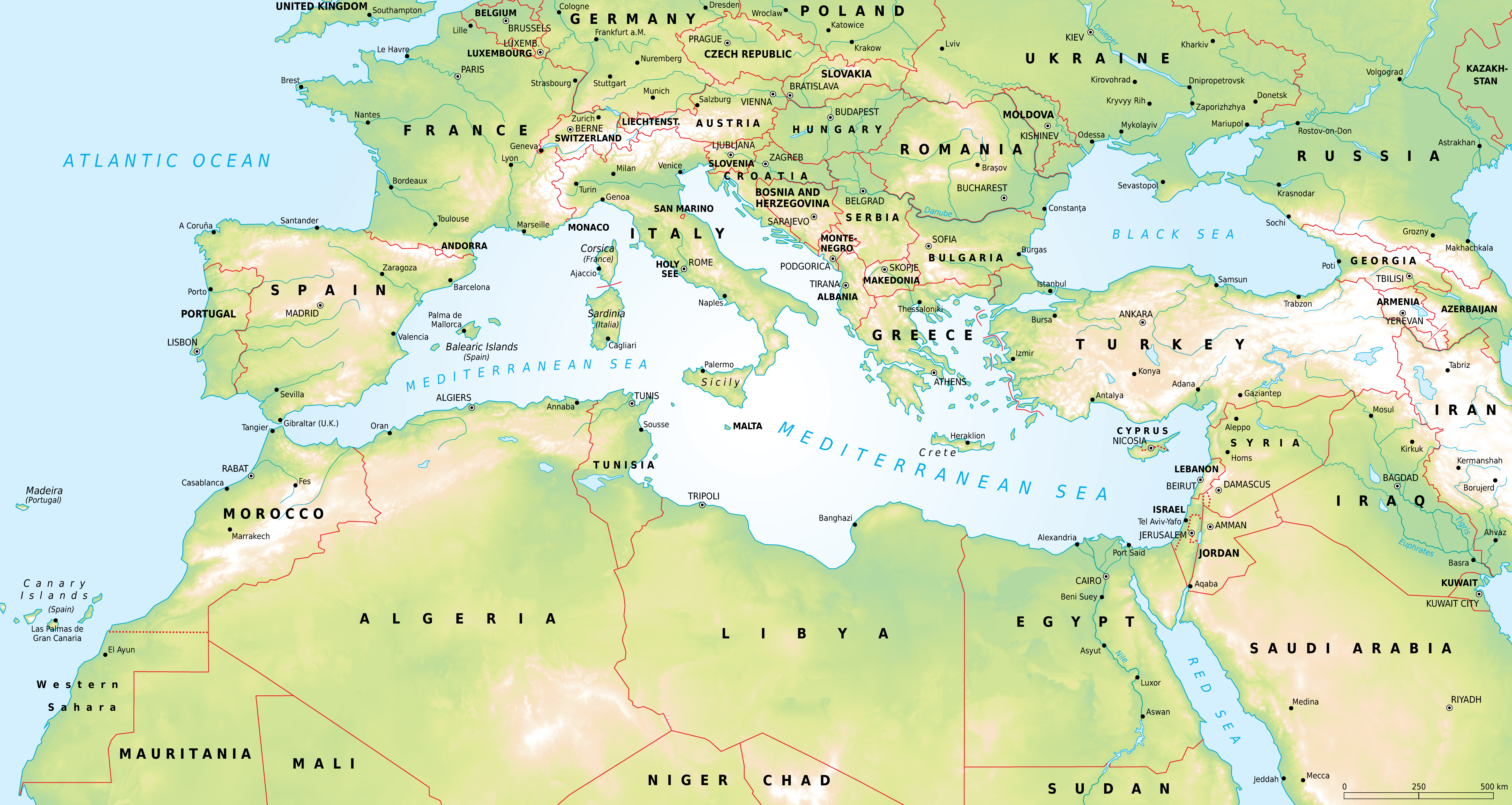
If you stand near Mbuzini long enough at dusk, the air feels heavy with something older than weather. It smells of red dust, damp grass, and woodsmoke drifting from homesteads tucked into the hills where Mozambique, South Africa, and Eswatini press close together. For forty years, a question has hung over that border like low cloud: what truly happened to the silver Tupolev Tu-134 carrying Mozambican President Samora Machel on the night of October 19, 1986?
Forty years.
That is long enough for saplings planted over scorched earth to grow thick trunks, for children born in refugee camps to raise grandchildren of their own, and for two countries that once stood on opposite sides of a bloody ideological divide to gather side by side to honor the man who died there. When South Africa and Mozambique come together to mark four decades since Machel’s death in a plane crash, the ceremony is more than a diplomatic ritual. It is an reckoning with grief, unfinished truth, and a shared southern African history that still shapes how neighbors look across their borders.
I have spent years reporting on post-liberation southern Africa, walking dusty town squares in Maputo and listening to elders in Mpumalanga talk about the nights when helicopters hovered low over the bush. Whenever I try to explain why a single night in October 1986 still makes people catch their breath, I find myself struggling with the sheer weight of what was lost. Numbers alone cannot carry it. Thirty-five people died in that crash—Machel among them, along with ministers, advisors, diplomats, and crew members. Yet a headcount leaves out the laughter that vanished from Maputo’s streets, the sudden quiet in homes across the region, and the gnawing suspicion that refused to die.
The Night the Sky Broke Over the Border
To understand why a fortieth anniversary matters so deeply to both South Africa and Mozambique, we have to step back into the late evening of October 19, 1986. Machel was returning to Maputo from Lusaka, Zambia, where he had met with other frontline leaders opposing apartheid rule in South Africa. His aircraft, a Soviet-built Tupolev Tu-134 piloted by a seasoned crew, was approaching Maputo International Airport through darkness and patchy weather.
Instead of lining up safely with Maputo’s runway, the plane banked right and slammed into a hillside at Mbuzini, just inside South African territory, roughly 35 kilometers northwest of Maputo.
Crash.
In aviation history, controlled flight into terrain is a chilling phrase. It means an aircraft in normal operation is flown into the ground, water, or an obstacle, often because the crew lacks accurate situational awareness. For families waiting at the airport in Maputo, there was no warning, no dramatic radio distress call that everyone heard at once, only a terrible silence stretching into the morning hours until word broke of a disaster on the ridge.
Here is where I want to pause and be honest about how confusing and painful this story becomes. Even among experts, investigators, and historians, the exact chain of events has sparked fierce debate for decades. An official South African board of inquiry led by Justice Cecil Margo pointed toward pilot error and cockpit crew practices, while Mozambique and the Soviet Union raised sharp questions about navigation beacons, flight path anomalies, and possible interference. Later investigations and commissions—including work revisited in South Africa years after apartheid ended—kept alive the possibility that external factors or a decoy navigation beacon played a role, even as debates over proof persisted.
Admitting that uncertainty is not a sign of weakness. It is the core of the wound. When a beloved leader dies in a crash near a hostile border during an era of covert cross-border raids, destabilization, and espionage, doubt does not stay neatly inside technical reports. It seeps into every family dinner, every political speech, and every glance toward the hills.
A Hypothetical Morning in Maputo
To feel how that night echoed into ordinary lives, consider a hypothetical scenario grounded in real historical conditions. Imagine a young dockworker named Mateus living in Maputo in October 1986, a man who had spent his teenage years watching colonial rule collapse and cheering as Machel spoke with booming energy in public squares.
Mateus is not a cabinet minister or a general. He is twenty-four years old, sharing a cramped room near the port, saving coins for a bicycle, and arguing with friends about rations and war news from the provinces. To Mateus, Machel is larger than life—a charismatic leader with a sharp mustache, military fatigues, and a habit of talking to ordinary citizens as if their daily struggle were his own.
When the news arrives on the radio that the president’s plane has crashed near the South African border, Mateus walks out onto the street and sees people standing frozen beside doorways. Nobody shouts at first. A woman carrying a bundle of laundry sits down slowly on a concrete step and covers her face with both hands. A teenager asks whether the South Africans shot it down. An older man shakes his head and says nothing, because saying anything feels like tempting more bad luck.
For Mateus, grief arrives braided with fear. Mozambique was already bleeding from internal conflict fueled in part by regional destabilization and economic strain. Losing Machel felt like losing the pilot of a ship entering rough water. Even if Mateus could not read a flight data recorder or parse aviation regulations, he knew one thing in his gut: whatever caused that silver plane to hit the ground at Mbuzini, his country’s future had just grown darker.
Why South Africa and Mozambique Stand Together Now
Forty years later, the setting has transformed. Apartheid ended in 1994, South Africa became a constitutional democracy, and Mozambique navigated its own long journey from war to peace and reconstruction. Yet memory does not automatically heal just because flags change or borders open.
When South Africa and Mozambique jointly honor Samora Machel on this fortieth anniversary, both nations are doing something delicate. Mozambique is honoring a founding father and liberation icon whose vision of independence and pan-African solidarity still resonates across generations. South Africa, meanwhile, is confronting a history in which the apartheid state viewed Machel’s government as an ideological threat and waged regional pressure and covert campaigns against neighboring states that backed liberation movements.
Think of it like two neighbors who once lived behind high walls, throwing stones across the fence while a fire burned in the yard. Decades later, the walls are lower and both neighbors know how to tend a garden, yet charred timber still lies near the boundary line. Marking the anniversary together is a way of acknowledging the shared history without pretending the past was simple.
In diplomatic terms, joint commemorations reinforce bilateral ties, regional memory, and solidarity within southern Africa. On a human level, they signal to survivors, families of the thirty-five victims, and citizens on both sides of the frontier that the tragedy at Mbuzini belongs to a shared human ledger rather than a partisan argument.
The Architecture of Grief and Memory
Why do societies keep returning to anniversaries like this one?
Because grief has a rhythm of its own. In the first days after a tragedy, shock crowds out everything else. In the first decade, people demand answers, accountability, and justice. By the fortieth year, another question rises to the surface: what do we carry forward when those who lived the moment are aging or gone?
At the Mbuzini memorial site, architects and designers worked to translate that history into stone, metal, and landscape—creating a space where visitors can reflect on the flight path, the victims, and the enduring bond between peoples. Standing beside a monument in open countryside feels very different from reading a paragraph in a history textbook. Wind moves through the grass. Sunlight catches metal tubes arranged like organ pipes or flight trajectories. You feel small under a wide sky.
Still, memorials cannot answer every lingering question by themselves. Some families of those who died on October 19, 1986, have spent decades seeking closure, complete clarity, and recognition. When South African and Mozambican leaders mark forty years since the crash, the weight of those unclosed chapters is part of the room whether every detail is settled or not.
What Four Decades Reveal About Power and Vulnerability
There is a hard truth embedded in Machel’s story that applies far beyond southern Africa. Leaders who project strength—who stand at podiums rallying crowds against overwhelming odds—are often perceived as untouchable. We build mental statues of them. We treat their voices as permanent fixtures of an era.
A plane crash shatters that illusion in seconds.
Metal meets earth. Engines fall quiet. Suddenly the person whose speeches shaped millions of lives is reduced to wreckage on a hillside, and an entire nation has to learn how to breathe without them. That contrast between towering public presence and sudden physical fragility is one reason plane crashes haunt collective memory so fiercely. There is no long illness to prepare people, no gradual goodbye. One moment the plane is in the air heading home; the next, it is gone.
Look at how that vulnerability rippled outward in 1986. Machel was not governing in a vacuum. Southern Africa in the mid-1980s was a chessboard of Cold War alignments, liberation struggles, sanctions, cross-border raids, and fragile economies. His death sent shockwaves through liberation movements and neighboring capitals alike, reminding everyone how precarious peace and sovereignty were in the region.
Even today, when analysts study southern African diplomacy, regional security, or the legacy of anti-colonial liberation movements, Machel’s name surfaces naturally. Not merely as a historical footnote, but as a symbol of defiance, sacrifice, and the high cost paid by ordinary people caught in geopolitical crossfire.
The Unfinished Conversation Between Two Neighbors
If you talk to people in Maputo, Johannesburg, or Nelspruit about what this fortieth anniversary means, you will hear different accents and different emphases, yet a striking overlap in feeling.
In Mozambique, Machel remains a touchstone of national identity and anti-colonial pride. People quote his phrases, remember his directness, and feel a fierce tenderness toward the memory of a leader who died far too young at fifty-three. Many Mozambicans still believe the full truth of what happened on the night of October 19 has never been completely laid bare, and that yearning for truth stays alive alongside affection for the man.
In South Africa, the anniversary carries a mirror held up to the apartheid past and the post-apartheid present. For South Africans who fought against apartheid, Machel was a comrade-in-arms whose country bore heavy costs for supporting liberation. For South Africans looking at the relationship between the two nations today, honoring him forty years later is also a reminder that neighboring democracies depend on trust, cooperation, and honest reckoning with history.
Consider what happens next: leaders give speeches, wreaths are laid, cameras click, and crowds disperse. The real test of any commemoration is what lingers after the microphones are packed away. Does it deepen mutual respect between South Africa and Mozambique? Does it keep alive the memory of all thirty-five people who lost their lives on that hillside, not just the most famous name on the manifest? Does it help younger generations—born decades after the crash—understand why a stretch of borderland near Mbuzini still carries so much meaning?
Those are questions that no ceremony can answer in an afternoon. They belong to the slow, ongoing work of two countries living side by side.
A Last Look Toward the Hills
Late afternoon light turns the grass on the ridge near Mbuzini a burnished gold before dusk settles in. A bird calls from the bush, sharp and clear in the cooling air, while far off a truck hums along a road connecting towns that trade, travel, and share families across a line drawn on maps long ago.
Forty years after a silver aircraft went down in the dark, the story of Samora Machel is no longer just a mystery from a Cold War night. It is a mirror reflecting grief that refused to fade, neighbors learning to stand together in daylight, and the quiet, stubborn power of memory on a border that never truly sleeps.