Imagine standing on a strip of sun-baked rock where the Persian Gulf narrows to a choke point. The air is so thick with humidity it feels like a physical weight, smelling heavily of salt and crude oil. This is Greater Tunb. To the casual eye, it is barely a speck on the map—just a few square miles of red dirt, low hills, and scrub. But to military strategists, this island is not mere land. It is a stationary, unsinkable aircraft carrier anchored at the throat of global commerce.
On a Wednesday afternoon, the deceptive quiet of this outpost evaporated.
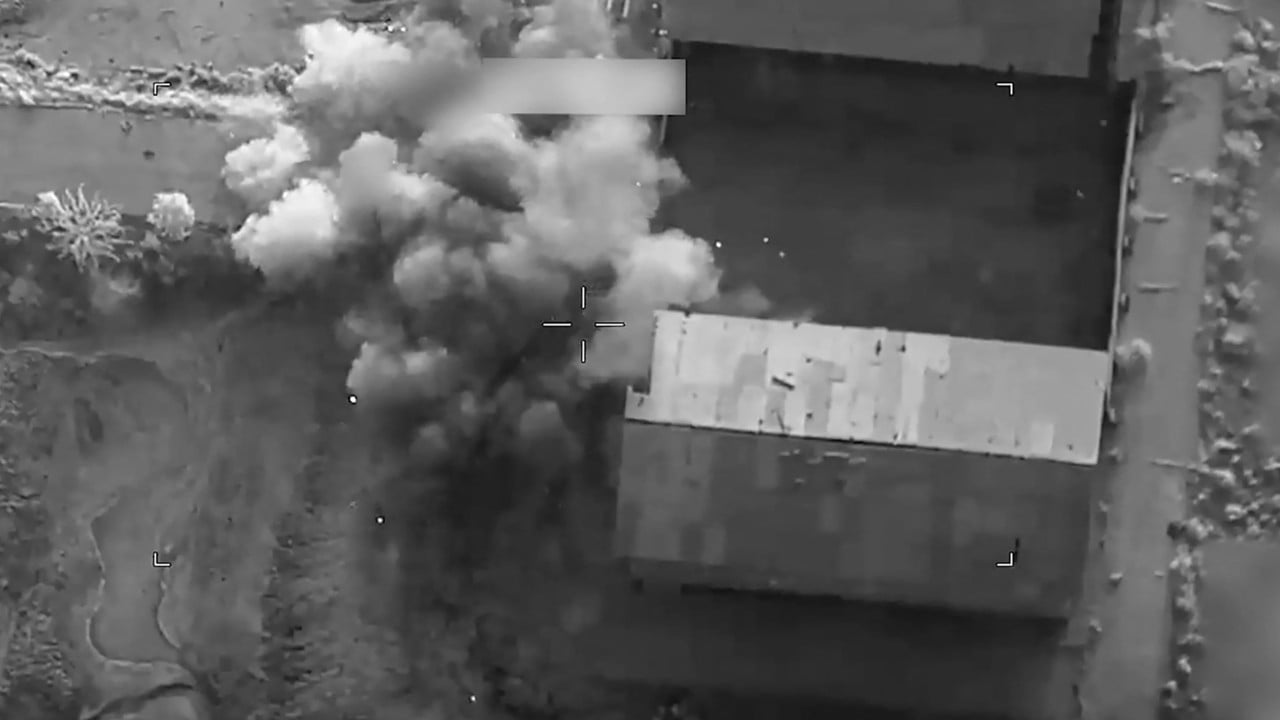
The sound did not begin as a roar, but as a low, pulsing vibration in the chest, the signature hum of precision-guided munitions slicing through the heavy coastal air. For ninety minutes, the sky over the Strait of Hormuz rained fire. American fighter jets and naval assets, operating under the blinding glare of daylight—a deliberate, aggressive departure from the cover of night—shattered the concrete bunkers and hidden launch pads carved into the island’s red clay.
By the time the smoke cleared, the delicate scaffolding of a fragile regional peace had turned to ash.
The Weight of a Choke Point
To understand why a remote island became the focal point of a superpower's wrath, one must understand the anatomy of a global economic artery. Consider the journey of a single oil tanker. It is a vessel longer than three football fields, carrying millions of barrels of crude destined for light switches in Europe, factories in Asia, or gas stations in Ohio. To get there, it must navigate the Strait of Hormuz, a passage so narrow that the shipping lanes shrink to just two miles wide in either direction.
About twenty percent of the world's petroleum flows through this tiny gap. When the strait is open, global markets hum. When it is threatened, the price of everything from fertilizer to wheat spikes.
For months, the strait has been a shadow of its former self. A virtual blockade imposed by Tehran in retaliation for earlier spring clashes had already sent tremors through the global economy. Then came last week's attacks on civilian tankers. A handful of commercial crews, sailors earning a living thousands of miles from home, suddenly found themselves in a shooting war. Ten died or went missing in the chaos.
The American response was swift, culminating in a daylight offensive on Greater Tunb. According to U.S. Central Command, the strikes targeted coastal defense systems and cruise missile storage facilities. The objective was simple: strip away the teeth that Iran uses to hold the strait hostage.
But military objectives rarely exist in a vacuum. Every strike has an echo.
The Unsinkable Fleet
To the Iranian Revolutionary Guard Corps (IRGC), Greater Tunb and its sister islands—Lesser Tunb and Abu Musa—are the crown jewels of their "arch defense". Seized from the United Arab Emirates in 1971, these islands have been systematically fortified over decades. They are not just defensive outposts; they are offensive staging grounds.
Deep beneath the rocky surface of Greater Tunb lie reinforced bunkers holding anti-ship cruise missiles. On the beaches, heavily armed fast-attack boats sit ready to swarm larger vessels. It is a highly asymmetrical setup designed to turn the narrow waters of the gulf into a lethal gauntlet.
The U.S. strikes were designed to break this gauntlet. For seven hours the night before, and then for another ninety minutes in the afternoon sun, precision bombs hammered these subterranean caches. Yet, the physical destruction of concrete and steel does not automatically translate to security.
Hours after the American ordnance detonated on Greater Tunb, the retaliation began.
The IRGC launched waves of one-way attack drones and ballistic missiles targeting Western-allied bases in Jordan, Kuwait, and Bahrain. In the southern province of Sistan and Baluchestan, Iranian officials reported that U.S. missiles hit a barracks belonging to the 388th Mechanized Infantry Brigade, claiming the lives of seven troops, including young conscripts. Across the country, hundreds of wounded filled local hospitals.
The human cost of geopolitical chess is never evenly distributed.
The Friction of the Blockade
As the military exchange intensified, the U.S. reimposed a strict naval blockade on Iranian ports. Within the first seventeen hours, American warships intercepted and redirected two commercial vessels attempting to make port.
This is the cold, logistical reality of a blockade. It is a slow tightening of the vice, intended to starve an adversary of economic oxygen until they return to the negotiating table. But blockades are notoriously difficult to maintain without provoking the very escalation they are meant to prevent.
The stakes could not be higher. The temporary truce signed in June—which offered a brief, sixty-day window of hope for diplomacy—has been completely torn to shreds. Now, rhetoric from both capitals has hardened. Tehran declares it has no interest in further talks, focusing instead on absolute defense and threatening to cut off all regional energy exports if the blockade persists.
In Washington, the language is equally unyielding. The warning is clear: agree to a deal, or watch the target list expand from isolated military islands to national power grids, bridges, and critical infrastructure.
The conflict has moved beyond a dispute over shipping lanes. It has become a contest of endurance, played out on a stage where a single miscalculation can trigger a wider regional war. As the sun sets over the red dirt of Greater Tunb, the smoke rises, drifting across a waterway that holds the fortune of the modern world in its tides.