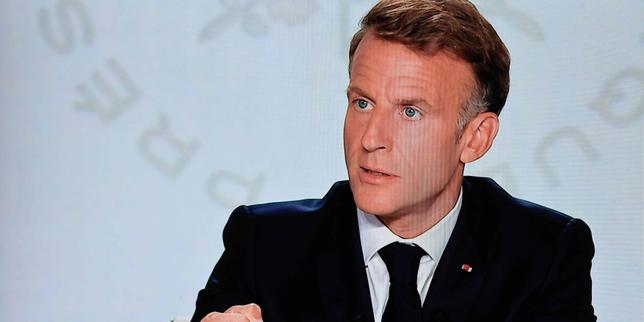
The Elysée operates on a specific frequency of crisis. When international shocks collide with domestic fury over the cost of living, French executive power instinctively reaches for the most formidable levers at its disposal. Emmanuel Macron deployment of military logistics and state authority in response to spiraling fuel prices and geopolitical instability is not merely an emergency measure. It is a revealing window into how modern governance attempts to tame global economic chaos through sheer force of will and administrative muscle.
For decades, the citizen at the pump has served as the ultimate political barometer in France. A spike in crude oil prices instantly translates into blocked roundabouts, soaring inflation fears, and acute political vulnerability for whoever sits in power. When supply chains fracture due to overseas conflicts, Red Sea shipping disruptions, or European sanctions packages, the shockwave hits French refineries and service stations within days. The response from the executive branch often blurs the traditional line between national defense and domestic economic management.
The Anatomy of State Requisition
When ordinary market mechanisms stutter, the French state possesses extraordinary statutory powers to intervene. These powers are rooted in a deeply embedded dirigiste tradition that predates the Fifth Republic by centuries. Yet, invoking military infrastructure or operational capabilities during civilian fuel crunches introduces a distinct set of operational dynamics and political risks.
Consider the logistical apparatus of the French armed forces. The Service des essences des armées manages fuel logistics for military operations across the globe, maintaining specialized reserves, transport networks, and distribution protocols that operate independently of commercial supply chains. When fuel shortages paralyze civilian distribution networks—whether driven by refinery strikes, panic buying, or international embargoes—the temptation to draw upon or mimic military logistical discipline becomes overwhelming for political leadership.
However, substituting military personnel or assets into commercial supply chains is far from a clean fix. It is a measure born of desperation disguised as decisive leadership. Troops deployed to secure depots or escort fuel tankers are diverted from their primary missions. More fundamentally, military intervention exposes the limits of presidential power when confronted with global commodity markets that care little for executive decrees issued from the Palais de l'Elysée.
The operational reality of military logistics is designed for tactical resilience under hostile conditions, not for optimizing commercial retail distribution across thirty thousand service stations. Trying to adapt military supply chains to relieve civilian shortages is akin to using a scalpel to fix a failing plumbing system. It creates friction with private operators, unions, and transport companies who view state intrusion with deep suspicion.
Geopolitical Shockwaves and Domestic Vulnerability
The global energy architecture is inherently fragile. When conflicts erupt in the Middle East or Eastern Europe, the immediate casualty is price stability. Refined products, crude benchmarks, and maritime insurance rates react instantly to geopolitical friction. For a nation like France, which relies heavily on imported hydrocarbons despite its nuclear baseload for electricity, these international tremors are felt acutely by motorists and trucking companies alike.
Macron strategy relies on projecting control over an uncontrollable environment. By framing domestic price spikes as a matter of national security intertwined with international crises, the administration attempts to shift the narrative. It transforms a mundane economic hardship into a test of national resilience. But this rhetorical framing carries a heavy burden. If military means are invoked to manage a fuel crisis, citizens expect tangible relief. When relief fails to materialize because global prices remain stubbornly high, the illusion of total executive competence shatters.
The friction between international mandates and domestic realities is stark. France participates in complex European Union sanctions regimes, international maritime security coalitions, and diplomatic efforts to stabilize volatile regions. Each of these commitments carries economic costs. When those costs trickle down to the local gas station in the form of record-high prices per liter, the public connection between foreign policy and domestic pain becomes immediate and volatile.
Consider the ripple effects through maritime trade routes. When security threats in regional chokepoints force container ships and oil tankers to bypass traditional canals and alter their routes, transit times increase by weeks, and fuel consumption for shipping surges. These added costs are absorbed by the market and passed down directly to the end consumer in Europe. No presidential speech delivered in Paris can alter geography or eliminate the maritime insurance premiums levied on tankers navigating war zones.
The Ghost of Past Protests
Political memory in Paris is long, scarred by the ghosts of the Yellow Vest movement. That revolt began with a seemingly minor proposed increase in fuel taxes, quickly snowballing into a nationwide indictment of metropolitan disconnect and economic marginalization. Ever since that winter of discontent, every French administration treats fuel price volatility with extreme urgency.
The deployment of emergency measures, whether through administrative price caps, targeted subsidies, or threats of military-backed logistics management, stems from a deep-seated fear of social explosion. The government knows that transport costs ripple through every sector of the economy. Fresh produce, construction materials, and public transit all depend on diesel and gasoline. When fuel prices surge, inflation broadens, eating away at purchasing power and triggering demands for wage increases that the economy cannot easily absorb.
By signaling a willingness to use state power and military-adjacent solutions, the executive attempts to project strength before protests can organize. Yet, this pre-emptive posture often produces unintended consequences. It signals panic. When the government loudly announces extraordinary measures to secure fuel supplies or curb prices, it validates public anxiety rather than calming it.
The psychological dimension of French political protests cannot be overstated. In the national consciousness, taking to the street is a legitimate constitutional exercise deeply tied to the republican tradition. When fuel prices cross perceived psychological thresholds, the reaction is swift and uncompromising. Executive power responds in kind, mobilizing symbols of authority—uniforms, convoys, state-directed distribution—to signal that the sovereign power of the state remains intact. Yet, this theater of authority often widens the gulf between the citizen and the state, transforming an economic grievance into a political confrontation.
The Limits of Presidential Omnipotence
The Fifth Republic was constructed to concentrate power in the hands of the president, particularly during times of crisis. Yet, modern globalized capitalism frequently circumvents the institutional architecture designed in 1958. No amount of executive authority or military logistical support can alter the global price of Brent crude. No presidential decree can single-handedly reopen maritime chokepoints or force foreign cartels to increase production.
When leaders attempt to bend global economic forces through domestic showmanship, they risk diminishing their own credibility. The deployment of state authority in economic matters works best when the problem is domestic and structural—such as regulatory bottlenecks or localized distribution failures. When the crisis originates from global supply and demand imbalances, local force is little more than a theatrical bandage on a systemic wound.
Furthermore, relying on military assets for civilian support strains an institution that is already operating under significant operational tempo. French forces are engaged in counter-terrorism missions, European defense initiatives, and strategic partnerships across multiple continents. Pulling focus or resources toward domestic fuel distribution, even in an advisory or security capacity, diverts attention from core defense readiness.
The mismatch between institutional design and economic reality creates a recurring cycle of frustration. Citizens look to the head of state to solve problems that originate thousands of miles away in boardrooms, oil fields, and geopolitical battlegrounds. When the president accepts this mantle of omnipotence during election campaigns or televised addresses, he sets an impossible standard. Every subsequent price hike at the pump becomes direct evidence of executive failure.
The Economic Reality Beneath the Uniform
Behind the political theater lies a stubborn arithmetic. Energy taxation remains a cornerstone of French state revenue. A significant percentage of every liter of fuel purchased at the pump flows directly into state coffers through value-added tax and the domestic consumption tax on energy products. When global prices rise, the state collects more revenue in absolute terms, even as consumers suffer.
Calls for emergency measures frequently skirt around this fundamental fiscal reality. Opposition politicians demand tax cuts on fuel, while fiscal conservatives warn of budget deficits that could violate European Union stability pacts. Caught in this squeeze, the executive attempts a delicate balancing act, offering temporary relief mechanisms while refusing to dismantle the underlying tax structure.
Military interventionism in this context serves as a convenient distraction from difficult fiscal choices. It shifts the public debate from taxation and structural economic dependency toward national security and crisis management. It allows the government to appear active, resolute, and commanding, even as the underlying economic pressures continue to grind down household budgets.
Consider the mechanics of the tax burden. When crude oil trades at low levels, high fuel taxes ensure steady budgetary inflows for public services, infrastructure, and social programs. But when crude spikes due to international conflict, those same taxes amplify the pain at the retail pump. The state profits from the very inflation that strangles the working motorist. Proposing military logistics or emergency decrees avoids the uncomfortable debate over whether the state should temporarily suspend or restructure its own tax intake during global emergencies.
Navigating the Permanent State of Emergency
France has spent much of the past decade lurching from one emergency to another. Terrorism, pandemics, climate disruptions, and geopolitical conflicts have normalized a permanent state of exceptional governance. In this environment, extraordinary measures lose their exceptional character and become routine administrative tools.
Using state authority and military capabilities to manage economic fallout is a symptom of this normalization. It reflects an administrative culture that believes every problem can be solved by an order from Paris, provided the order is firm enough and backed by sufficient authority.
Yet, as the global energy landscape undergoes structural transformation driven by decarbonization, geopolitical fragmentation, and shifting trade routes, the limits of this approach become increasingly apparent. Citizens grow cynical toward spectacles of power that fail to lower their cost of living. International partners observe the internal contradictions of a state attempting to project global power while struggling to manage domestic petrol prices.
The challenge facing the French executive is not merely managing the immediate fallout of a fuel price spike or an international conflict. It requires confronting the structural vulnerabilities that leave the nation perpetually exposed to external shocks. Until those foundational vulnerabilities are addressed, every crisis will prompt the same frantic resort to state authority, and every return to normalcy will remain painfully fragile.
The system stumbles forward, caught between the archaic grandeur of presidential command and the relentless, uncaring mechanics of global trade. Uniforms will appear at depots when the pressure mounts. Speeches will be delivered from gilded rooms. And at the corner gas station, the motorist will continue calculating whether the weekly wage can cover the commute.