Keir Starmer is signaling a fundamental shift in how the British state handles public dissent, moving toward a harder line on pro-Palestinian demonstrations that use specific historical slogans. By suggesting that certain marches could be banned if they feature "intifada" chants, the Prime Minister is navigating a narrow corridor between protecting public order and upholding the traditional British right to protest. This isn't just about a single word. It is about a government attempting to redefine the boundaries of what is considered "threatening" in a multi-ethnic democracy under intense pressure from both domestic communities and international allies.
The Prime Minister’s recent comments indicate that the Home Office and the Metropolitan Police are being encouraged to take a more interventionist approach. For months, the police have operated under a policy of "engagement and observation," largely allowing marches to proceed unless an immediate threat of mass violence appeared. That era is ending. Starmer, a former Director of Public Prosecutions, knows the law better than most who have held his office. He is now signaling that the threshold for criminal behavior or "harassment" is lower than previously enforced.
The Legal Tightrope of Chants and Intent
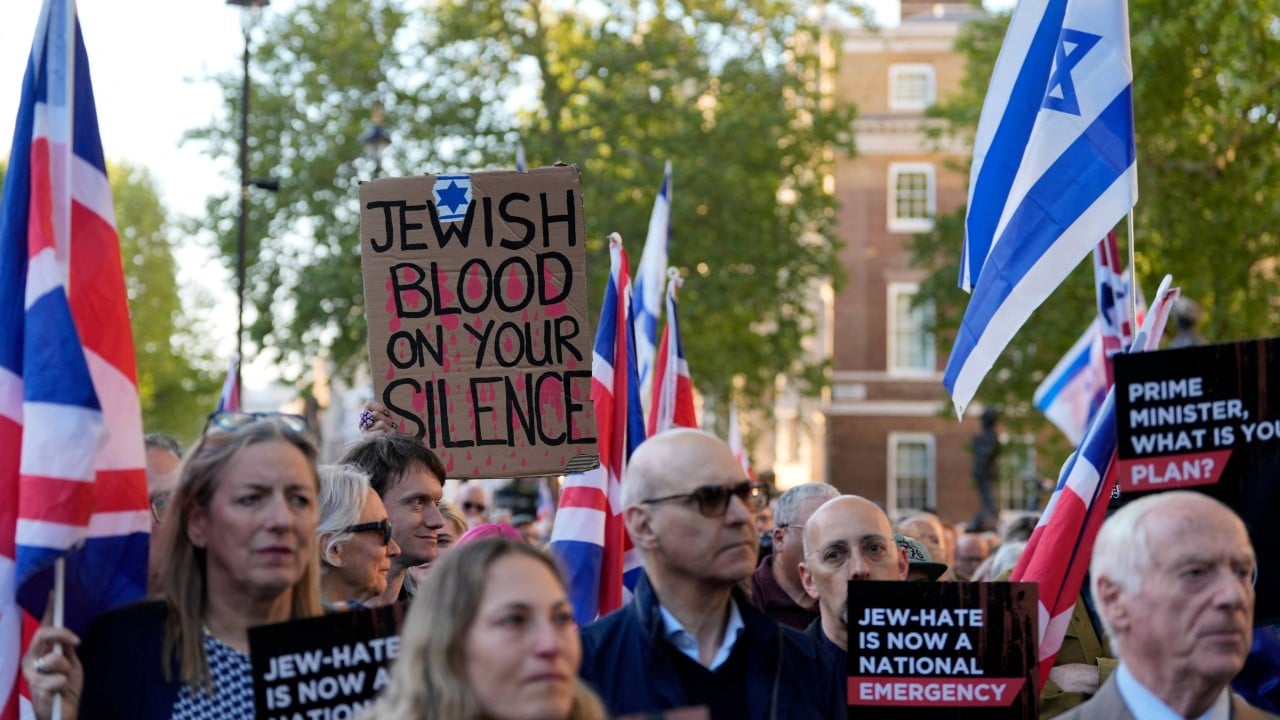
The word "intifada" sits at the heart of this legislative and social tension. To many demonstrators, it represents a historical struggle for liberation. To the government and significant portions of the Jewish community, it is a direct call for violence against civilians. Starmer is siding with the latter interpretation, arguing that such language creates an environment of intimidation that makes specific groups feel unsafe in their own capital.
Prohibition of a march is a "nuclear option" under the Public Order Act. To trigger a ban, a Chief Constable must demonstrate that the march will result in serious public disorder that cannot be managed by standard policing conditions. By highlighting specific chants, Starmer is suggesting that the psychological impact on the public can be used as a justification for these bans. It is a subtle but significant pivot from managing physical safety to managing the "atmosphere" of the streets.
The Mechanics of a Protest Ban
A ban doesn't happen with the stroke of a pen from 10 Downing Street. The process is intentionally bureaucratic to prevent political interference. The police must apply to the local authority, which then seeks the Home Secretary’s consent. In London, the Metropolitan Police Commissioner applies directly to the Home Secretary.
Starmer’s rhetoric serves as a green light for police leaders. He is essentially telling them that if they bring him a request to shut down a march based on the rhetoric used in previous weeks, the government will provide the political cover to do so. This puts the police in a difficult position. If they don't ask for a ban, they look weak to the government; if they do, they risk a massive backlash from civil liberties groups and the millions who have marched peacefully.
A Struggle for Control Over the Metropolitan Police
For over a year, the Metropolitan Police have been caught in a vice. On one side, conservative critics and now the Labour leadership demand "toughness." On the other, operational reality shows that arresting a person for a slogan in the middle of a crowd of 300,000 can trigger a riot. This is the "tactical dilemma" that analysts often overlook.
The police prefer to use "retrospective facial recognition." They record everything and make arrests in the days following a march. Starmer’s new stance suggests this "softly-softly" approach is no longer politically viable. He wants visible deterrence. He wants the chants to stop while the cameras are rolling, not just a knock on a door three days later.
The Political Risk of Alienating the Base
Labour faces a precarious internal situation. A significant portion of the party’s younger members and its traditional base in urban centers are the very people organizing these marches. By threatening bans, Starmer risks a total rupture with these voters. However, his calculation is clear: he believes the "middle ground" of the UK electorate is exhausted by the weekly disruption of central London.
He is betting that the average voter cares more about the perceived lack of order than the nuances of free speech. This is a gamble. History shows that when you ban a march, the protesters don't just stay home. They splinter into smaller, more radical, and harder-to-police groups. A banned mass march often turns into a day of "spontaneous" chaos across a dozen different locations.
Redefining Harassment in Public Spaces
The government is looking at expanding the definition of "harassment" under the law. Currently, the police need to prove that a specific person felt harassed, alarmed, or distressed. Starmer is moving toward a model where the collective presence of certain slogans is enough to meet that burden of proof.
If this legal theory holds, it changes everything for organizers. It means they are no longer just responsible for their official speakers, but for every person who brings a homemade sign or joins a chant. It shifts the burden of policing from the state to the protest organizers themselves.
International Context and the Shadow of History
Britain isn't acting in a vacuum. Other European nations, notably Germany and France, have already implemented much stricter bans on pro-Palestinian symbols and speech. Starmer is aligning the UK more closely with these continental allies. He views this as part of a broader effort to combat rising antisemitism, which has spiked to record levels.
The challenge is that the UK has a more robust tradition of "non-interference" in protest than many of its neighbors. Overturning that tradition requires more than just a speech; it requires a sustained legal campaign that will inevitably be challenged in the High Court. Civil rights lawyers are already preparing for the first ban to be announced. They will argue that the Prime Minister is using the police as a political tool to silence a specific viewpoint.
The Practical Difficulty of Enforcement
Even if a ban is signed, how do you stop 100,000 people from walking down a street? You can’t. Not without a level of force that no British government wants to see on the evening news. The police know this. They are terrified of being the ones forced to hold the line against a crowd that believes it is on the right side of history.
The threat of a ban might be a bluff designed to force organizers to self-censor. By putting the word "intifada" in the crosshairs, Starmer is telling the Palestine Solidarity Campaign (PSC) and other groups to clean up their act or lose their platform. It is a high-stakes game of chicken. If the organizers refuse to back down and the government refuses to ban the march, Starmer looks powerless. If he does ban it and the streets fill anyway, he looks even worse.
The Changing Face of British Public Order
We are witnessing the end of the post-war consensus on the right to assembly. For decades, the assumption was that the state would tolerate almost any speech as long as it didn't involve a physical assault. That assumption is being replaced by a new doctrine of "protected sensitivities."
Under this doctrine, the state takes an active role in deciding which political slogans are too divisive for the public square. It is a move away from the "marketplace of ideas" and toward a managed public discourse. The implications of this extend far beyond the current conflict in the Middle East. If the government can ban a march because of a chant about a foreign war, it can certainly do so for chants about domestic issues that it finds "intimidating."
The Impact on Community Cohesion
There is a documented tension between the government’s desire for "order" and the reality of community relations. In many British cities, the local police work hard to build trust with minority communities. A blanket ban on marches, or a crackdown on widely used slogans, threatens to burn those bridges in a single afternoon.
Local commanders are often more pragmatic than the politicians in Westminster. They know that a peaceful march, even one with "offensive" slogans, is better than a violent confrontation. Starmer’s intervention is a direct challenge to this pragmatic policing. He is demanding a principled stand, even if that stand leads to a more volatile environment on the ground.
The coming months will test the structural integrity of the UK's protest laws. If the government moves from rhetoric to action, we will see a series of legal and physical confrontations that will define the Starmer era. This isn't just a debate about foreign policy or ancient grievances. It is a raw struggle for the soul of the British street, where the power of the state is being weighed against the power of the crowd. The decision to ban or not to ban will set a precedent that will haunt the Home Office for a generation.