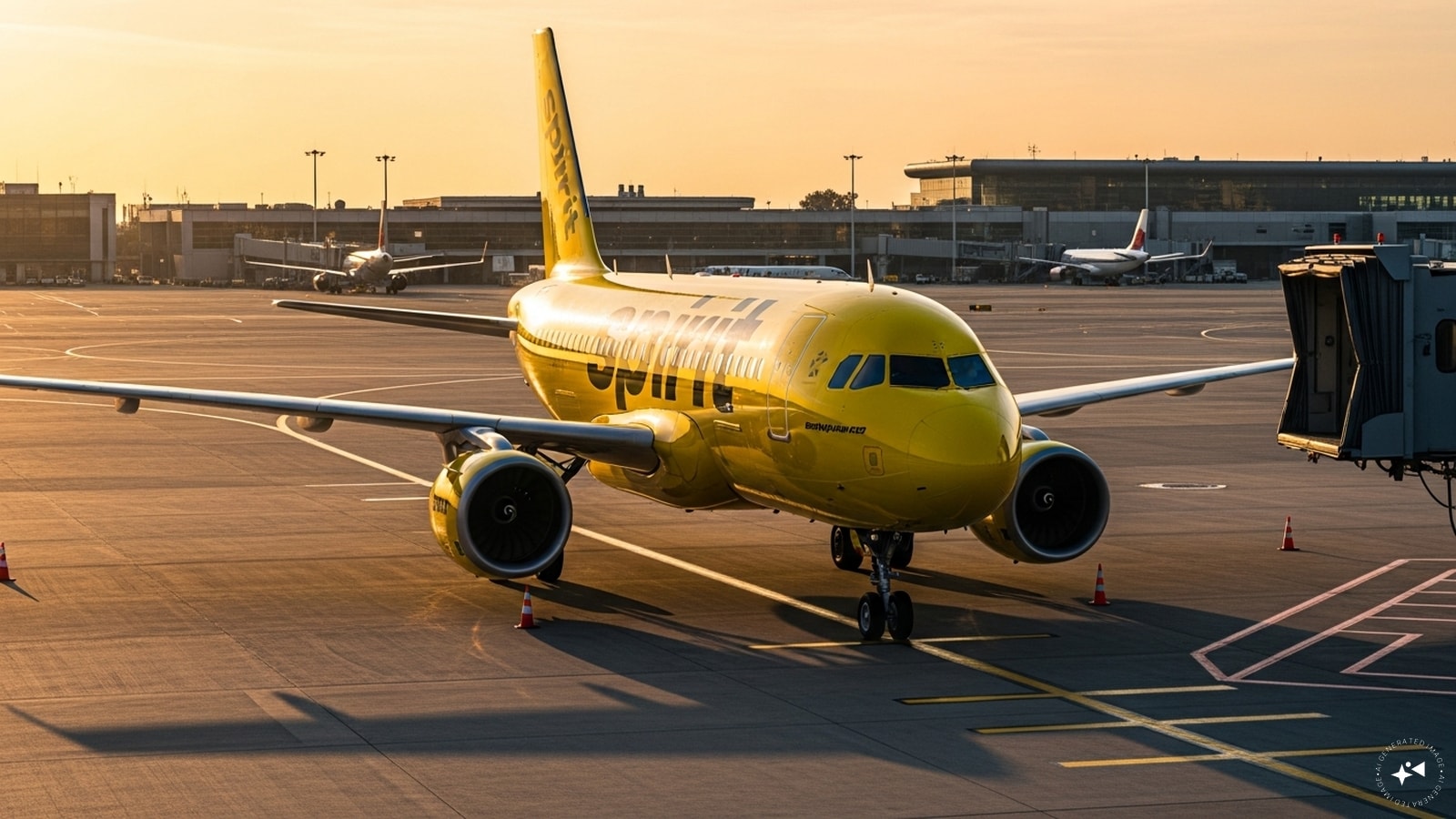
Spirit Airlines faces a liquidity crisis that transcends simple debt management; it is a fundamental breakdown of the Ultra-Low-Cost Carrier (ULCC) model in a high-interest, post-pandemic economic environment. While sensationalist headlines suggest an "overnight" disappearance, the reality of airline restructuring is governed by the United States Bankruptcy Code—specifically Chapter 11—which prioritizes operational continuity over immediate liquidation. For the traveler, the risk is not a mid-air cessation of service but a systemic degradation of the network, diminished rebooking power, and the eventual evaporation of unredeemed credits. Understanding the trajectory of Spirit requires an analysis of its debt maturity schedule, the Pratt & Whitney GTF engine grounding crisis, and the legal constraints of the DOT’s consumer protection mandates.
The Triad of Operational Instability
The current distress at Spirit Airlines is driven by three distinct but intersecting vectors:
- The Engine Grounding Bottleneck: A significant portion of Spirit’s Airbus A320neo fleet is grounded due to mandatory inspections and repairs of Pratt & Whitney Geared Turbofan (GTF) engines. This creates a dual-threat financial drain: the airline loses revenue-generating capacity while maintaining the fixed costs of aircraft leases and labor.
- The Maturity Wall: Spirit faces approximately $1.1 billion in loyalty-program-backed debt due in 2025. In a high-interest-rate environment, refinancing this debt is prohibitively expensive, especially following the blocked merger with JetBlue, which was the primary "exit strategy" for the airline's balance sheet.
- Revenue Softness in Core Markets: The ULCC model relies on high-utilization and "ancillary-heavy" revenue. However, legacy carriers have aggressively expanded their "Basic Economy" offerings, neutralizing Spirit’s price advantage while offering superior network density.
The Mechanics of a Chapter 11 Transition
Should Spirit file for bankruptcy, the process is unlikely to result in an immediate shutdown. The objective of Chapter 11 is reorganization. Under this framework, the airline continues to fly while renegotiating contracts with lessors, labor unions, and creditors.
The immediate operational impact is usually felt in network optimization. An airline in restructuring will aggressively cut unprofitable routes. If you are booked on a high-frequency route (e.g., Fort Lauderdale to New York), the risk of total cancellation is lower than for a thin, seasonal route. In these scenarios, the airline often consolidates passengers onto fewer flights, increasing load factors but decreasing traveler flexibility.
The legal priority of a ticket holder is that of an unsecured creditor. However, as long as the airline is operating, it has a massive incentive to honor tickets to maintain cash flow. The real danger arises if the restructuring fails and shifts to Chapter 7 liquidation. In that rare event, the aircraft are seized by creditors, and the "cessation of service" becomes a reality. Under current Department of Transportation (DOT) regulations, if an airline cancels a flight for any reason—including bankruptcy-related service cuts—it is legally required to provide a prompt refund to the original form of payment.
The Rebooking Paradox and Reciprocal Agreements
A critical vulnerability for Spirit passengers is the lack of "interline agreements." Legacy carriers like Delta, United, and American have reciprocal arrangements where they can rebook passengers on each other’s flights during irregular operations (IROPS). Spirit generally does not participate in these networks.
If Spirit cancels a flight due to operational insolvency, other airlines are under no legal obligation to fly you for free. During the 2023 collapse of several international budget carriers, some airlines offered "rescue fares"—discounted seats for stranded passengers—but these are voluntary and subject to seat availability.
Evaluating the "Value at Risk" for the Consumer
To quantify the risk of booking with a distressed carrier, one must look at the Time-to-Travel Horizon.
- T-Minus 0 to 30 Days: Risk is statistically low. The legal and financial lead-up to a total shutdown involves public filings and court dates that provide a buffer. Operations usually remain stable in the immediate weeks following a Chapter 11 filing.
- T-Minus 90 Days and Beyond: Risk is elevated. This window allows for major network shifts or a transition from reorganization to liquidation.
The primary exposure for frequent Spirit flyers is the Free Spirit loyalty points and "Spirit 100% Fruit" credits. In a bankruptcy, loyalty programs are often treated as liabilities. While they are frequently honored to maintain customer goodwill, their value can be devalued overnight through "dynamic pricing" adjustments or outright expiration if the program is not acquired by another entity.
Tactical Mitigation for Scheduled Travel
The strategy for navigating a potential airline insolvency is not to avoid booking entirely—as Spirit’s low fares may still represent a rational trade-off for some—but to isolate the risk through financial and logistical decoupling.
Credit Card Protections and the Chargeback Mechanism
The most effective hedge against an airline shutdown is the Fair Credit Billing Act. If you pay for a service (transportation) that is not rendered due to the provider's insolvency, you have a strong legal basis for a credit card chargeback. This is superior to travel insurance in many cases, as some insurance policies specifically exclude "financial insolvency" of a carrier from their coverage.
The "Shadow Booking" Strategy
For mission-critical travel (weddings, non-refundable cruises, time-sensitive business), travelers should maintain a "shadow itinerary." This involves identifying a fully refundable fare on a legacy carrier that departs within a similar window. If Spirit remains operational, the refundable fare is canceled 24 hours prior. If Spirit fails, the traveler has a guaranteed seat at a pre-distress price.
The Displacement of the ULCC Model
The structural problem Spirit faces is the "Convergence of the Middle." Historically, Spirit won on price, and legacy carriers won on service. Today, legacy carriers use sophisticated Revenue Management Systems (RMS) to match Spirit’s base fares in key markets, while Spirit has attempted to move "upmarket" by introducing bundled fares and "Big Front Seats."
This identity crisis has increased Spirit’s Cost per Available Seat Mile (CASM) without a commensurate increase in Yield (revenue per passenger). When an airline's cost structure begins to mirror that of a legacy carrier without the benefit of a global hub-and-spoke network or lucrative corporate contracts, the business model becomes unsustainable.
Strategic Asset Valuation
If Spirit does not survive as a standalone entity, its value lies in its Assets, not its Brand:
- A320neo Delivery Slots: These are highly coveted given the multi-year backlogs at Airbus.
- Gate Holdings: Specifically in constrained airports like Newark (EWR), Los Angeles (LAX), and Orlando (MCO).
- Pilot Seniority Lists: In a labor-constrained market, the acquisition of a trained pilot workforce is a significant strategic move for a competitor.
The most likely outcome is a "distressed asset" sale where a competitor or a private equity group acquires these pieces, potentially under the protection of a bankruptcy court to shed the $3 billion+ in total debt.
Final Strategic Posture
The probability of Spirit Airlines disappearing between sunset and sunrise is near zero due to the procedural requirements of federal law and the operational inertia of a 200-aircraft fleet. However, the probability of a forced contraction—where the airline you booked today is fundamentally different from the airline operating on your travel date—is high.
Passengers should treat Spirit as a "spot market" provider. Use it for immediate, low-stakes travel where the cost savings exceed the cost of a last-minute replacement ticket. Avoid using the airline as a long-term "bank" for travel credits or points. The structural insolvency of the ULCC model suggests that liquidity will remain the primary constraint for the foreseeable future, making every Spirit ticket a speculative investment in the airline’s ability to find a new creditor or a willing buyer.
Monitor the 10-K and 10-Q filings specifically for "Going Concern" warnings from auditors. Once an auditor issues a formal doubt about the company's ability to survive the next twelve months, the window for safe booking effectively closes. Until then, the risk is manageable through aggressive use of credit card protections and a refusal to hold long-term loyalty balances.