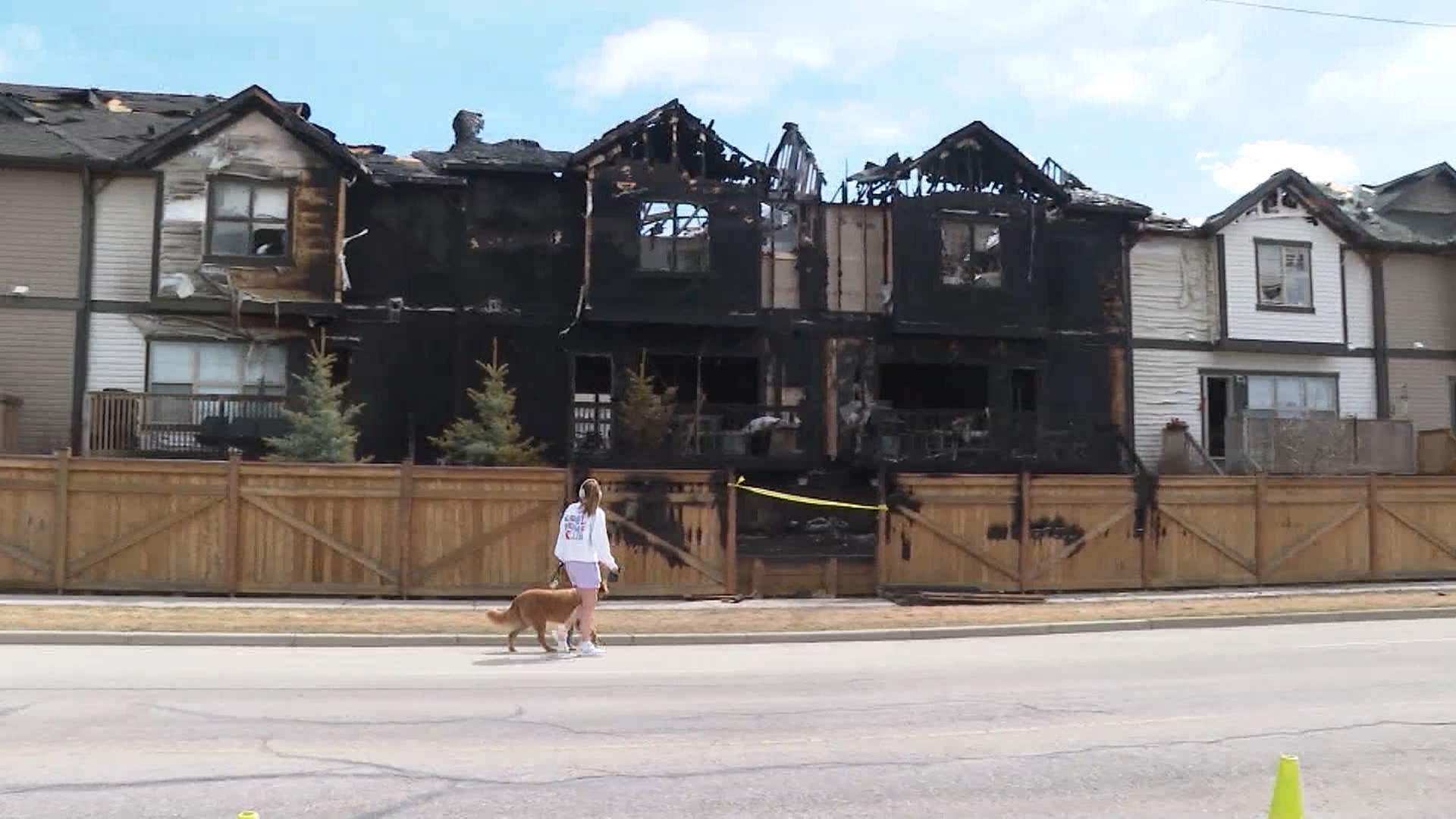
The smell of wood smoke in Cochrane usually signals a quiet Tuesday night, the kind where the wind rolls off the Rockies and settles into the Bow Valley like a heavy blanket. But for a captain sitting in the front seat of a fire engine, that smell triggers a mental stopwatch. He isn't thinking about the charm of a mountain town. He is calculating the distance between Station 151 and the furthest reaches of a community that is stretching its limbs faster than it can grow its heart.
Cochrane is no longer the sleepy ranching outpost people remember from the nineties. It is a juggernaut. With a population surging past 34,000, it has become one of the fastest-growing municipalities in Canada. The sprawl is beautiful—rows of pristine siding and expansive windows overlooking the foothills—but beauty has a footprint. And right now, that footprint is outrunning the people sworn to protect it. Don't forget to check out our recent post on this related article.
The Math of a Single Spark
Consider a hypothetical resident named Sarah. She moved to a new development on the north side of town because she wanted the view and the fresh air for her kids. To Sarah, the town feels vibrant. To a fire chief, Sarah’s neighborhood represents a logistical nightmare.
When a fire starts, it doesn't wait for a council meeting. In a modern home filled with synthetic materials, "flashover"—the point where everything in a room ignites simultaneously—happens in less than four minutes. Ten years ago, with legacy furniture made of solid wood and cotton, you had ten minutes. Now, the clock is your enemy. To read more about the history here, Al Jazeera offers an informative summary.
If the fire station is downtown and Sarah’s house is behind three new traffic circles and a bridge congested with commuter traffic, the math stops working. If it takes six minutes for the tones to drop and the truck to arrive, the "save" isn't a save anymore. It’s a recovery.
Cochrane’s fire services are currently operating out of a single primary station supported by a secondary site, but the geographic spread is becoming unsustainable. The town’s own data suggests that as the borders push outward, response times naturally begin to creep up. In the world of emergency services, a "creep" in time is measured in charred rafters and lost livelihoods.
The Invisible Infrastructure
We often talk about growth in terms of property taxes, school spots, and "coming soon" signs at the local plaza. These are the visible markers of a booming town. We rarely talk about the invisible infrastructure: the ratio of firefighters to citizens, the water pressure in new hydrants, and the sheer physical exhaustion of a crew that is seeing their call volume skyrocket while their numbers remain static.
The burden isn't just about fire. Over 60% of most modern fire department calls are medical or "all-hazard." As Cochrane grows, so does the frequency of heart attacks, car accidents on the 1A, and technical rescues. When one crew is tied up assisting an elderly resident in the south, and a kitchen fire breaks out in the north, the town enters a state of "red alert."
There is no backup behind the curtain.
Local officials have been sounding the alarm because they understand a fundamental truth about municipal planning: you cannot build your way out of a safety deficit after the tragedy occurs. You have to buy the trucks and hire the crews before the smoke appears on the horizon.
The Price of a View
The tension in Cochrane mirrors a struggle happening across the West. We want the small-town feel, but we bring big-city demands. We want lower taxes, but we want a fire engine at our door in 300 seconds.
There is a psychological gap between the way a citizen views their town and the way a first responder views it. A citizen sees a new community as a place of beginning; a firefighter sees a new community as a series of "unprotected" acres. They see the lack of a third station not as a budgetary line item, but as a gamble.
Imagine the crew sitting in the bay at 3:00 AM. They know the maps. They know that during peak hours, the bridge becomes a bottleneck that can turn a routine call into a desperate race. They aren't just worried about the fire; they are worried about the seconds they lose waiting for a gap in traffic that used to be non-existent.
The Weight of the Tones
Budgeting for emergency services is often a thankless task for town councils. If they do it right, nothing happens. No one writes a letter to the editor thanking the fire department for a fire that didn't spread or a response time that stayed under five minutes. Success in this field is defined by the absence of catastrophe.
But the data is shouting. The sheer volume of residents moving into the corridor between Calgary and the mountains is putting a strain on the "mutual aid" agreements that once acted as a safety net. When every neighboring town is also bursting at the seams, you can no longer rely on your neighbor to bail you out. You have to be your own hero.
This isn't about politics or partisan bickering over mill rates. It is about the fundamental social contract. When you pay your taxes and move your family into a cul-de-sac, you are buying into the promise that help will come when you call. In Cochrane, keeping that promise is getting harder every day.
The town stands at a crossroads. It can continue to permit the sprawl and hope for the best, or it can pause and realize that a community is more than just rooftops. A community is the assurance that when the lights go out or the smoke rises, the gap between the siren and the front door is as short as humanly possible.
The wind continues to blow off the Rockies, and the town continues to climb the hillsides. Somewhere in a station downtown, a firefighter checks his gear, looking at the map of a town that is growing faster than the ink can dry. He knows the truth that the rest of us try to ignore.
Seconds aren't just units of time. They are the difference between a story about a close call and a story about everything that was lost.