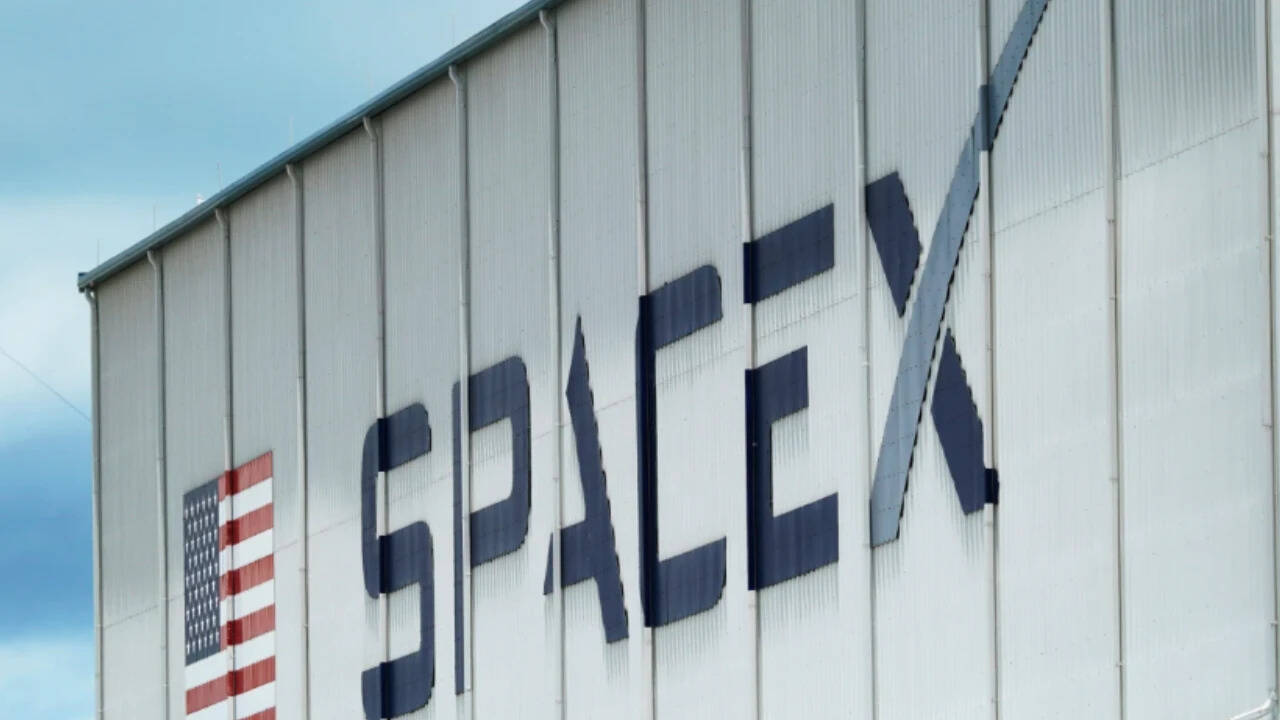
The judicial approval of a land exchange between SpaceX and public agencies regarding acreage adjacent to the Boca Chica launch facility represents a significant precedent in infrastructure expansion intersecting with ecological conservation. When industrial growth demands spatial scaling, the mechanism of land swapping introduces complex legal, ecological, and regulatory variables that extend far beyond a simple real estate transaction. Deconstructing this transaction requires analyzing the statutory frameworks governing public wildlife lands, the valuation models applied to ecological assets, and the operational imperatives driving private aerospace expansion in restricted ecosystems.
The Structural Mechanics of Public Land Exchanges
Public lands, particularly those designated as state parks, wildlife management areas, or national refuges, are legally insulated to protect biodiversity and public recreational access. Alienating these parcels is not a discretionary executive decision; it requires navigating statutory guardrails designed to prevent the erosion of public trust assets.
When a private entity seeks to acquire portions of these protected tracts, the transaction typically hinges on the doctrine of equal or greater ecological and economic value. The legal architecture governing such swaps requires the proponent to provide replacement acreage that matches or exceeds the conservation utility of the ceded land. This creates a multi-variable optimization problem for regulatory bodies:
- Ecological Equivalency: Can newly acquired land support the same biological carrying capacity, vegetative communities, and species diversity as the lost parcel?
- Geographic Proximity: Is the replacement land situated within the same functional ecosystem, or does the transfer result in habitat fragmentation and localized net loss?
- Encumbrance Status: Are the replacement tracts free of competing industrial, agricultural, or residential claims that could compromise long-term conservation viability?
In the context of the SpaceX transaction involving over 700 acres, the judicial review focused on whether the administrative agencies adhered to statutory mandates when evaluating the exchange ratio and the quality of the compensatory parcels. The legal challenge brought by conservation groups tested the limits of administrative discretion, specifically examining whether the public interest in commercial aerospace development legally supersedes statutory protections for state-held wildlife habitats.
The Cost Function of Launch Facility Proximity
For a vertically integrated aerospace manufacturer, physical proximity to the launch asset dictates logistical velocity. Operating a heavy-lift orbital program from a fixed coastal site creates severe boundary constraints. Boca Chica is bounded by sensitive coastal environments, limiting the spatial buffer required for ground operations, propellant staging, support infrastructure, and safety exclusion zones.
The economic and operational drivers for acquiring surrounding acreage can be modeled through spatial efficiency parameters:
$$\text{Logistical Friction} = \frac{\text{Distance to Operations} \times \text{Regulatory Overhead}}{\text{Available Spatial Buffer}}$$
As launch cadences increase and vehicle sizes scale—transitioning from developmental flight tests to high-frequency commercial and interplanetary operations—the denominator in this operational equation must expand. Without additional acreage for ground infrastructure, hazard mitigation zones, and environmental staging, launch cadence faces artificial ceilings imposed by physical crowding.
The acquisition of over 700 acres via the land swap alters this cost function. By shifting the spatial boundary, the operator gains operational depth. However, this expansion internalizes significant externalities related to environmental management and regulatory oversight.
Regulatory Fragmentation and Jurisdictional Overlap
The governance of the Boca Chica corridor is characterized by overlapping federal, state, and local jurisdictions. This fragmentation creates complex compliance pathways that can delay infrastructure scaling.
[Private Enterprise Requirements]
       │
       ├──> State Agencies (Land Management & Parks)
       ├──> Federal Regulators (FAA, USFWS, Army Corps)
       └──> Judicial Review (State and Federal Courts)
Each regulatory body enforces distinct statutory mandates:
- Federal Aviation Administration (FAA): Evaluates airspace safety, public risk, and environmental impact statements under the National Environmental Policy Act (NEPA).
- State Parks and Wildlife Departments: Oversee the integrity of state-owned refuges and manage public access rights.
- Environmental Protection Agencies: Monitor impacts on wetlands, endangered species habitats, and hydrological flows.
The judicial ruling allowing the land swap validates the procedural steps taken by state agencies, but it does not grant immunity from federal environmental reviews. Consequently, the transaction highlights a core tension in modern infrastructure development: the friction between rapid technological iteration cycles and deliberate, multi-agency environmental compliance frameworks.
Ecological Tradeoffs and Habitat Fragmentation
From a conservation biology perspective, trading land parcels is rarely a zero-sum game. Ecosystems are not modular units that can be swapped without functional loss. The original acreage utilized or impacted by aerospace operations often possesses specific hydrological and topographical characteristics critical to migratory birds, coastal species, and local flora.
The compensation parcels acquired through the exchange must compensate for three distinct forms of ecological displacement:
- Direct Habitat Loss: The physical conversion of natural terrain into industrial pads, roads, or safety zones.
- Edge Effects: The degradation of adjacent undisturbed habitats due to acoustic noise, artificial lighting, vibration, and increased human presence during launch campaigns.
- Hydrological Disruption: Alterations to coastal wetlands, tidal flows, and drainage patterns that affect local vegetation and fauna.
While replacement acreage may offer raw square footage, the time required for a newly acquired tract to achieve biological maturity and ecological stability often spans decades. This temporal lag represents an unpriced deficit in the transaction economics.
Strategic Outlook on Industrial Encroachment
The judicial clearance for the SpaceX land exchange establishes a tactical blueprint for how private high-tech infrastructure can negotiate spatial expansion within ecologically sensitive regions. As commercial spaceports proliferate globally, the precedent set in South Texas will influence future disputes between heavy industrial development and public conservation trusts.
The primary operational constraint moving forward will not be legal permissibility alone, but the ongoing cost of managing environmental compliance under heightened public scrutiny. Operators must balance the acceleration of launch cadence against the compounding liabilities of ecological monitoring and mitigation mandates. The long-term viability of the expanded footprint depends entirely on the empirical performance of the compensatory conservation measures—shifting the burden of proof from judicial arguments to measurable ecological outcomes.