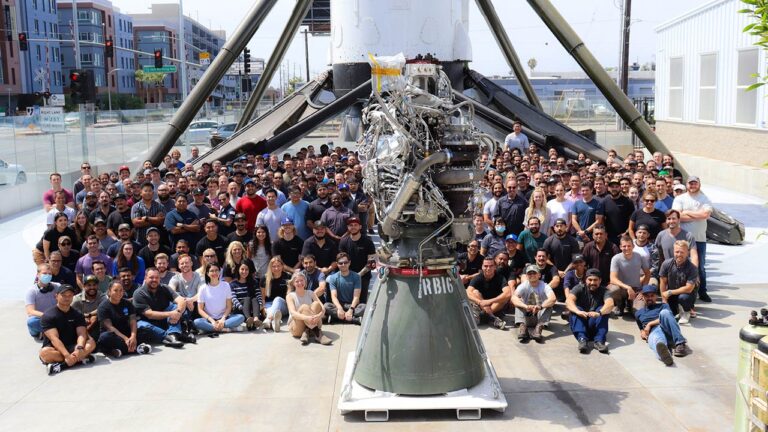
The financial press is currently choking on its own narrative. Mainstream analysts look at SpaceX’s staggering $1.78 trillion valuation and see a speculative casino built on Mars dreams, orbital internet gambles, and Elon Musk’s personal cult of personality. They frame it as the ultimate "moonshot" investment—a high-risk, lottery-ticket bet where retail and institutional allocators are supposedly praying for a sci-fi future to justify the multiple.
They are fundamentally misreading the mechanics of the company.
SpaceX is not a speculative tech startup burning cash to buy growth. It is a brutal, vertically integrated infrastructure monopoly disguised as an aerospace firm. The "moonshots" aren't wild stabs in the dark; they are the inevitable, highly calculated downstream products of a terrestrial launch monopoly. If you are analyzing this asset through the lens of traditional venture risk or venture-backed tech multiples, you are doing the math entirely wrong.
The Launch Monopoly Nobody Wants to Quantify
Every critique of SpaceX’s valuation focuses on the unproven margins of Starlink or the long-term utility of Starship. This is a severe analytical error. It ignores the compounding moat of the Falcon 9 and Falcon Heavy architecture.
Let’s talk reality. I have watched legacy aerospace giants spend decades blowing billions of dollars on disposable, single-use launch vehicles while insisting that reusability was a engineering pipe dream. They didn't just miss the boat; they built a completely obsolete dock.
Today, SpaceX controls the absolute majority of global commercial launch volume. It is not a duopoly. Arianespace is bogged down in bureaucratic inertia, Russia’s Proton is geopolitically dead, and ULA’s Vulcan is moving at the speed of a legacy defense contractor.
When you buy into SpaceX, you aren't buying a ticket to Mars. You are buying a toll booth on the only operational highway leaving Earth.
The marginal cost of a Falcon 9 flight is estimated to be under $15 million, while the company charges commercial clients over $65 million per launch. That is a software-like gross margin masquerading as heavy industry. SpaceX uses this massive, predictable cash engine to self-fund its R&D. Traditional companies must raise dilutive capital or take on high-interest debt to fund next-generation projects. SpaceX funds Starship and Starlink out of operational cash flow and occasional, highly oversubscribed secondary rounds that exist purely to provide liquidity to early employees and insiders.
Starlink Is a Utility, Not a Tech Speculation
The financial media loves to treat Starlink like a speculative consumer play. They look at the hardware costs, the subscription prices, and wonder if the addressable market of rural internet users is big enough to support a trillion-dollar valuation.
This is the wrong question. Starlink is not an internet service provider for campers and off-grid cabins. It is a sovereign defense asset and a high-frequency trading infrastructure network.
The True Addressable Market
- Maritime and Aviation: Commercial shipping lines and global airlines do not care about a $120 monthly subscription. They care about multi-million dollar enterprise contracts that guarantee high-bandwidth, low-latency connectivity across oceans. SpaceX has locked this market down before competitors can even get their test satellites into low Earth orbit (LEO).
- Military and Sovereign Defense: The Starshield variant proves that SpaceX is now deeply entrenched in the military-industrial complex. Governments are paying premium pricing for secure, un-jammable, distributed communications networks. This is recurring, high-margin revenue backed by national security budgets.
- High-Frequency Trading: The speed of light through the vacuum of space is roughly 47% faster than through fiber-optic cables on Earth. By routing data via inter-satellite laser links, Starlink can shave milliseconds off transoceanic data transfers. For global financial institutions, those milliseconds are worth billions.
To call Starlink a "moonshot" is to completely misunderstand the nature of global utilities. It is a global telecommunications infrastructure play with an absolute barrier to entry.
Imagine a scenario where a competitor wants to replicate Starlink today. Even if they had the capital—which would require hundreds of billions of dollars—they lack the launch capacity. To deploy a constellation of tens of thousands of satellites, a competitor would have to pay SpaceX to launch them. Amazon's Project Kuiper had to book launches with legacy competitors and is facing massive delays because those rockets simply aren't ready. SpaceX has created a vertical chokehold.
The Flawed Premise of the "Musk Risk" Premium
The most common pushback from institutional bears is key-man risk. The argument goes: if Elon Musk steps away, goes rogue, or focuses entirely on his other ventures, the SpaceX valuation collapses.
This narrative is lazy. It ignores the operational reality of the company's leadership team, specifically COO Gwynne Shotwell.
While Musk handles the high-level engineering architecture and dominates the news cycle, Shotwell has built an execution machine that runs with military precision. She manages the supply chain, handles regulatory hurdles, secures the massive government contracts, and ensures the trains run on time. The institutional knowledge inside SpaceX—from the propulsion engineers in Hawthorne to the pad technicians at Boca Chica—is deeply institutionalized.
The "Musk Risk" is actually an asset in disguise. It allows the company to absorb regulatory and political scrutiny that would paralyze a public firm like Boeing or Lockheed Martin. SpaceX can explode ten Starship prototypes in full public view, iterate rapidly, and treat catastrophic failure as data collection. A public company doing that would see its stock price crater 30% after the first anomaly, followed by a series of congressional hearings.
SpaceX’s private status is its structural weapon. It allows the company to operate on an engineering timeline rather than an earnings-per-share quarterly schedule.
The Downside No One Wants to Face
An honest assessment requires admitting the structural vulnerabilities of this model. The contrarian take isn't that SpaceX is flawless; it’s that the flaws are entirely different from what the market thinks.
The real risk to SpaceX isn't that Starship fails to reach Mars or that Starlink loses subscribers. The risk is orbital debris and regulatory strangulation.
+-------------------------------------------------------------+
|                     THE REAL RISK MATRIX                    |
+------------------------------+------------------------------+
|     PERCEIVED RISKS          |         ACTUAL RISKS         |
| (What the media talks about) |  (What actually threatens)   |
+------------------------------+------------------------------+
| * Starship test explosions   | * Kessler Syndrome (debris)  |
| * Mars colonization funding  | * FAA launch license delays  |
| * Consumer churn on Starlink | * Geopolitical asset seizure |
+------------------------------+------------------------------+
If a cascading collision event—known as the Kessler Syndrome—occurs in low Earth orbit, it could render specific orbital shells completely unusable. This wouldn't just hurt Starlink; it would destroy the economic viability of LEO business models entirely.
Furthermore, SpaceX is increasingly vulnerable to domestic political shifts. Because it operates as a de facto monopoly for NASA and the Department of Defense, it invites massive antitrust scrutiny. The moment regulators decide that SpaceX’s vertical integration (owning both the launch vehicle and the satellite payload) constitutes unfair competition, the company could face forced divestiture. That is a far greater threat to the $1.78 trillion valuation than any engineering hurdle.
Stop Asking if the Valuation Is Fair
The traditional investment community loves to debate whether SpaceX is worth 50 times revenue or 100 times EBITDA. They try to fit a completely unprecedented corporate entity into a standard financial spreadsheet.
They are asking the wrong question. The valuation of SpaceX is not a reflection of its current cash flow; it is a reflection of its replacement cost.
If you wanted to recreate SpaceX from scratch tomorrow, how much capital would it take? You cannot do it with $100 billion. You cannot do it with $500 billion. The infrastructure, the regulatory licenses, the proprietary alloy manufacturing, the launch site allocations at Cape Canaveral and Vandenberg, and the sheer intellectual capital accumulated over twenty years cannot be replicated by throwing money at the problem.
When an asset is completely irreplaceable and controls access to a brand-new economic domain, traditional valuation metrics cease to apply. It becomes a systemic asset.
Stop looking at SpaceX as a high-stakes gamble on a sci-fi future. It is a hyper-efficient, vertically integrated industrial monopoly that has commoditized the cost of reaching space, using that dominance to fund a global telecommunications network that faces zero viable competition for the next decade.
The market isn't buying a moonshot. It is buying the grid.