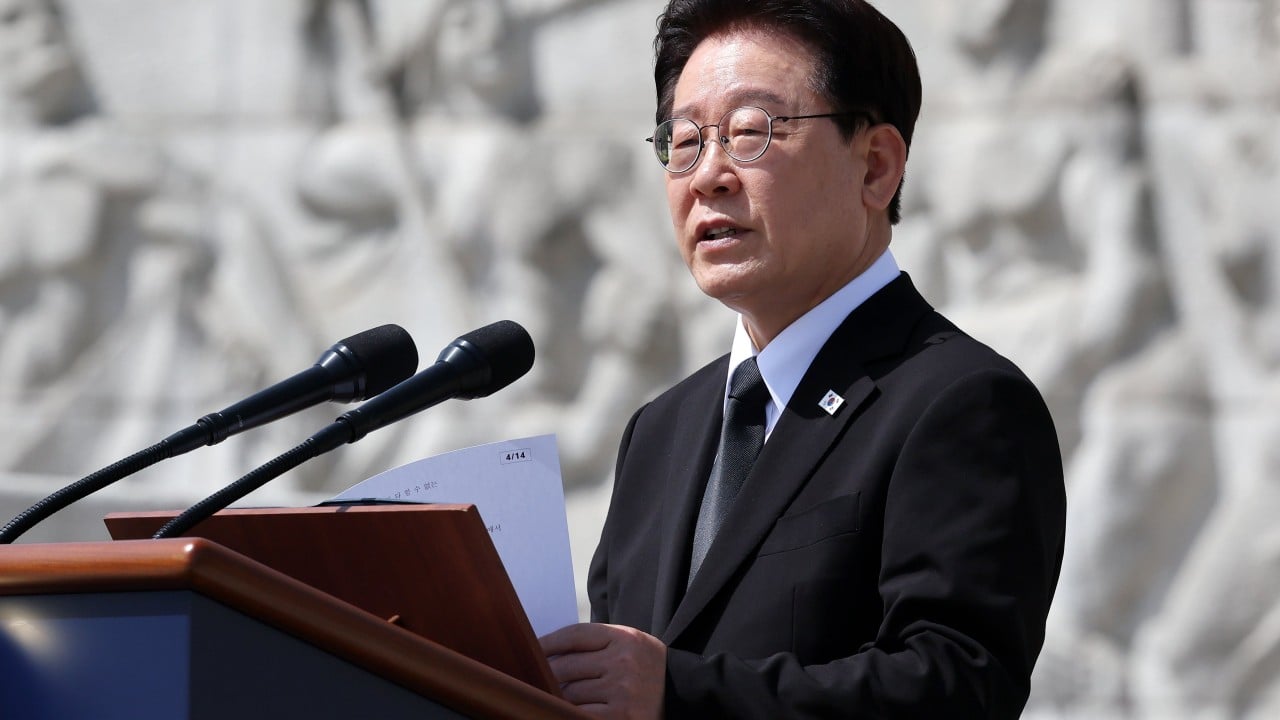
South Korea is currently pulling off one of the most aggressive economic pivots in modern history. If you've been watching the news, you know the old playbook of relying on a single giant neighbor for manufacturing and sales is dead. Seoul has realized that "co-prosperity" isn't just a fancy diplomatic buzzword—it's a survival strategy. On April 19, 2026, President Lee Jae Myung kicked off a high-stakes six-day tour of India and Vietnam, and he didn't go alone. He brought the heavy hitters: the chairs of Samsung, SK, Hyundai, and LG.
When the heads of the four largest conglomerates in your country pack their bags for the same trip, you aren't just looking at a photo op. You're looking at a fundamental shift in the global supply chain. Korea isn't just looking for customers; it’s looking for a way to divorce its industrial destiny from the volatility of the Taiwan Strait and the South China Sea.
The India gap and the 600 company problem
President Lee pointed out something pretty shocking during a dinner in New Delhi this week. Korea has roughly 10,000 companies operating in Vietnam. In India—a country with 1.46 billion people and the world’s fourth-largest economy—there are only about 600 to 700. That’s a massive oversight, and frankly, a bit embarrassing for a nation that prides itself on being a global export powerhouse.
India isn't just a "consumer market" anymore. It's becoming the world's factory floor. Hyundai Motor Group Executive Chair Chung Euisun is betting big on this. While other leaders are splitting their time between both countries, Chung is laser-focused on India. Why? Because India is about to become the world’s third-largest economy, and if you aren't building EVs there now, you’ve already lost the next decade.
The goal here is a total upgrade of the Comprehensive Economic Partnership Agreement (CEPA). Korea needs better tariff terms, and India wants Korean tech to fuel its "Make in India" initiative. It’s a trade-off that makes sense for everyone involved.
Vietnam is no longer just a backup plan
If India is the new frontier, Vietnam is the established fortress. But the relationship is changing. It's no longer just about Samsung assembling Galaxy phones in Bac Ninh. We’re seeing a shift toward "strategic tech development."
Earlier this month, the two countries agreed on six joint research projects in high-tech sectors like:
- Semiconductor packaging and testing
- Biotechnology and nanotechnology
- AI infrastructure and next-gen data centers
- Clean energy and climate tech
[Image of semiconductor manufacturing process]
Vietnam is moving up the value chain. They aren't content being the world’s assembly line forever. The Second Phase of the Vietnam-Korea Institute of Science and Technology (VKIST) is the proof. Korea is effectively exporting its R&D blueprint to Hanoi. It’s a "package-style" cooperation where Korea provides the tech and training, and Vietnam provides the talent and the manufacturing base.
The energy crisis forcing Seoul’s hand
You can't talk about this pivot without talking about the Middle East. With 2026 seeing massive disruptions in the Strait of Hormuz, Korea and India have found themselves in the same leaky boat. Both countries depend heavily on imported energy.
India has been aggressively diversifying its energy sources, pulling in more LNG from the U.S. and Russia. Korea is watching closely. During this summit, supply chain resilience isn't just about microchips; it’s about making sure the lights stay on. When 61% of your crude oil imports used to pass through a single, volatile chokepoint, you start looking for "strategic partners" who share your anxieties.
What this means for the tech sector
For anyone in the tech industry, the 11th session of the Vietnam-South Korea Joint Committee on Science and Technology Cooperation (scheduled for 2028) is the date to watch. But you don't have to wait that long to see the impact.
Samsung and LG are already building their third and fourth plants in these regions. LG is currently finishing its third manufacturing plant in India, specifically targeting automotive components. They aren't just selling TVs; they're building the guts of the cars Indians will be driving in 2030.
How to play the new Asian axis
If you’re running a business or investing in the region, stop thinking of "Asia" as a monolith. The Seoul-New Delhi-Hanoi axis is the new reality. Here is how to navigate it:
- Watch the CEPA updates: If you’re in manufacturing, the upcoming changes to the Korea-India trade deal will likely slash duties on intermediate goods. That’s your window to move.
- Follow the R&D money: Vietnam is hungry for "high-tech training." If your business provides technical education or B2B software, Hanoi is a much friendlier market than it was three years ago.
- Diversify your energy exposure: Use the same logic the Korean conglomerates are using. If your supply chain relies on a single geographical route, it’s vulnerable.
Korea’s push for co-prosperity isn't an act of charity. It's a calculated, high-stakes move to ensure that the "Miracle on the Han River" doesn't get choked out by 21st-century geopolitics. If you aren't looking at the deals being signed in New Delhi and Hanoi this week, you're missing the blueprint for the next global trade cycle.