Seoul isn't waiting for the current tech boom to run out of steam. While chipmakers rake in record profits from the global appetite for artificial intelligence, South Korea's leadership is already looking past the horizon. They know that relying forever on memory chips and standard silicon is a dangerous game.
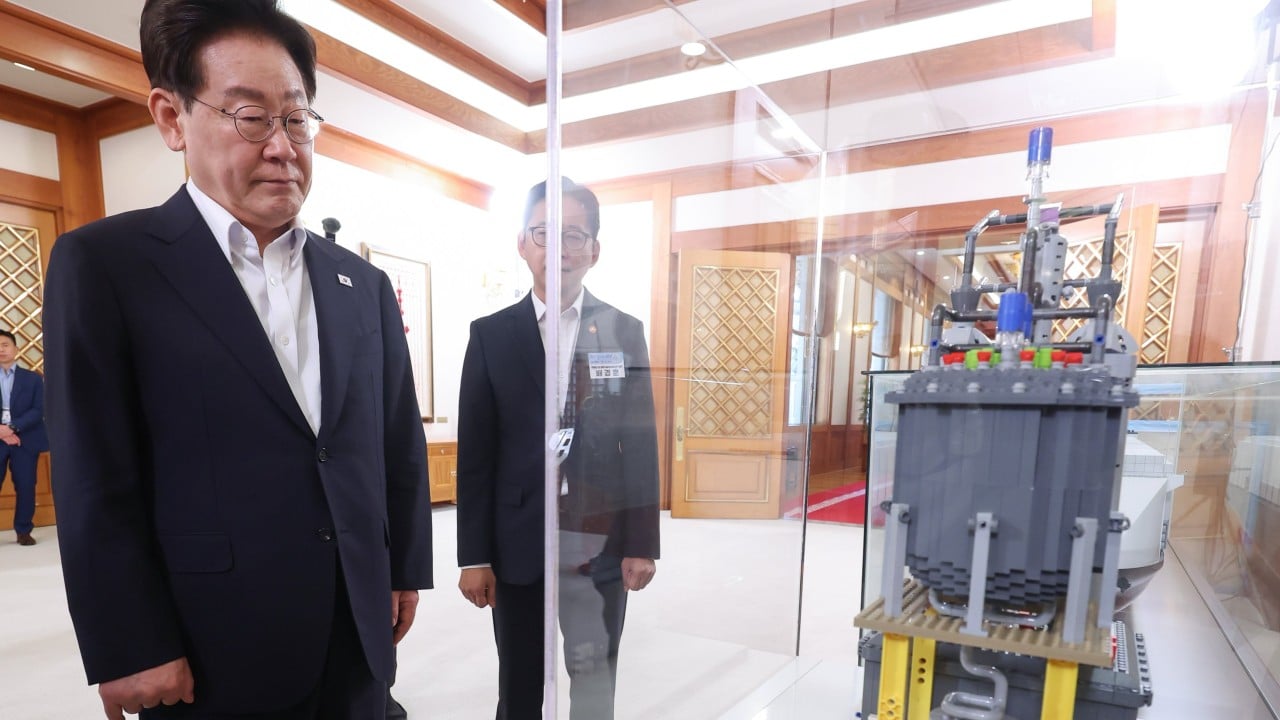
Enter the "Seven Major SEED" initiative. Unveiled at a Blue House meeting chaired by President Lee Jae Myung, this blueprint commits massive public and private capital to seven distinct technological pillars. We are talking about a deliberate pivot toward a post-AI economy.
If you want to understand where global hardware manufacturing, space exploration, and energy policy are heading over the next decade, you have to look at what South Korea is doing right now. They aren't just drafting white papers. They are setting hard deadlines.
The 2030 Moon Shot and Quantum Horizons
Space and quantum mechanics used to be fields reserved for superpowers with bottomless state budgets. Seoul is changing that math. Under the new strategy, South Korea aims to land a spacecraft on the moon by 2030 using a privately developed small lunar lander launched aboard the domestic three-stage Nuri rocket. A second lunar mission follows in 2032.
At the same time, the quantum timeline is aggressively short. The government wants to build a domestic 100-qubit error-correcting quantum computer by 2029. The ultimate goal is to capture global leadership in quantum-chip manufacturing by 2035.
These aren't vague aspirations. Science Minister Bae Kyung-hoon made it clear that these projects are designed to build an industrial moat that no rival can cross in ten or twenty years.
Why the Post-AI Pivot Matters Now
You might wonder why a country dominating the current semiconductor cycle is panicking. The reality is simple. South Korea faces a shrinking working-age population and slowing long-term potential growth. The current artificial intelligence gold rush has filled corporate coffers, but it won't solve demographic decline or permanent structural shifts in global trade.
Seoul's strategy relies on building special purpose companies (SPCs) backed by both public funds and private giants. Instead of leaving research trapped in university labs, these joint ventures will push technologies straight into commercial manufacturing.
The initiative divides future growth into clear operational tracks:
- Next-Generation Frontier: Quantum computing, aerospace engineering, and advanced biotechnology.
- Advanced Energy Systems: Small modular reactors (SMRs) targeted for commercial deployment by 2035, alongside nuclear fusion development.
- Supply Chain Security: Expanding critical mineral stockpiles and pouring roughly $7.1 billion into domestic materials and equipment research by 2030.
The Real Challenge Ahead
Throwing hundreds of billions of dollars at futuristic hardware sounds great on paper, but execution is where most national strategies fail. South Korea has a strong track record with memory chips and consumer electronics, but quantum error correction and deep-space logistics operate on an entirely different difficulty curve.
Yet, ignoring these sectors means accepting economic stagnation. By forcing conglomerates and startups to collaborate on high-risk projects like brain-computer interfaces and nuclear fusion, South Korea is betting that urgency beats comfort.
Keep an eye on how these public-private partnerships form over the next twenty-four months. If Seoul pulls this off, the blueprint will become the default playbook for advanced nations trying to survive the next century.